 en
en русский
 Español
 عربى
عربى
Single-Stage Compression Rotary Screw Air Compressor: Efficient, Stable, and Intelligent Compressed-Air Production
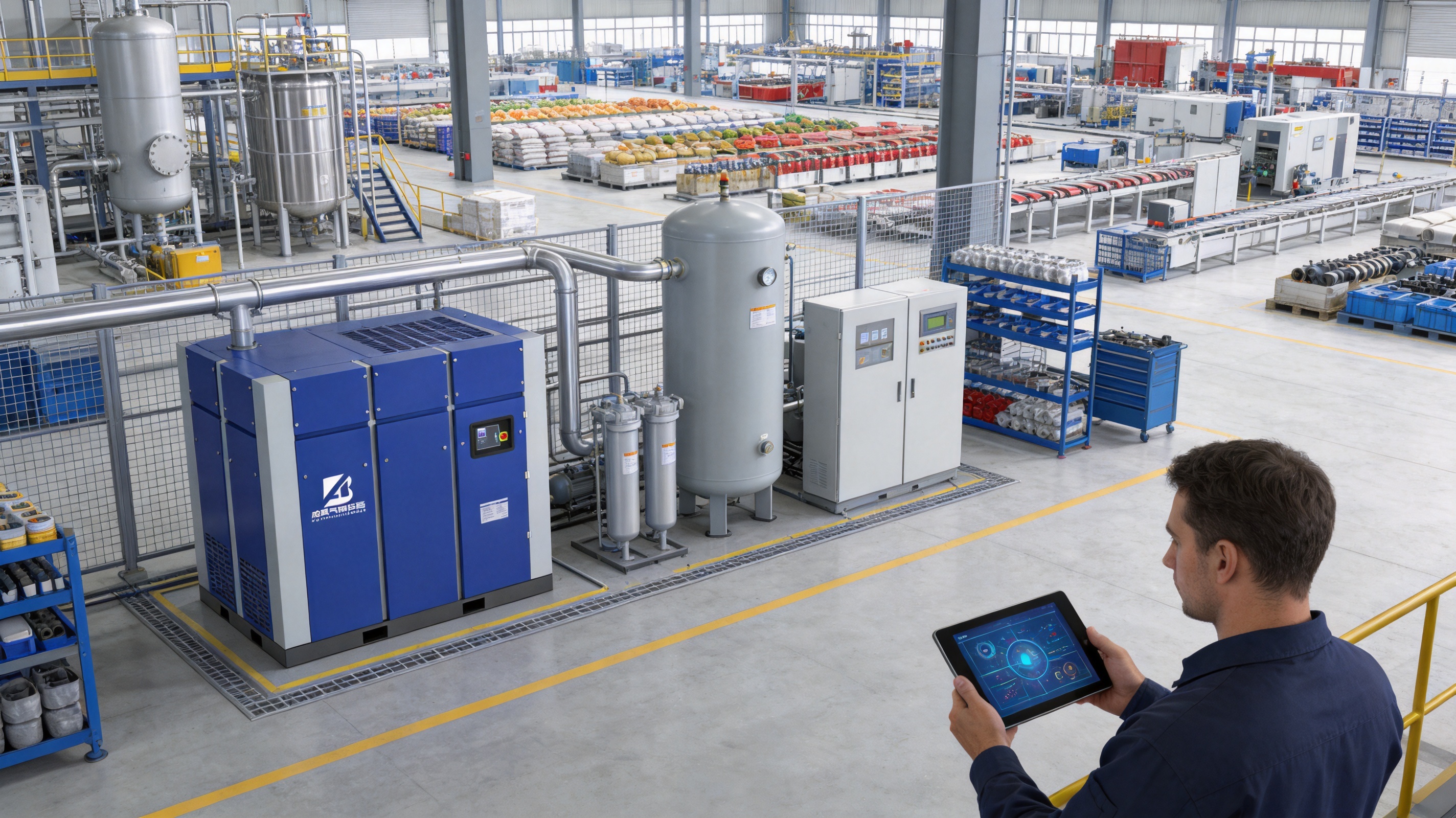
Compressed air is an essential utility in modern manufacturing. It powers pneumatic tools, operates automated production lines, supports material handling, drives control systems, and protects product quality in industries ranging from petrochemical processing to food production and electronics assembly. Because compressed air is used continuously in many plants, the performance of the air compressor directly affects energy consumption, production stability, maintenance costs, and overall operating efficiency.
The BHV-G/A series single-stage compression rotary screw air compressor is designed for industrial users seeking dependable compressed-air production with flexible flow control and efficient motor technology. Available in permanent magnet variable frequency drive and fixed-speed configurations, the series combines oil-injected rotary screw compression, intelligent monitoring, optimized cooling, and durable electrical protection. Its design addresses several common challenges found in conventional compressed-air systems, including unstable pressure during start-up, unnecessary energy consumption at partial load, excessive fan power consumption, heat accumulation, and limited operating visibility.
With working pressures from 8 to 13 bar, air capacity from 0.2 to 61.0 cubic meters per minute, and motor power from 7.5 to 75 kilowatts, the series can support a broad range of industrial applications. It is suitable for individual machines, production cells, workshops, and larger compressed-air systems that require stable pressure and controllable output.
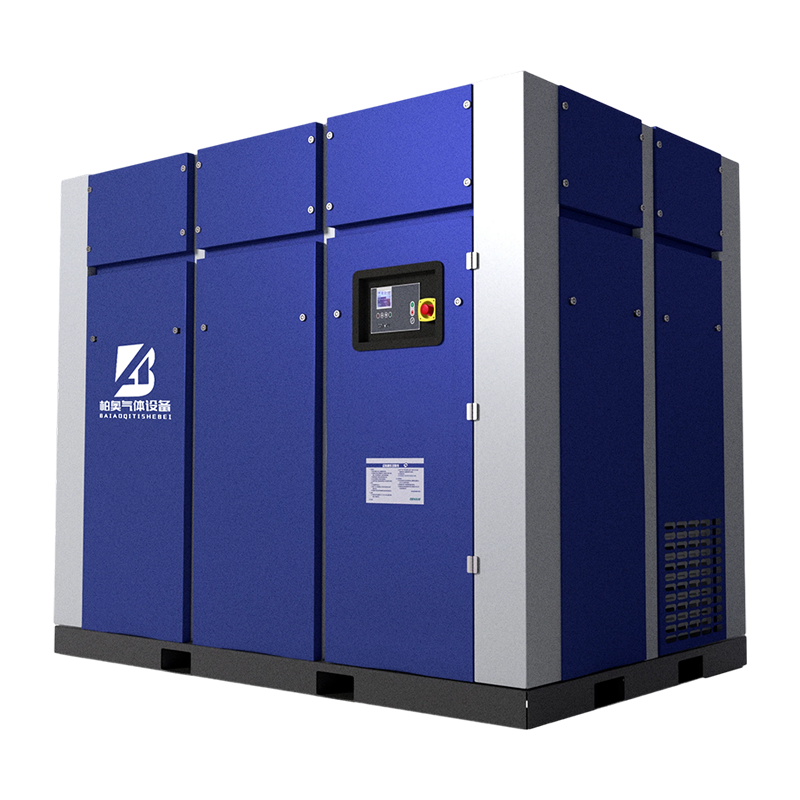
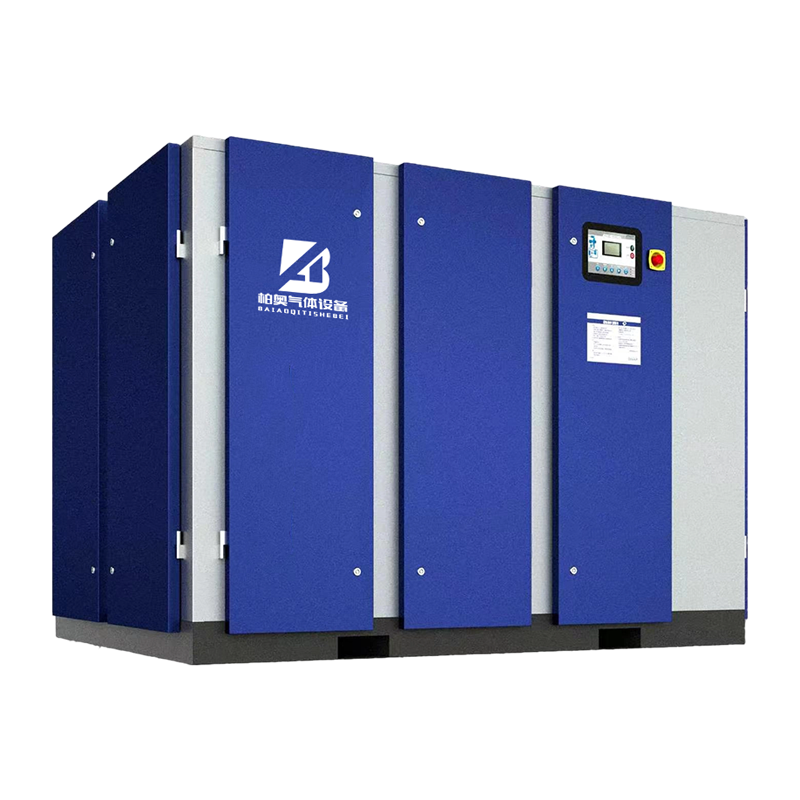
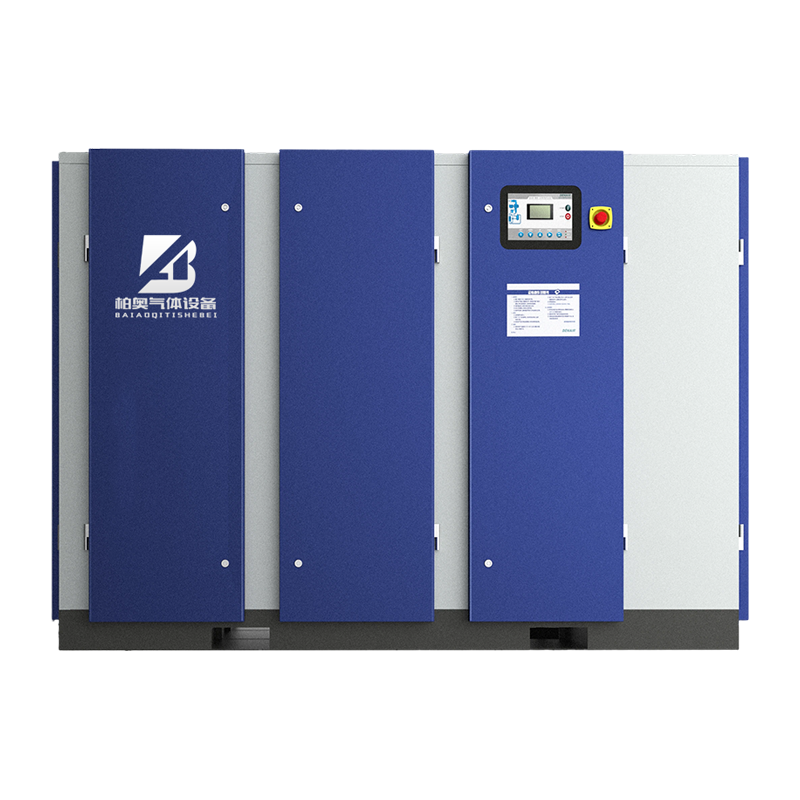
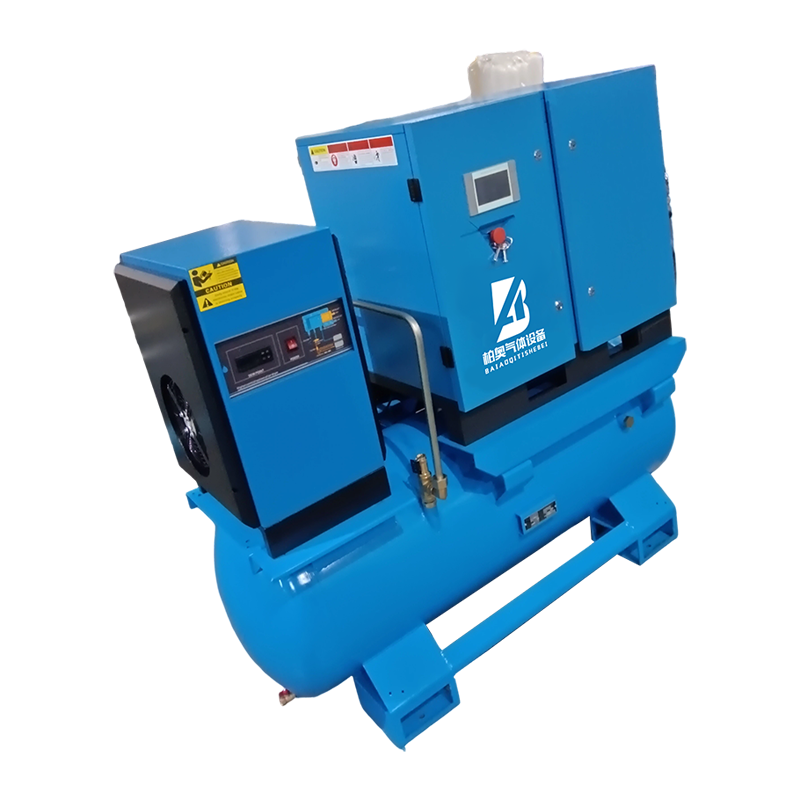
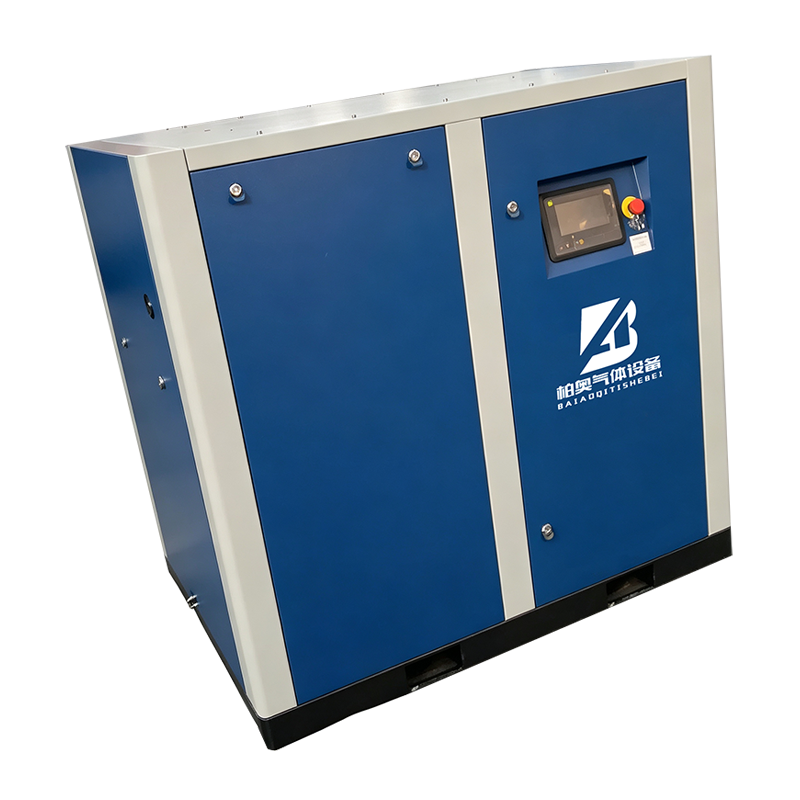
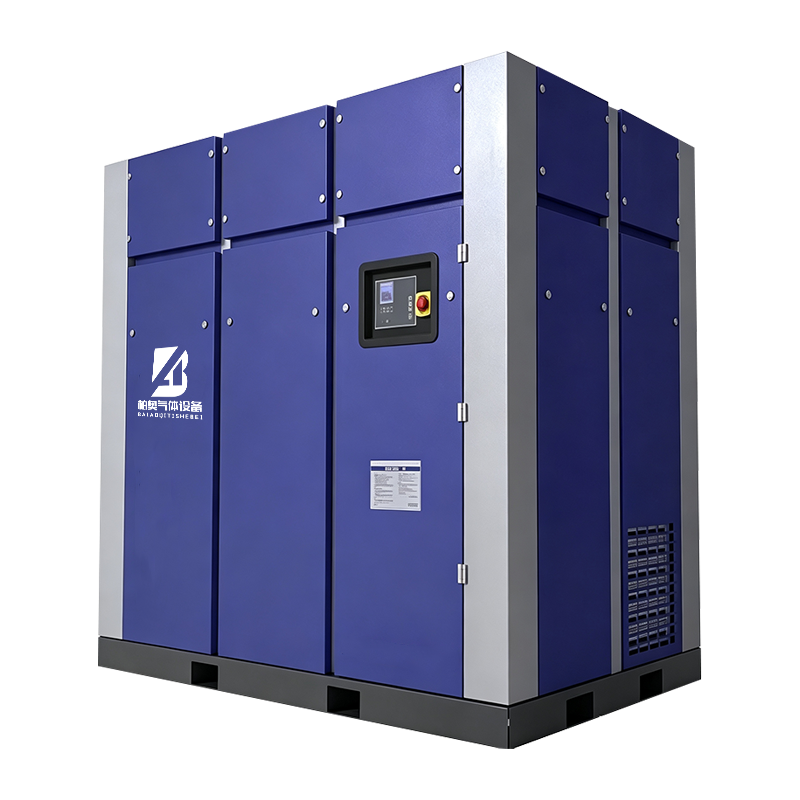
Single-Stage Compression Rotary Screw Air Compressor (PM VSD/FSD)
Content
- 1 Why Single-Stage Rotary Screw Compression Matters
- 2 Product Overview and Operating Range
- 3 Stable Pressure During Start-Up
- 4 Variable Flow Control for Changing Demand
- 5 Permanent Magnet Motor Technology
- 6 Quiet Centrifugal Fan and Efficient Ventilation
- 7 Large Cooler Design and Heat Management
- 8 Intelligent HMI Touchscreen Controller
- 9 Advantages Compared with Conventional Compressor Solutions
- 10 Manufacturing and Engineering Strengths
- 11 Quality Control and Production Discipline
- 12 Application Areas
- 13 Compressed-Air System Design Considerations
- 14 Installation and Maintenance Practices
- 15 Energy-Efficiency Strategy
- 16 Why Choose an Integrated Gas Equipment Manufacturer
- 17 Selection Guide for Buyers
- 18 Q&A
- 18.1 What type of compressor is the BHV-G/A series?
- 18.2 What working pressure range does the series provide?
- 18.3 What is the available air capacity?
- 18.4 What motor power range is available?
- 18.5 What is the main advantage of the permanent magnet variable frequency model?
- 18.6 Is a fixed-speed model also available?
- 18.7 How does the compressor manage heat?
- 18.8 What does the IP65 motor protection rating indicate?
- 18.9 Does the compressor include an intelligent control system?
- 18.10 Is the compressor suitable for food-processing applications?
- 18.11 What maintenance is required?
- 18.12 Can the compressor be used with gas-generation equipment?
- 18.13 What industries can use this series?
- 18.14 How should the compressor be selected?
- 19 Conclusion
- 20 References
- 21 Product: Single-Stage Compression Rotary Screw Air Compressor (PM VSD/FSD)
Why Single-Stage Rotary Screw Compression Matters
A rotary screw compressor produces compressed air through the continuous rotation of two intermeshing screw rotors. Air enters the compression chamber, becomes trapped between the rotor profiles, and is progressively compressed as the available volume decreases. In an oil-injected design, oil is introduced into the compression chamber to help seal the clearances, lubricate moving components, and absorb part of the heat generated during compression.
Single-stage compression offers a practical balance between mechanical simplicity, output stability, and operating efficiency for many industrial applications. Compared with more complex multistage systems, a single-stage compressor generally contains fewer major compression stages and fewer interstage components. This can simplify equipment layout, reduce installation complexity, and make routine servicing more straightforward.
The suitability of a single-stage compressor depends on the required pressure and application conditions. The BHV-G/A series is specified for working pressures between 8 and 13 bar, which covers many common industrial requirements, including pneumatic production equipment, general factory air, packaging systems, automated machinery, and process-support applications.
Rotary screw technology is particularly valuable where compressed air is required for long operating periods. Unlike reciprocating compressors, which commonly produce pulsating airflow and repeated start-stop cycles, a rotary screw compressor is designed for continuous and comparatively smooth air delivery. This helps reduce pressure fluctuations and provides a more consistent supply to downstream equipment.
The oil-injected structure also supports efficient sealing inside the compression chamber. Effective internal sealing helps reduce leakage during compression and contributes to stable performance. The oil must then be separated from the compressed air before the air leaves the compressor package. Correct oil management, separation, cooling, and filtration are therefore important parts of the total compressor design.
Product Overview and Operating Range
The BHV-G/A series is a single-stage oil-injected rotary screw air compressor offered in permanent magnet variable frequency and fixed-speed configurations. The permanent magnet variable frequency model is intended for systems with changing air demand, while the fixed-speed model is suitable for applications with relatively constant consumption and predictable loading patterns.
The central feature of the series is its ability to provide stable compressed-air performance while adapting to the electrical and pneumatic conditions of the installation. The permanent magnet variable frequency system adjusts motor speed according to demand, helping the compressor avoid producing substantially more air than the system requires. The fixed-speed configuration provides a conventional operating solution for users who prioritize a straightforward control strategy and steady-duty operation.
| Performance Parameter | Available Range | Imperial Equivalent |
|---|---|---|
| Working pressure | 8–13 bar | 116.0–188.5 psig |
| Air capacity, FAD | 0.2–61.0 m³/min | 7.1–2,154.2 cfm |
| Motor power | 7.5–75 kW | 10.2–102.0 hp |
| Compression configuration | Single-stage rotary screw | Oil-injected design |
| Drive options | Permanent magnet variable frequency or fixed speed | Application-dependent selection |
The broad output range allows the product family to serve both smaller compressed-air users and larger industrial consumers. Actual selection should be based on measured air demand, required working pressure, duty cycle, ambient conditions, air quality requirements, and the operating profile of the plant.
Stable Pressure During Start-Up
Start-up behavior is a major consideration in industrial compressed-air systems. When an air compressor starts, a sudden increase in motor demand or a rapid pressure change can affect the electrical network and downstream machinery. In sensitive production environments, unstable pressure during this period may interrupt pneumatic operations, create process variation, or cause protective devices to react unnecessarily.
The BHV-G/A series is designed to provide stable air pressure during start-up without a sudden impact. This feature supports smoother commissioning of the compressor and helps reduce the disruption that can occur when a compressor is introduced into an operating air network.
Stable start-up is especially useful where several machines share a common air header. A sudden pressure disturbance from one compressor can affect valves, cylinders, actuators, and control instruments throughout the system. By promoting a more controlled transition into operation, the compressor can help maintain a more predictable pressure environment for connected equipment.
The start-up design also contributes to user confidence. Operators do not need to treat every start cycle as a potentially disruptive event. This is valuable in facilities that stop and restart equipment according to production shifts, batch schedules, maintenance programs, or fluctuating demand.
Variable Flow Control for Changing Demand
Most factories do not consume exactly the same amount of compressed air every minute of the day. Air demand may rise when multiple production lines operate simultaneously and fall during breaks, shift changes, low-volume periods, or partial shutdowns. A compressor selected only for peak demand may operate inefficiently during much of the production schedule.
The permanent magnet variable frequency configuration addresses this challenge through variable flow control. Instead of operating at one fixed motor speed regardless of actual consumption, the system can adjust output in response to demand. When the plant requires more air, the compressor can increase output. When demand decreases, the compressor can reduce its operating level.
This approach can offer an advantage over conventional fixed-speed operation in systems with a widely changing load profile. A fixed-speed compressor may repeatedly load and unload or operate at a capacity that exceeds the immediate requirement. Variable speed control can reduce this mismatch, helping users manage energy use more effectively.
Variable flow control can also support more consistent pressure management. When output is adjusted progressively rather than through abrupt operating changes, the system can respond more smoothly to demand variation. This may help reduce pressure swings in the compressed-air network and improve the operating conditions of pneumatic equipment.
Energy performance depends on many factors, including pressure settings, leakage, air treatment, piping design, operating hours, ambient temperature, and maintenance. Nevertheless, selecting a variable frequency compressor for a variable-demand system is an important step toward matching production capacity with real consumption.
Permanent Magnet Motor Technology
The BHV-G/A permanent magnet variable frequency model uses an oil-cooled permanent magnet motor. Permanent magnet motors can provide efficient motor operation by using magnetic elements to generate torque without relying on the same rotor excitation approach used by some traditional motor designs.
Oil cooling helps manage motor temperature within the compressor package. Because the motor operates in an industrial environment and may run for extended periods, effective heat management is essential for reliable operation. The oil-cooled configuration integrates the motor into the compressor’s overall thermal-management concept rather than treating the motor as an isolated component.
The motor is specified with an IP65 protection rating. This rating indicates a high level of protection against dust ingress and protection against water jets from different directions under defined testing conditions. In practical industrial use, this supports greater resistance to common workshop contaminants and environmental exposure, although the compressor should still be installed according to the manufacturer’s requirements.
Motor protection is important in factories where dust, moisture, oil mist, and other contaminants may be present. A robust enclosure helps protect electrical and mechanical components, supports long-term reliability, and reduces the risk that environmental conditions will interfere with normal operation.
The combination of permanent magnet motor technology, variable frequency control, and oil cooling provides the product with a coordinated drive solution. The motor, controller, compressor element, and cooling system are not independent features; they work together to produce controllable output and stable operation.
Quiet Centrifugal Fan and Efficient Ventilation
Cooling air is necessary for removing heat from the compressor package, but the cooling fan can become a significant source of power consumption and operating noise. An inefficient fan may consume unnecessary electricity, generate disruptive sound, or fail to provide adequate airflow through the cooler during demanding operating conditions.
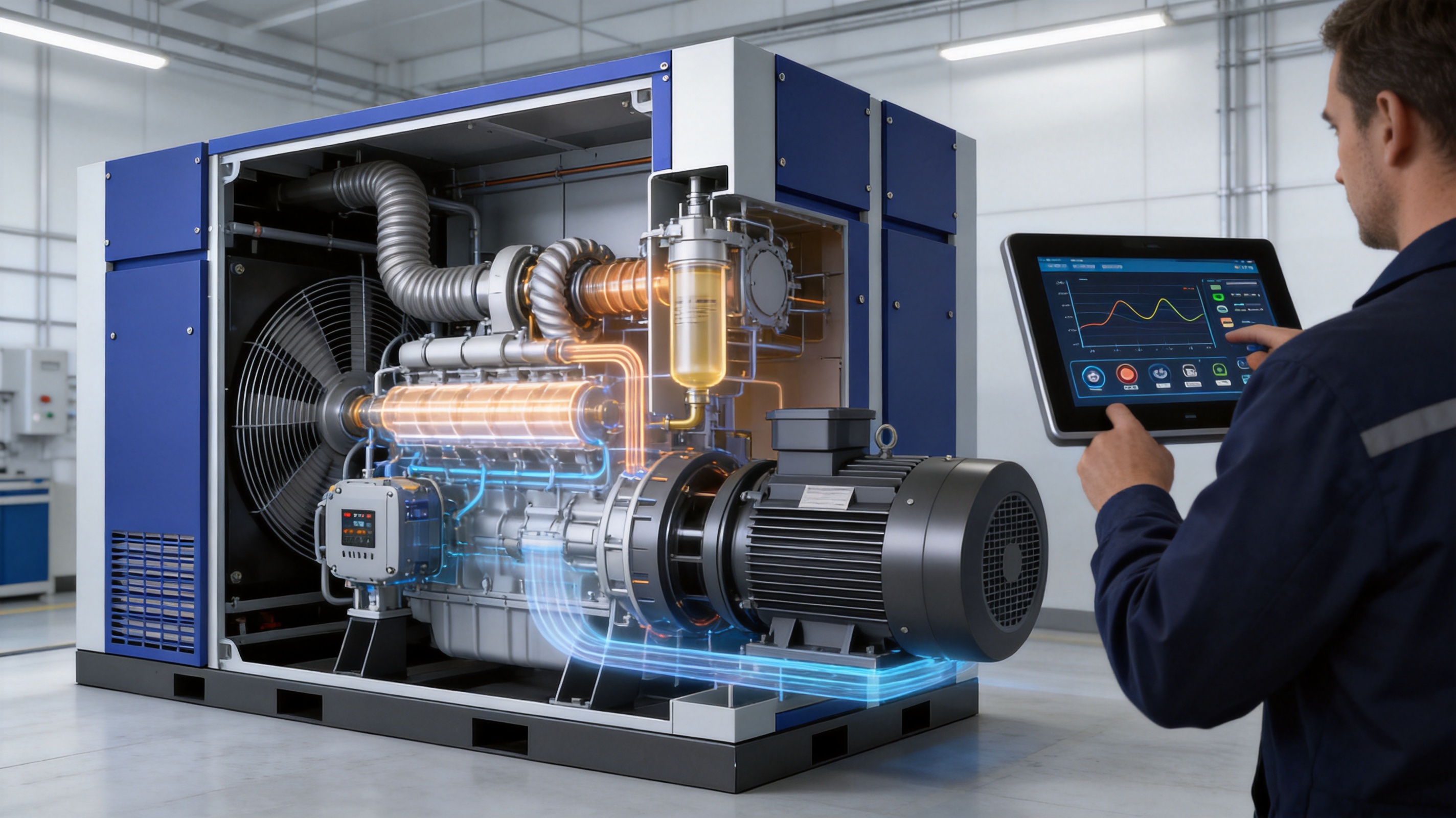
The BHV-G/A series uses a quiet centrifugal fan designed to support energy-saving operation and constant pressure output. The centrifugal configuration is suitable for moving air through resistance-producing components such as coolers, protective grilles, and internal air passages. By supporting controlled airflow through the thermal system, the fan helps maintain appropriate operating conditions for the compressor.
Noise management is valuable in both production facilities and enclosed compressor rooms. Excessive noise can affect worker comfort, complicate communication, and increase the need for acoustic treatment. A quieter fan does not eliminate all compressor sound, but it can reduce one important source of operating noise within the package.
Fan efficiency also affects the total cost of ownership. The compressor motor is usually the largest energy consumer in a compressed-air system, but auxiliary components such as cooling fans remain important, particularly when the compressor operates for long hours. A fan designed for efficient operation can help limit auxiliary power consumption while maintaining stable temperature control.
Large Cooler Design and Heat Management
Compression generates heat. If heat is not removed effectively, oil temperature, motor temperature, air discharge temperature, and component stress may increase. Excessive thermal loading can affect lubricant performance, accelerate component aging, and reduce the compressor’s ability to operate reliably under demanding conditions.
The BHV-G/A series uses a large cooler design with hot and cold zone isolation. This arrangement is intended to improve heat management by organizing the airflow and thermal zones within the compressor package. Separating hot and cold areas helps reduce the risk that already-heated air will immediately re-enter the cooling path.
Hot and cold zone isolation is a practical design consideration in compact industrial equipment. When the cooling system is not carefully arranged, heat from the discharge side or motor compartment may accumulate around cooler surfaces and reduce thermal efficiency. A well-planned internal layout can help maintain a more favorable temperature difference between the cooling medium and the components that need heat removal.
The large cooler provides greater heat-transfer area than a very compact cooler designed only around minimum package size. This can support stable operation across a wider range of load conditions, provided that the cooler is kept clean and the installation has sufficient ventilation.
Users should include cooler inspection in routine maintenance. Dust, fibers, oil deposits, and other contaminants can restrict airflow and reduce heat-transfer performance. Even an efficiently designed cooler requires appropriate cleaning and sufficient clearance around the compressor package.
Intelligent HMI Touchscreen Controller
Industrial equipment is easier to operate when performance information is visible and understandable. The BHV-G/A series includes a human-machine interface touchscreen controller that monitors operating status in real time. The controller allows operators to remain informed about the condition of the compressor and its current operating state.
A touchscreen interface can present important information in a more accessible format than a limited set of indicator lights. Depending on the configured control system, users may be able to review pressure, operating mode, load condition, temperature, alarms, maintenance reminders, and other relevant status information.
Real-time monitoring supports faster decision-making. If the compressor enters an alarm condition or shows an abnormal temperature trend, operators can identify the issue earlier and arrange inspection before a minor problem develops into a major interruption. Clear status information can also help maintenance personnel understand the operating history before beginning service work.
The controller is particularly useful for variable frequency operation because the compressor may operate across a range of speeds and outputs. Operators can observe how the equipment responds to changing demand and can use this information when adjusting pressure settings, scheduling maintenance, or evaluating system performance.
Improved visibility also contributes to energy management. When plant personnel can observe loading patterns and operating conditions, they are better positioned to identify excessive demand, unnecessary running time, pressure settings that are higher than required, or production periods during which the compressor is underutilized.
Advantages Compared with Conventional Compressor Solutions
Improved Adaptability to Variable Demand
One of the most important advantages of the permanent magnet variable frequency configuration is its ability to adapt output to changing air consumption. Conventional fixed-speed compressors may be well suited to stable demand, but they can be less efficient when the system frequently moves between high-load and low-load conditions.
Variable speed control helps reduce the gap between actual air demand and compressor output. This can limit unnecessary loading and unloading, support more stable pressure, and improve the efficiency of the overall compressed-air supply.
Reduced Start-Up Disturbance
Stable start-up behavior provides an advantage in plants where pressure continuity and electrical stability are important. A controlled start can reduce the possibility of abrupt pressure changes and can make the compressor easier to integrate with other equipment in the air network.
Enhanced Thermal Organization
The large cooler and hot-and-cold-zone isolation approach provide a more deliberate thermal-management structure than a basic package that simply places a cooler wherever space is available. Better heat organization can support consistent operating temperatures and protect the compressor during extended service.
Greater Environmental Protection
The IP65-rated oil-cooled permanent magnet motor is designed to resist dust and water-jet exposure under the conditions defined by the rating. This gives the motor a strong protection level for industrial environments and can contribute to more dependable operation when the installation area is properly selected and maintained.
Better Operating Visibility
The HMI touchscreen controller gives operators direct access to real-time equipment information. Compared with a compressor that provides only basic local indications, an intelligent interface can improve troubleshooting, maintenance planning, and operational awareness.
Flexible Equipment Selection
The availability of both permanent magnet variable frequency and fixed-speed configurations allows users to select equipment according to their actual operating profile. A variable frequency model may be preferred for fluctuating demand, while a fixed-speed model may be appropriate for a stable and predictable process. This flexibility reduces the risk of choosing a compressor that is technically capable but poorly matched to the application.
Manufacturing and Engineering Strengths
Zhejiang Baiao Gas Equipment Co., Ltd. integrates research and development, equipment design, production, installation, and after-sales service. This integrated structure is important for industrial compressor manufacturing because product performance depends not only on individual components but also on system integration, process control, testing, installation, and technical support.
The company operates a 3,000-square-meter standardized workshop, a 500-square-meter office area, and a 500-square-meter warehouse. These facilities provide space for organized manufacturing, engineering activities, material management, equipment assembly, and product preparation.
A standardized workshop supports repeatable production practices. Industrial compressors must be assembled with attention to alignment, sealing, wiring, oil circulation, cooling airflow, and control integration. Organized production areas help separate different operations and can improve consistency between units.
The warehouse supports component storage and order preparation. Appropriate material organization is important because compressors include mechanical, electrical, thermal, and control components that must be matched correctly. Reliable inventory handling also supports more efficient production scheduling and service response.
The company’s engineering capabilities cover gas separation and purification equipment as well as industrial air compressors. Its product range includes PSA nitrogen generators, PSA oxygen generators, membrane nitrogen and oxygen generators, nitrogen purification units, and ammonia decomposition hydrogen purification units.
This broader gas-equipment background is relevant to compressor users because compressed air is often the foundation of a gas-generation or gas-purification plant. PSA systems, membrane systems, purification units, and related equipment require dependable air sources with appropriate flow and pressure. Experience across these product categories can support a more complete understanding of plant utility requirements.
The company develops products using overseas technologies that are optimized for industrial conditions in China. Technology adaptation is important because equipment must perform under actual site conditions, including local power characteristics, ambient temperatures, dust levels, maintenance practices, and production patterns. A design that is suitable in one market may require practical adjustments before it can deliver reliable service in another.
Research and development also supports product improvement. Compressor development can involve motor selection, control logic, cooler sizing, fan performance, oil separation, enclosure design, user-interface functions, and service accessibility. Continuous technical improvement helps manufacturers respond to changing energy requirements and customer expectations.
Quality Control and Production Discipline
Quality control for rotary screw compressors must cover more than visual appearance. The compressor package contains systems that interact continuously under pressure and temperature. Quality assurance should therefore consider component compatibility, assembly accuracy, electrical safety, control response, sealing, lubrication, cooling, and operating stability.
A disciplined manufacturing process begins with appropriate component selection. The compressor element, motor, inverter, fan, cooler, oil separator, filters, valves, sensors, and controller must be matched to the intended pressure and flow range. Incorrect sizing or inconsistent component quality can reduce efficiency and shorten service life.
Assembly accuracy is equally important. Rotor alignment, pipe connections, electrical terminals, sensor installation, and oil-circuit connections must be completed correctly. Attention to these details helps prevent leakage, vibration, overheating, control errors, and premature wear.
Functional testing is an important part of product preparation. Testing may include checking start-up behavior, pressure control, temperature response, fan operation, motor protection, touchscreen display functions, alarm logic, and overall package performance. The specific test procedures should correspond to the selected model and applicable technical requirements.
Strict quality control supports customer confidence because industrial users purchase compressors for continuous production, not merely for occasional operation. A dependable manufacturing process can reduce commissioning problems, simplify installation, and make service requirements more predictable.
Application Areas
Petrochemical and Chemical Processing
Petrochemical and chemical plants use compressed air for pneumatic valves, instrumentation, automated handling equipment, cleaning operations, and process-support systems. Stable pressure is important because control valves and pneumatic instruments may respond differently when supply pressure fluctuates.
The BHV-G/A series can serve general industrial compressed-air requirements within its specified pressure and capacity range. The variable frequency option may be useful where process demand changes according to production conditions.
Textile Manufacturing
Textile plants often operate many machines simultaneously and may require compressed air for actuators, yarn handling, cleaning, control systems, and automated equipment. Production schedules can create changing demand, particularly when different lines operate at different times.
The compressor’s variable flow control can help align supply with actual consumption. The cooling system is also important in textile environments, where fibers and dust may be present. Regular cooler cleaning and proper ventilation should be included in the maintenance plan.
Food Processing and Packaging
Food-processing facilities use compressed air for packaging machines, pneumatic cylinders, conveying systems, filling equipment, and automation. Depending on the application, the compressed air may require additional downstream treatment, such as filtration, drying, or oil-removal equipment.
The BHV-G/A series is an oil-injected compressor, so users must evaluate the required air-quality class and install suitable downstream treatment where the air contacts food, packaging surfaces, or sensitive process materials. The compressor can provide the compressed-air source, while the final air quality depends on the complete treatment system and maintenance program.
Automotive Manufacturing
Automotive factories use compressed air for assembly tools, robotic systems, paint preparation, pneumatic actuators, material handling, and production-line controls. Demand may change significantly as different lines, shifts, and stations operate.
Variable frequency operation can provide a practical response to these demand changes. The HMI controller can also help maintenance teams monitor operating conditions across extended production schedules.
Heat Treatment
Heat-treatment plants use compressed air for control systems, pneumatic equipment, material transfer, and auxiliary operations. The operating environment may involve elevated temperatures and demanding production schedules, making cooling and motor protection important considerations.
The large cooler design and controlled ventilation support the compressor’s thermal-management objectives. Installation should still provide adequate room ventilation, appropriate clearances, and protection from excessive ambient heat.
SMT Electronics Manufacturing
Surface-mount technology production depends on stable automation, precise pneumatic mechanisms, and reliable plant utilities. Pressure fluctuations can interfere with sensitive equipment, while excessive noise and uncontrolled heat may reduce the suitability of an equipment area.
The combination of stable pressure, quiet centrifugal fan operation, real-time monitoring, and flexible flow control makes the compressor suitable for consideration in electronics manufacturing support systems. Final selection should account for the air-quality specifications of each machine and process.
Compressed-Air System Design Considerations
A compressor should not be selected only by motor power. The correct choice depends on the relationship between pressure, flow, air quality, operating hours, ambient conditions, and future production plans.
First, the user should determine the actual required flow. The stated FAD range of the BHV-G/A series extends from 0.2 to 61.0 cubic meters per minute. The compressor should be selected so that normal demand falls within an efficient operating region rather than at an extreme edge of the range.
Second, the required pressure should be evaluated at the point of use. The product range covers 8 to 13 bar. Designing for pressure significantly higher than necessary can increase energy consumption. However, the system must also account for pressure losses caused by filters, dryers, piping, valves, hoses, and elevation changes.
Third, the demand profile should be measured. If demand changes throughout the day, a permanent magnet variable frequency model may provide better operating flexibility. If demand remains stable for long periods, a fixed-speed model may offer a straightforward solution.
Fourth, air quality must be defined. An oil-injected compressor is appropriate for many industrial applications, but some processes require additional filtration and drying. Food, pharmaceutical, laboratory, electronics, and precision applications may have stricter air-quality requirements than general factory air.
Finally, the installation environment should be reviewed. The compressor room should have sufficient ventilation, protection from flooding, reasonable ambient temperature, adequate service access, and limited exposure to corrosive substances or excessive dust.
Installation and Maintenance Practices
Correct installation is essential for realizing the advantages of the compressor. The unit should be placed on a suitable foundation with adequate space around access panels, coolers, electrical components, and service points. The location should permit safe inspection and maintenance without requiring the compressor to be moved.
Ventilation must be planned according to the heat released by the compressor. Hot discharge air should not be allowed to circulate back into the compressor room or re-enter the cooling-air intake. Proper separation of intake and exhaust airflow supports the internal hot-and-cold-zone design.
Electrical installation should be completed by qualified personnel. The power supply must be compatible with the compressor’s electrical requirements, and protection devices, grounding, cable sizing, and control connections should be selected according to applicable standards and site conditions.
The compressed-air connection should include suitable isolation and service provisions. Piping should be sized to limit pressure loss, and the system should be checked for leaks. A compressor can operate efficiently while the plant still wastes substantial energy through leaking hoses, fittings, valves, and unused branches.
Routine maintenance should include inspection of oil level and condition, oil filters, air filters, oil separators, cooler surfaces, fan operation, belts or couplings where applicable, electrical connections, sensors, and safety devices. Maintenance intervals should follow the product documentation and be adjusted according to operating hours and environmental conditions.
The cooler deserves particular attention in dusty or fiber-producing environments. Deposits on the cooler surface reduce airflow and heat transfer. Cleaning methods should avoid damaging fins, electrical components, and protective coatings.
The HMI touchscreen should also be reviewed during maintenance. Operators should record alarms, abnormal temperature trends, pressure variation, and other indications that may reveal developing problems. Early intervention is generally less costly than emergency repair after a production interruption.
Energy-Efficiency Strategy
Compressed air is often described as a convenient but energy-intensive utility. The compressor converts electrical energy into stored pneumatic energy, and a significant portion of the input power becomes heat. Energy efficiency therefore depends on both compressor technology and complete-system management.
The permanent magnet variable frequency configuration contributes to an energy-efficiency strategy by adjusting output to demand. However, the greatest benefit is obtained when the compressor is correctly sized and operated with appropriate pressure settings.
Leak detection is another essential measure. Even small leaks can operate continuously and create a demand that the compressor must satisfy. Regular ultrasonic inspection, repair of damaged hoses, and elimination of unused open lines can reduce artificial demand.
Pressure optimization can also reduce energy use. Every unnecessary increase in system pressure may increase compression work and aggravate leakage. Users should identify the minimum pressure required at the most demanding point of use and then account for distribution losses.
Air treatment should be selected carefully. Filters and dryers are necessary for many applications, but they can create pressure drops when incorrectly sized or poorly maintained. Oversized or clogged filters may force the compressor to work at a higher discharge pressure than necessary.
Operating data from the HMI controller can support a continuous improvement program. By comparing pressure, flow, loading behavior, runtime, and alarms, facility managers can identify opportunities to improve system performance over the equipment’s service life.
Why Choose an Integrated Gas Equipment Manufacturer
A manufacturer with experience in both compressed-air equipment and industrial gas systems can provide valuable system-level insight. Gas generators and purification equipment often depend on compressed air as a feed or utility. The performance of the compressor can therefore influence nitrogen generation, oxygen production, membrane separation, PSA cycling, purification stability, and plant availability.
Zhejiang Baiao Gas Equipment Co., Ltd. serves customers in industries including petrochemical production, textiles, food processing, automotive manufacturing, heat treatment, and SMT electronics. This industry coverage reflects an understanding of varied operating conditions and different expectations for reliability, pressure stability, air quality, and service support.
The company’s activities include research and development, design, manufacturing, installation, and after-sales service. Combining these functions can make communication more efficient throughout a project. Instead of treating equipment supply, installation, and service as unrelated activities, an integrated manufacturer can follow the equipment from initial selection through commissioning and ongoing support.
Customized solutions are important because compressed-air requirements differ significantly between facilities. A manufacturer may need to consider production capacity, air demand patterns, ambient temperature, available floor space, power supply, air treatment, communication requirements, and integration with existing equipment.
The company’s sales network covers more than 30 provinces and cities in China, with products also exported to international markets. Experience serving different locations can support the development of practical delivery, installation, and service procedures for varied customer environments.
Selection Guide for Buyers
Before purchasing a single-stage rotary screw air compressor, buyers should prepare a clear technical specification. The document should identify the required working pressure, normal and peak air demand, operating hours, power supply, ambient temperature, installation location, air-quality requirements, and expected expansion.
Buyers should also clarify whether the plant needs a variable frequency or fixed-speed model. A permanent magnet variable frequency compressor is generally worth considering when demand changes frequently, when the compressor operates for long hours at partial load, or when pressure stability is important. A fixed-speed model may be considered when consumption is relatively constant and the operating schedule is predictable.
Questions about service access, consumables, spare parts, control functions, warranty coverage, commissioning, and operator training should be addressed before the purchase order is finalized. A technically suitable compressor can still create avoidable difficulties if the service plan is unclear.
The user should request performance information based on the actual required pressure. Air capacity should be compared at the intended operating condition rather than relying only on a nominal maximum value. This helps ensure that the selected unit can provide the required flow after accounting for system losses and operating conditions.
Where the compressor will supply gas-generation or purification equipment, the complete plant should be evaluated. The air compressor, air receiver, filters, dryer, generator, purification unit, and distribution piping must work together. A system-level approach is more reliable than selecting each component independently without reviewing their operating relationships.
Q&A
What type of compressor is the BHV-G/A series?
It is an oil-injected, single-stage rotary screw air compressor series. It is available in permanent magnet variable frequency and fixed-speed configurations.
What working pressure range does the series provide?
The specified working pressure range is 8 to 13 bar, equivalent to approximately 116.0 to 188.5 psig.
What is the available air capacity?
The stated FAD range is 0.2 to 61.0 cubic meters per minute, equivalent to approximately 7.1 to 2,154.2 cfm. The correct model should be selected according to the required pressure and actual site demand.
What motor power range is available?
The series covers motor powers from 7.5 to 75 kilowatts, equivalent to approximately 10.2 to 102.0 horsepower.
What is the main advantage of the permanent magnet variable frequency model?
Its main advantage is variable flow control. The compressor can adjust output according to changing air demand, which may improve pressure stability and energy performance in systems that do not operate at a constant load.
Is a fixed-speed model also available?
Yes. The product title identifies both permanent magnet variable frequency and fixed-speed configurations. The fixed-speed option may be suitable for applications with stable and predictable compressed-air consumption.
How does the compressor manage heat?
The compressor uses a large cooler design with hot-and-cold-zone isolation. The permanent magnet motor is oil-cooled, and a quiet centrifugal fan supports airflow through the cooling system.
What does the IP65 motor protection rating indicate?
IP65 indicates protection against dust ingress and protection against water jets under the conditions defined by the relevant enclosure-rating tests. The compressor should still be installed and maintained in an appropriate industrial environment.
Does the compressor include an intelligent control system?
Yes. The product includes an HMI touchscreen controller that monitors operating status in real time and helps operators review equipment conditions, alarms, and operating information.
Is the compressor suitable for food-processing applications?
It can be considered for food-processing plant utilities, packaging, and related equipment, but it is an oil-injected compressor. Where compressed air contacts food or product-contact surfaces, the user should specify suitable downstream filtration, drying, and air-quality controls.
What maintenance is required?
Maintenance generally includes checking oil, filters, oil separation components, cooler surfaces, fan operation, electrical connections, sensors, alarms, and safety devices. Exact intervals should follow the product documentation and account for operating hours and environmental conditions.
Can the compressor be used with gas-generation equipment?
Yes. Compressed air is commonly used as a utility or feed source for gas-generation and purification systems. The compressor should be matched with the required flow, pressure, air quality, dryer, filters, and generator specifications.
What industries can use this series?
Potential applications include petrochemical processing, textile manufacturing, food processing, automotive manufacturing, heat treatment, SMT electronics, general factories, and other industrial facilities requiring oil-injected compressed air within the specified operating range.
How should the compressor be selected?
Selection should be based on measured air demand, peak demand, working pressure, operating hours, load variation, air-quality requirements, ambient conditions, installation space, and future production plans. A technical review with the equipment supplier is recommended before final selection.
Conclusion
The BHV-G/A single-stage compression rotary screw air compressor series provides a comprehensive solution for industrial compressed-air production. Its permanent magnet variable frequency configuration offers variable flow control for changing demand, while the fixed-speed option provides an alternative for stable-duty applications. Stable start-up, a quiet centrifugal fan, an oil-cooled IP65 permanent magnet motor, large cooler design, and hot-and-cold-zone isolation address important requirements for dependable industrial operation.
The HMI touchscreen controller adds real-time operating visibility, allowing users to monitor equipment conditions and respond more effectively to alarms or changing production requirements. The available pressure, flow, and power ranges make the series suitable for a broad selection of industrial installations.
Beyond the product itself, the manufacturer’s integrated capabilities in research and development, design, production, installation, and after-sales service strengthen its ability to deliver complete equipment solutions. Its standardized workshop, engineering resources, warehouse, gas-equipment experience, and industry coverage support a practical approach to compressor and gas-system projects.
For buyers comparing industrial air compressors, the most important consideration is not simply the nameplate power or maximum flow. The best solution is the one that matches actual demand, maintains stable pressure, manages heat effectively, protects critical components, provides useful operating information, and can be supported throughout its service life. When evaluated on these criteria, the BHV-G/A series represents a flexible and technically focused option for modern compressed-air systems.
References
1. General principles of oil-injected rotary screw compressor operation and compressed-air system design.
2. Industrial guidance on compressed-air energy efficiency, leakage management, pressure optimization, and demand-based control.
3. International enclosure protection classification principles for electrical equipment, including IP65 protection ratings.
4. Industrial motor and variable frequency drive application practices.
5. Manufacturer-provided product specifications for the BHV-G/A single-stage compression rotary screw air compressor series.
6. Manufacturer-provided information concerning gas separation equipment, gas purification systems, production facilities, and industrial applications.
Product: Single-Stage Compression Rotary Screw Air Compressor (PM VSD/FSD)

- Tel: +86-15057127179
+86-13588382771 - Email: huang.yifan0215@gmail.com
- Address: Huanshan Township, Fuyang District, Hangzhou City, Zhejiang Province
Copyright © Zhejiang Baiao Gas Equipment Co., Ltd. All Rights Reserved.
Privacy
Gas Generator Plant Manufacturer, Industrial Purification Equipment Plant
