
 en
en русский
 Español
 عربى
عربى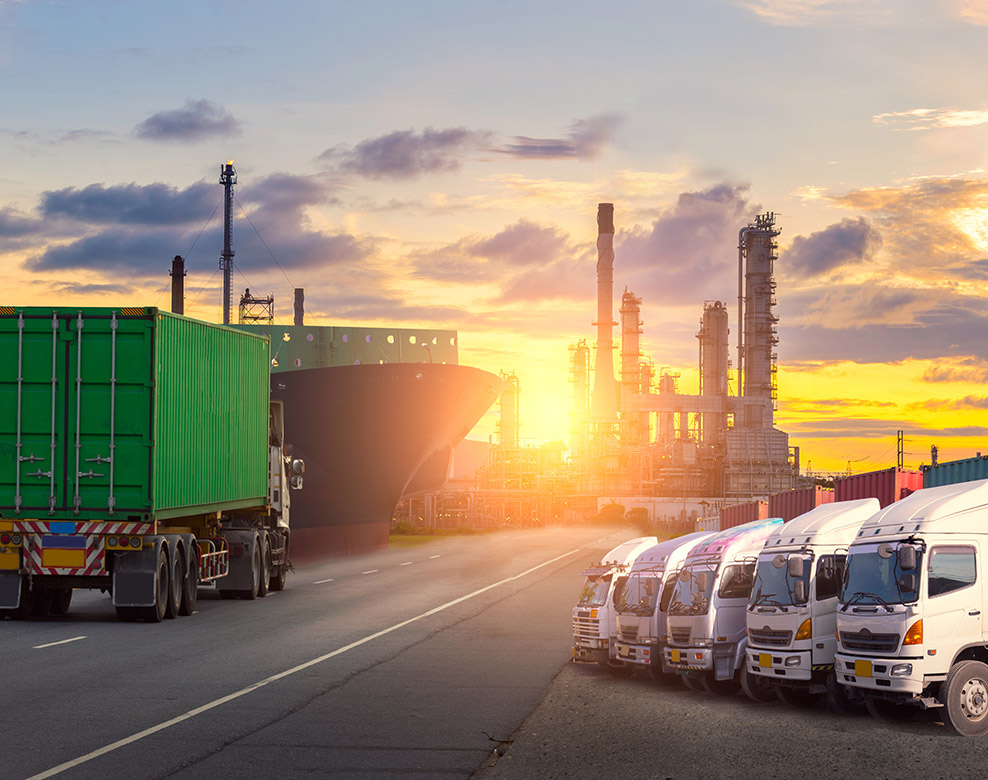











Industry Knowledge: Why Continuous Nitrogen Inerting Matters More at Sea Than On Land
Transportation covers the widest mix of gas uses on this site — safety inerting, tire inflation, leak testing, anti-oxidation protection, flame cutting, and emergency oxygen. The scenarios below share a supply-continuity problem in common, but the underlying mechanism differs by scenario, and one of them (flame cutting) actually works the opposite way from the rest.
| Scenario (as stated on this page) | Gas | Mechanism |
|---|---|---|
| Tanker & LNG vessel inerting | Nitrogen | Continuous oxygen displacement in cargo holds/tanks keeps flammable vapor below its combustible threshold at all times, not just when a cylinder happens to be connected |
| Tire inflation (buses, freight, engineering vehicles) | Nitrogen | Same mechanism covered in depth on the Automotive application page — slower diffusion through rubber holds pressure more stable over time |
| Air-tightness / leak testing | Dry nitrogen | Absence of moisture avoids condensation that would otherwise skew a pressure-decay test reading |
| Anti-oxidation protection & cold-chain MAP | Nitrogen | Excludes oxygen during heat treatment/spraying and inside cold-chain containers to prevent oxidation and spoilage |
| Gas-assisted flame cutting | Oxygen | The opposite role: oxygen sustains and accelerates the combustion reaction that cuts through the metal, rather than being excluded from it |
| Emergency oxygen & marine sewage aeration | Oxygen | Life support at altitude/in enclosed spaces, and supporting aerobic bacteria in onboard wastewater treatment |
Scenarios above are as published on this page; the mechanism column is added here.
Why Continuous Supply Is Non-Negotiable for Tanker and LNG Inerting
On land, an intermittent cylinder supply for nitrogen blanketing is inconvenient but recoverable — a delayed delivery is a scheduling problem. On an oil tanker, hazardous chemical carrier, or LNG vessel mid-voyage, there is no delivery to schedule: the vessel cannot dock to swap cylinders while cargo tanks need continuous inerting. This is the specific reason on-site nitrogen generation matters more here than the general "24/7 supply" benefit that applies across most industries on this site — for a vessel at sea, on-site generation isn't just cheaper than cylinder resupply, it's the only realistic way to maintain continuous inerting at all between ports.
Why Flame Cutting Uses Oxygen Instead of Nitrogen
Every other scenario on this page uses nitrogen (or dry, inert conditions) to keep oxygen away from something — a cargo tank, a tire, a weld joint, a chilled container. Gas-assisted flame cutting for vehicle, vessel, and rail structural parts does the opposite: an oxygen jet is what sustains and accelerates the rapid oxidation (combustion) of the metal being cut, which is the mechanism that actually separates the material. It's worth knowing this distinction when specifying equipment for a facility that does both — an oxygen generator for cutting and an nitrogen generator for inerting are solving opposite chemistry problems, not variations of the same one.
A Note on Argon
This page's summary mentions argon alongside nitrogen, oxygen, and compressed air. As with other industrial applications on this site, it's worth being precise: argon's adsorption behavior is close enough to oxygen's that PSA, VPSA, and membrane systems cannot separate it from air — argon is produced almost exclusively by cryogenic distillation. Where a transportation application specifically needs argon rather than nitrogen or oxygen, it is typically sourced separately from the on-site nitrogen and oxygen equipment described here.
Frequently Asked Questions
Is nitrogen inerting for oil tankers and LNG vessels continuous or only during loading/unloading?
Continuous — the page specifically calls for round-the-clock inerting for explosion protection, not just protection during cargo transfer, since flammable vapor risk exists throughout a voyage.
Can one facility (a port or shipyard, for example) run nitrogen inerting, leak testing, and oxygen cutting from the same equipment?
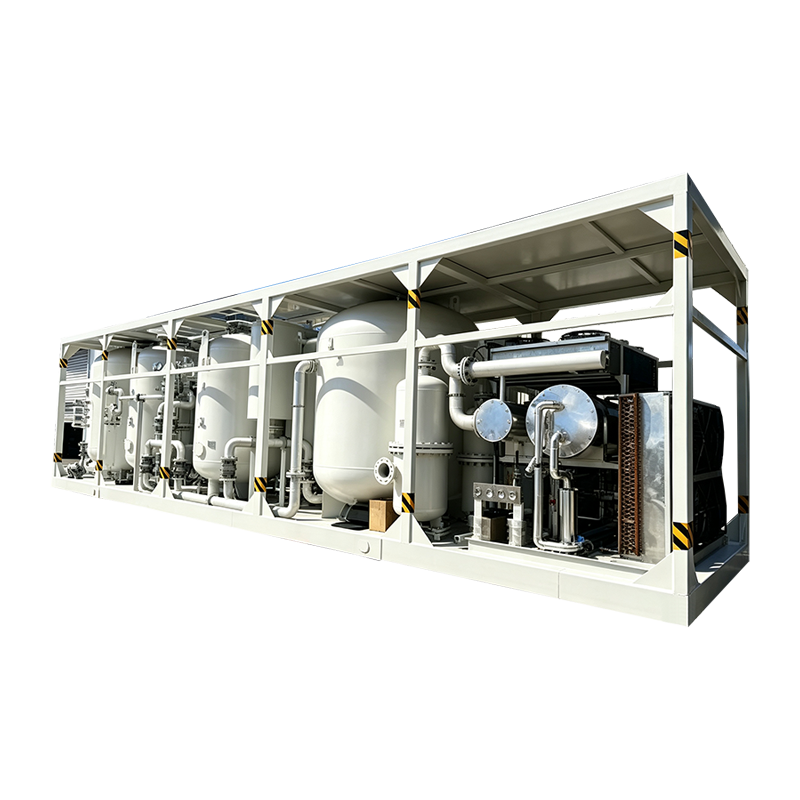
Nitrogen-based uses (inerting, leak testing, anti-oxidation protection) can typically share one nitrogen generator sized for combined demand, but oxygen for flame cutting is a separate system, since it's a different gas serving an unrelated process.
Does Zhejiang Baiao Gas Equipment Co., Ltd. supply argon generation equipment for this industry?
No — argon requires cryogenic separation, which is outside the PSA, VPSA, and membrane technologies the company manufactures. Nitrogen and oxygen generation, as described above, covers the other gas needs on this page.
