
 en
en русский
 Español
 عربى
عربى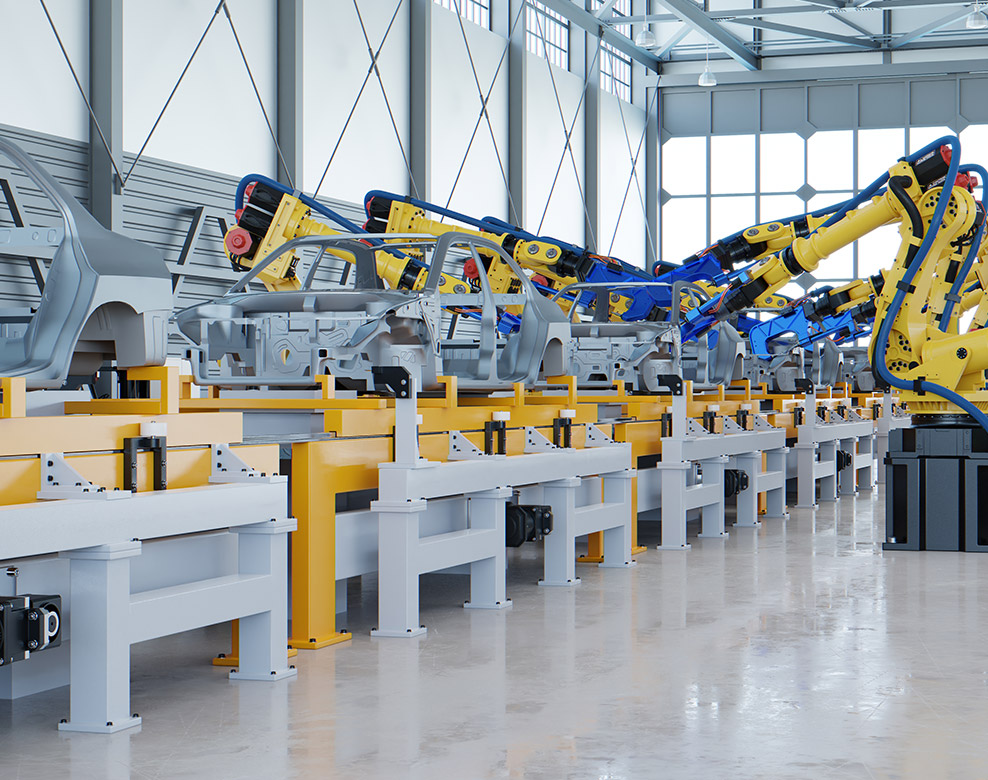









Industry Knowledge: Why Nitrogen Protection Runs Through Five Different Automotive Processes
Welding, battery dry rooms, painting, tire inflation, and heat treatment look like five unrelated problems, but the pain points above share one root cause: oxygen reacting with a material at a vulnerable moment — molten weld metal, exposed lithium and electrolyte, wet paint, tire rubber, or hot steel. Displacing that oxygen with nitrogen is the same underlying fix applied at five different points in vehicle manufacturing.
| Process | What oxygen exposure causes | Published result with on-site nitrogen |
|---|---|---|
| Welding & thermal processing | High-temperature oxidation, slag inclusion, porosity, weakened joints | Retained structural strength, higher yield rate |
| Battery dry rooms | Cell oxidation, bulging, explosion risk from moisture/oxygen exposure | Maintains <1% humidity and <2% oxygen |
| Painting & drying | Craters, pinholes, orange-peel texture, discoloration | Reduced rework and material cost |
| Tire inflation | Faster pressure loss, blowout risk, higher rolling resistance | +20–30% tire service life, −3–5% fuel consumption |
| Heat treatment | Decarburization, uneven hardness, part deformation | >99% product yield |
Figures above reflect Zhejiang Baiao Gas Equipment Co., Ltd.'s own published results for this application; actual results vary by process and part.
Why Lithium Battery Dry Rooms Need Both Low Humidity and Low Oxygen Together
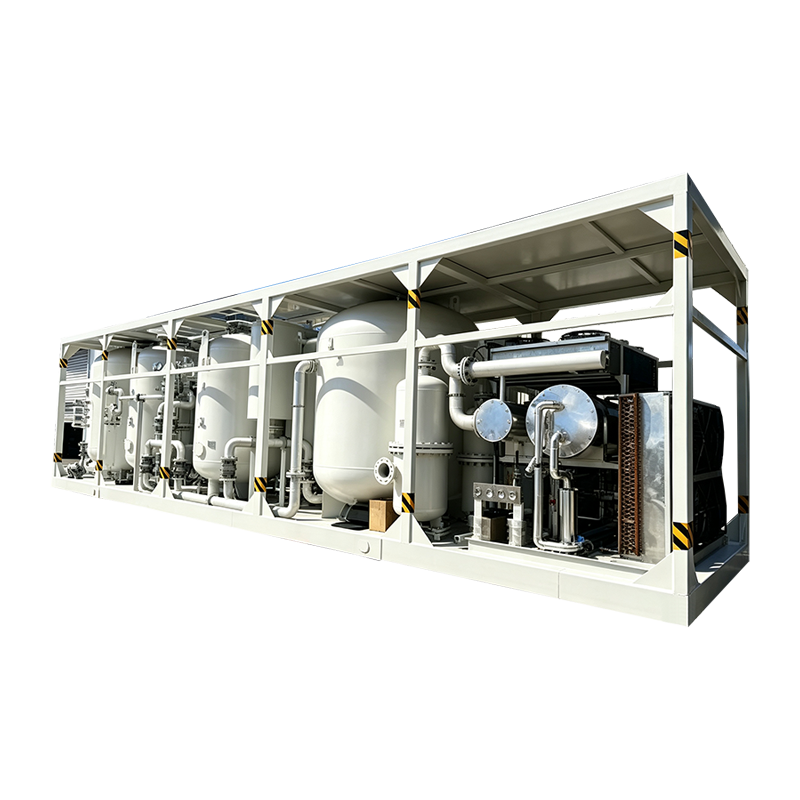
Lithium metal and the electrolyte compounds used in battery cells react readily with both water vapor and oxygen, which is why a dry room specification sets limits on both at once rather than treating them as separate problems — humidity below 1% alone would not stop oxidation, and low oxygen alone would not stop moisture-driven electrolyte degradation. In practice this means pairing dehumidification with nitrogen atmosphere control: gas purification equipment (dryers) brings incoming air down to the required dew point, while an on-site nitrogen generator holds the room's oxygen level down, rather than either system working alone.
Why Nitrogen-Filled Tires Hold Pressure Longer Than Compressed Air
Ordinary compressed air is roughly 78% nitrogen already — the difference nitrogen inflation makes comes from removing the remaining oxygen and moisture. Oxygen molecules are smaller than nitrogen molecules and diffuse through tire rubber measurably faster, so an oxygen-containing fill loses pressure more quickly over time than a nitrogen fill does. Since underinflated tires increase rolling resistance and generate more heat, holding pressure more stable over time is what drives the published 20–30% service-life extension and 3–5% fuel consumption reduction, rather than nitrogen itself having some special property beyond simply not being oxygen.
A Note on Argon
Argon shielding gas is genuinely used elsewhere in automotive welding, particularly for aluminum bodies. It's worth being precise, though, about what on-site PSA, VPSA, and membrane equipment can and cannot produce: argon has adsorption behavior very close to oxygen's, which is why argon is separated almost exclusively by cryogenic distillation rather than by pressure-swing or membrane technology. Where a process specifically requires argon rather than nitrogen, that gas is typically sourced separately (cylinder or bulk supply) rather than generated on-site alongside nitrogen and oxygen by the same non-cryogenic equipment.
Frequently Asked Questions
Does on-site nitrogen generation really cost less than buying cylinders or liquid nitrogen?
For continuous automotive-scale consumption, yes — Zhejiang Baiao Gas Equipment Co., Ltd. publishes a 30–60% cost reduction compared with purchased cylinder gas and liquid nitrogen for this application, largely because on-site generation removes delivery logistics and the price volatility of purchased gas.
Can one central nitrogen system serve welding, tire inflation, and heat treatment in the same plant?
Yes — a single air separation unit sized for the plant's combined demand can typically feed multiple stations through a distribution manifold, rather than requiring a separate generator per process. Sizing is based on the sum of flow rate and the highest purity requirement among the connected stations, since every station downstream receives gas at that shared purity.
Does Zhejiang Baiao Gas Equipment Co., Ltd. supply argon generation equipment for aluminum body welding?
No — as noted above, argon separation requires cryogenic distillation, which is outside the PSA, VPSA, and membrane technologies the company manufactures. For nitrogen and oxygen supply across the other four applications on this page, on-site generation applies; argon for aluminum welding is typically sourced separately.
