 en
en русский
 Español
 عربى
عربى
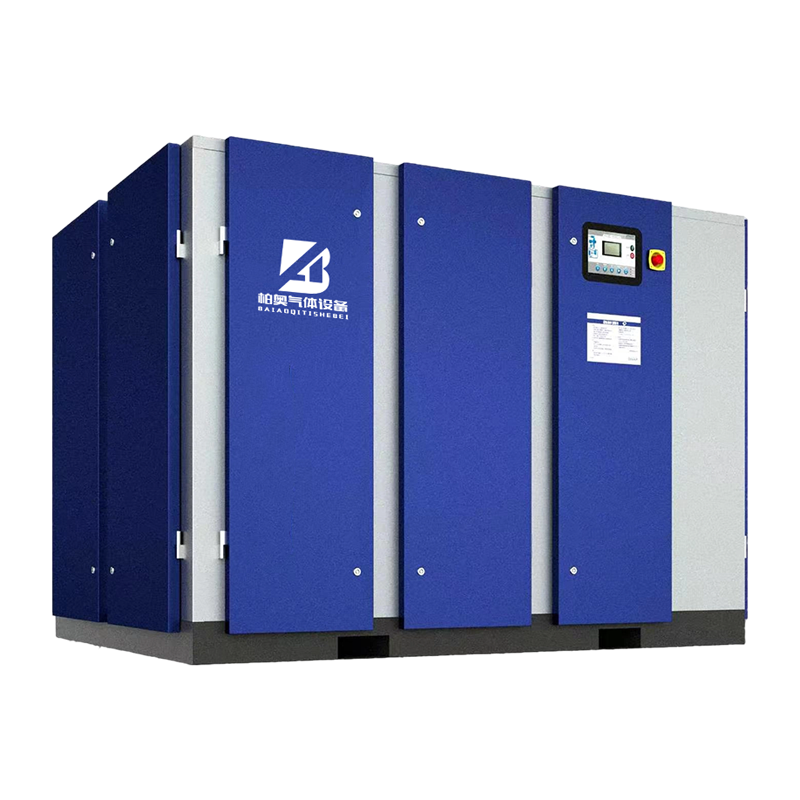
Dry Oil-Free Rotary Screw Air Compressor for Efficient Industrial Air Production
Reliable compressed air is essential to modern manufacturing. It powers pneumatic tools, supports automated production lines, operates control systems, and provides process air for applications where cleanliness and continuity are critical. In these environments, compressor selection directly influences product quality, energy consumption, maintenance requirements, and operating costs. The Dry Oil-Free Rotary Screw Air Compressor with PM VSD/FSD technology is designed to address these demands by combining oil-free air delivery, variable-speed operation, fixed-speed operating flexibility, and a broad range of industrial capacities.
This compressor belongs to the oil-free rotary screw air compressor category and is suitable for facilities that require clean, stable, and dependable compressed air. Its working pressure range is 7 to 10 bar, equivalent to 101.5 to 145.0 psig. Air capacity ranges from 3.6 to 86 cubic meters per minute, or approximately 127.1 to 3,037.1 cubic feet per minute. Available motor power ranges from 22 to 560 kW, corresponding to approximately 29.9 to 761.4 horsepower.
With an imported oil-free air end, the compressor is developed for applications in which oil contamination must be minimized or avoided. The product is also certified to ISO 8573-1 Class 0 through dry testing for oil-free rotary screw air compressors. This qualification supports its suitability for demanding industrial processes, although each application should still be evaluated according to its specific air-quality, installation, and validation requirements.
The equipment is manufactured by Zhejiang Baiao Gas Equipment Co., Ltd., a gas equipment manufacturer based in Fuyang District, Hangzhou, Zhejiang Province, China. The company integrates research and development, equipment design, manufacturing, installation, and after-sales service. Its broader product portfolio includes gas separation and purification systems, PSA nitrogen generators, PSA oxygen generators, membrane gas generators, nitrogen purification units, and ammonia decomposition hydrogen purification equipment.
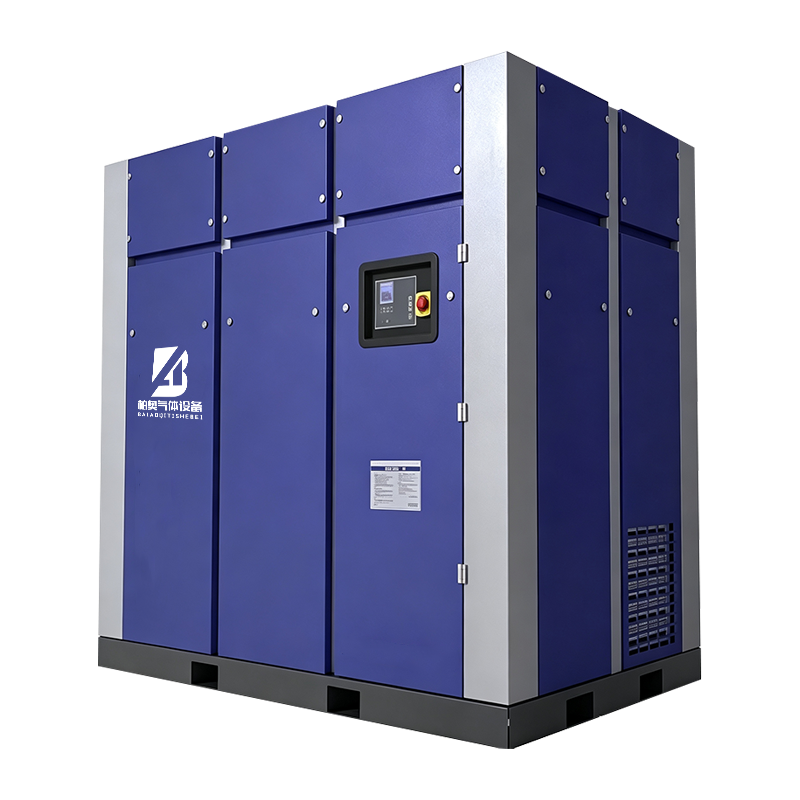
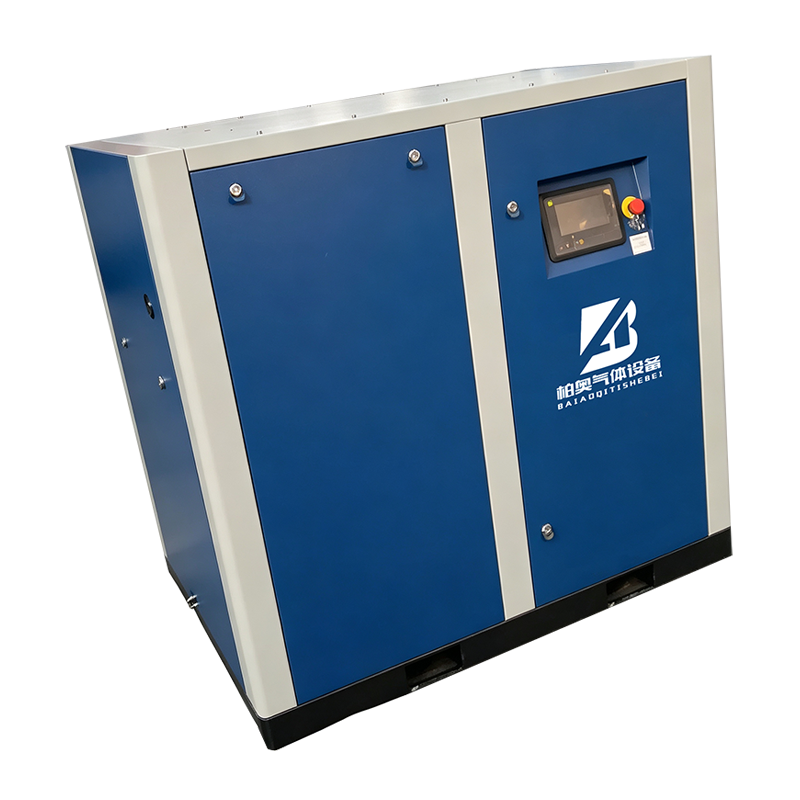
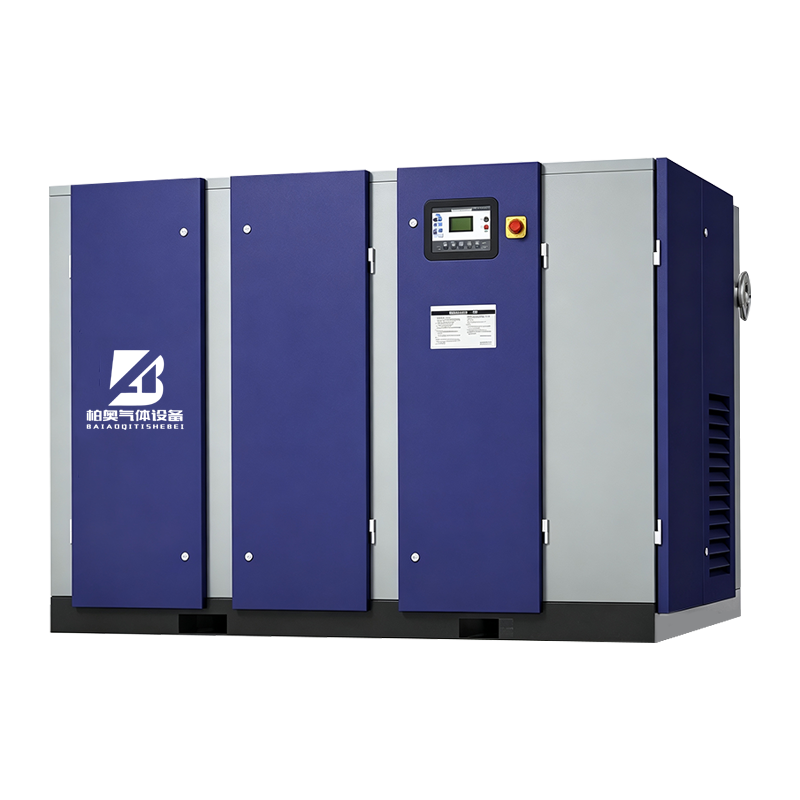
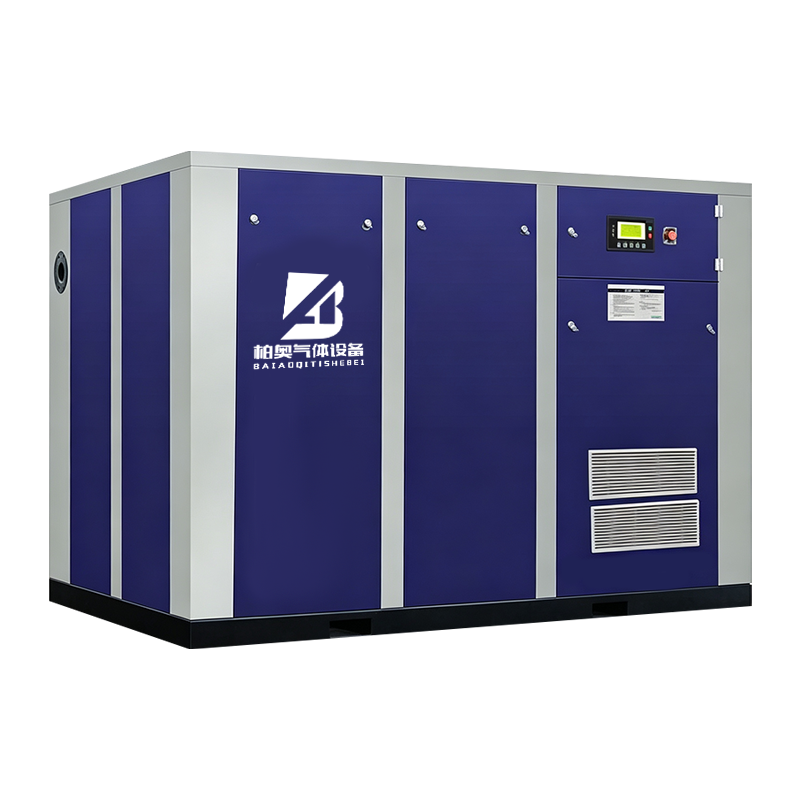
Dry Oil-Free Rotary Screw Air Compressor (PM VSD/FSD)
Content
- 1 Why Oil-Free Compressed Air Matters
- 2 Core Product Specifications
- 3 Imported Oil-Free Air End
- 4 PM VSD and FSD Operating Concepts
- 5 Energy Efficiency and Operating Cost Advantages
- 6 Environmental and Workplace Benefits
- 7 Applications Across Industrial Sectors
- 8 Advantages Compared with Conventional Oil-Injected Compressors
- 9 Manufacturing Capabilities and Quality Management
- 10 Connection with Gas Separation and Purification Systems
- 11 Installation Recommendations
- 12 Maintenance and Service Considerations
- 13 How to Select the Correct Model
- 14 Total Cost of Ownership
- 15 Manufacturer Strengths and Customer Support
- 16 Q&A: Dry Oil-Free Rotary Screw Air Compressor
- 16.1 What is a dry oil-free rotary screw air compressor?
- 16.2 What pressure and capacity range does this product cover?
- 16.3 What does PM VSD mean?
- 16.4 When is FSD operation appropriate?
- 16.5 Is oil-free air required for every factory?
- 16.6 Does ISO 8573-1 Class 0 mean that no filtration is needed?
- 16.7 Can the compressor be used with a nitrogen generator?
- 16.8 How can energy savings be evaluated?
- 16.9 What information should be provided when requesting a quotation?
- 16.10 What installation conditions are important?
- 16.11 How often should the compressor be serviced?
- 16.12 Can the manufacturer provide a complete industrial gas solution?
- 17 Conclusion
- 18 References
- 19 Product: Dry Oil-Free Rotary Screw Air Compressor (PM VSD/FSD)
Why Oil-Free Compressed Air Matters
Compressed air is often described as the fourth utility in industrial production. Like electricity, water, and fuel, it affects every stage of a factory’s operation. However, compressed air quality is not uniform. Air produced by a lubricated compressor may contain oil aerosols, oil vapor, and liquid oil carryover. Even when downstream filters are installed, contamination control can require additional equipment, replacement elements, monitoring, and maintenance.
Oil contamination can be particularly undesirable in food processing, pharmaceutical production, electronics manufacturing, chemical processing, textile production, painting, surface treatment, and certain assembly operations. A small amount of oil may affect product appearance, damage sensitive components, interfere with coatings, contaminate process materials, or create difficulties during quality inspection.
A dry oil-free rotary screw compressor is designed to produce compressed air without injecting lubricating oil into the compression chamber. Instead of relying on oil to seal and cool the compression process, the air end uses a specialized oil-free compression design and separate systems for lubrication and cooling of other components where required. This approach helps prevent oil from entering the compressed-air stream at the compression source.
Oil-free design does not mean that every component in a complete compressed-air installation is automatically contamination-free. Air intake conditions, piping materials, receiver tanks, dryers, filters, valves, and maintenance practices can all influence final air quality. Nevertheless, starting with an oil-free compressor significantly reduces the risk of oil contamination and provides a stronger foundation for clean-air production.
For industries that operate under strict hygiene or quality standards, selecting an oil-free compressor can also simplify the overall air-treatment strategy. It may reduce dependence on oil-removal filters and lower the risk associated with filter saturation or incorrect maintenance. The actual air-treatment configuration should be selected based on the required dew point, particles, microbiological control, pressure stability, and applicable industry standards.
Core Product Specifications
The compressor is available in a wide range of configurations to match different plant sizes and operating requirements. The range begins at 22 kW and extends to 560 kW, enabling the equipment to serve both medium-sized production lines and large industrial facilities. The corresponding flow range of 3.6 to 86 cubic meters per minute provides flexibility for applications with significantly different air-demand profiles.
| Specification | Available Range | Imperial Equivalent |
|---|---|---|
| Product type | Dry oil-free rotary screw air compressor | Oil-free rotary screw compressor |
| Operating pressure | 7 to 10 bar | 101.5 to 145.0 psig |
| Air capacity, FAD | 3.6 to 86 m³/min | 127.1 to 3,037.1 cfm |
| Motor power | 22 to 560 kW | 29.9 to 761.4 hp |
| Air end | Imported oil-free air end | Designed for oil-free compressed-air delivery |
| Control options | PM VSD/FSD | Permanent-magnet variable-speed or fixed-speed operation |
| Air-quality qualification | ISO 8573-1 Class 0 certification through dry testing | Application-specific validation remains recommended |
FAD means free air delivery and is used to express the volume of compressed air delivered under specified test conditions. When comparing compressor models, buyers should confirm the reference conditions, discharge pressure, cooling method, altitude, ambient temperature, and measurement standard. A higher nominal motor rating does not automatically indicate better performance if the compressor cannot deliver stable flow efficiently at the required pressure.
The pressure range of 7 to 10 bar covers many common industrial applications, including pneumatic conveying, assembly tools, instrumentation, automated machinery, textile equipment, packaging lines, and general plant air. Some applications may require higher pressure, lower pressure, or multiple pressure zones. In such cases, system design should assess whether a dedicated compressor, pressure-reduction station, booster, or separate compressed-air network is more appropriate.
Imported Oil-Free Air End
The air end is the heart of a rotary screw compressor. It determines how air is compressed, how efficiently the machine operates, and how reliably it performs over time. This product uses an imported oil-free air end selected for oil-free rotary screw compression. Using a specialized air end allows the compressor to focus on clean-air production without introducing lubricating oil directly into the compression chamber.
The air end’s design is important because compression generates heat, pressure, and mechanical loads. Oil-injected screw compressors normally use oil for sealing, lubrication, and cooling inside the air end. An oil-free air end requires a different engineering approach. Clearances, rotor profiles, temperature management, materials, coatings, sealing arrangements, and stage configuration all influence operating stability.
In an oil-free rotary screw compressor, the compressed-air path and the lubrication path are separated. This separation helps protect the delivered air from oil carryover. The design can also reduce the need for oil-removal treatment directly after the compressor, although aftercoolers, dryers, particulate filters, and other equipment may still be needed depending on the application.
An imported air end can also provide access to established component engineering and manufacturing experience. However, the performance of the complete compressor depends on more than the air end alone. Motor selection, inverter control, cooling system design, electrical protection, piping, control software, assembly accuracy, and commissioning quality must all work together.
For this reason, the value of the product lies in the integration of the imported air end with a complete compressor package. The manufacturer’s role includes selecting compatible components, configuring the machine for the intended pressure and flow, performing assembly and testing, and providing technical support for installation and operation.
PM VSD and FSD Operating Concepts
Permanent-Magnet Variable-Speed Drive
PM VSD refers to permanent-magnet motor and variable-speed drive technology. A permanent-magnet motor can provide efficient power conversion across a broad operating range, while the variable-speed drive adjusts motor speed according to the compressed-air demand. Instead of operating continuously at one fixed speed, the compressor can increase or reduce output as system demand changes.
Many industrial facilities experience fluctuating air demand. Production shifts may start and stop, multiple machines may operate at different times, or demand may vary between day and night. In a fixed-speed compressor, the motor may continue running even when the system requires less air. This can create unloading losses and unnecessary energy consumption.
A variable-speed compressor can reduce these losses by matching production more closely to actual demand. When demand decreases, the motor slows down. When demand increases, the motor speeds up within the permitted operating range. The result can be improved part-load efficiency and reduced pressure variation, provided that the compressor is correctly sized and controlled.
Energy savings are influenced by the operating profile, pressure set point, leakage rate, ambient conditions, maintenance condition, and system controls. Therefore, no single percentage of savings applies to every facility. A proper evaluation should use measured demand data and compare the existing compressor’s loaded, unloaded, and standby operating periods with the proposed system.
Fixed-Speed Operation
FSD refers to fixed-speed drive operation. A fixed-speed compressor operates at a defined motor speed and is often advantageous where compressed-air demand is stable and continuous. When a plant operates close to a consistent base load, a fixed-speed machine may provide straightforward control and dependable output.
Offering PM VSD/FSD configurations gives users greater flexibility. A facility with changing demand can select variable-speed operation, while a facility with a stable demand profile may prefer fixed-speed operation. In larger installations, both types can be used together. Fixed-speed compressors can cover the base load, while a variable-speed compressor trims the changing portion of demand.
The correct selection should be based on the demand curve rather than the maximum possible flow alone. Oversizing a fixed-speed compressor may cause frequent loading and unloading. Oversizing a variable-speed machine can also reduce the opportunity for it to operate near its most efficient range. A technical assessment should consider minimum, average, peak, and future air requirements.
Energy Efficiency and Operating Cost Advantages
Electricity commonly represents the largest portion of a compressor’s lifecycle cost. The initial purchase price is important, but energy consumption over many years may have a greater financial impact. This is why compressor efficiency should be assessed at the system level, including motor efficiency, air-end efficiency, control strategy, pressure management, cooling, leaks, and maintenance.
The PM VSD configuration supports energy-efficient operation by adjusting output to match demand. It can be particularly useful when the plant has variable production schedules or when pneumatic equipment does not consume the same amount of air throughout the day. By reducing unnecessary full-speed operation, the compressor may lower electrical consumption during partial-load periods.
Oil-free operation also provides economic benefits beyond the motor’s power consumption. Facilities may reduce the cost and complexity associated with oil separation, oil disposal, oil filter replacement, and contamination-related cleaning. These benefits depend on the complete installation and the industry’s specific air-quality requirements.
Pressure optimization is another important consideration. Every increase in discharge pressure can require additional compressor energy. A compressor selected for 10 bar operation should not automatically be operated at 10 bar if the application only requires 7 bar. The system should be designed to deliver the required pressure at the point of use while accounting for pressure drops through dryers, filters, piping, valves, and regulators.
Compressed-air leaks can waste a significant amount of energy. Even an efficient oil-free compressor will consume unnecessary power if the distribution network has leaking hoses, fittings, valves, quick couplings, or unused branches. A complete energy-efficiency program should therefore combine efficient compressor technology with leak detection, pressure management, proper pipe sizing, and regular maintenance.
Environmental and Workplace Benefits
The compressor’s oil-free design supports cleaner industrial operations. By avoiding oil injection into the compression chamber, the system reduces the risk of oil entering the compressed-air stream. This is valuable in facilities where clean air supports product quality, process stability, and workplace housekeeping.
Oil-free compression can also reduce the handling of compressor oil and oil-contaminated condensate. In oil-injected systems, condensate may require special treatment before disposal because it can contain oil. An oil-free system may simplify condensate management, although the aftercooler, atmospheric moisture, pipe corrosion products, and other contaminants must still be considered.
Environmental performance also depends on electrical efficiency. Lower energy consumption can reduce indirect carbon emissions associated with electricity generation. The extent of the environmental benefit depends on the local power mix, operating hours, load profile, and maintenance condition.
Noise and heat management should be addressed during installation. Industrial compressors generate sound and reject heat even when they are oil-free. A well-designed compressor room should provide adequate ventilation, service access, drainage, electrical protection, and safe clearance around the equipment. If the compressor supplies sensitive production areas, additional acoustic or thermal measures may be appropriate.
Applications Across Industrial Sectors
Food and Beverage Processing
Food and beverage plants often use compressed air for packaging, bottling, pneumatic conveying, filling, cleaning, instrumentation, and product-contact applications. Oil-free air can help reduce the risk of contamination during processes where air may contact ingredients, packaging, or finished products. The final air-treatment design should be based on the required hygiene level and applicable food-production standards.
Pharmaceutical and Medical Production
Pharmaceutical production requires careful control of contamination. Compressed air may be used for tablet processing, packaging, instrumentation, fermentation support, and clean manufacturing environments. An oil-free compressor can provide a suitable foundation for these applications, but the complete system may also require sterile filtration, validated dryers, redundant equipment, monitoring, and documented cleaning procedures.
Electronics and SMT Manufacturing
Surface-mount technology and electronics manufacturing depend on stable, clean compressed air for pick-and-place machines, soldering equipment, pneumatic actuators, cleaning processes, and factory automation. Oil contamination may affect circuit boards, optical surfaces, coatings, or precision components. Oil-free compression helps support a controlled production environment where air purity and pressure stability are important.
Textile Manufacturing
Textile machinery uses compressed air for weaving, spinning, yarn handling, air jets, automatic controls, and cleaning. Oil-free air can help reduce the possibility of staining materials or affecting fabric quality. The required flow depends on machine quantity, operating speed, production type, and whether compressed air is used directly on textile products.
Automotive Manufacturing
Automotive factories require compressed air for assembly tools, robotic systems, painting, tire equipment, metal forming, cleaning, and control systems. Oil-free air is especially relevant to painting and surface-finishing operations, where contamination can cause defects such as craters, fisheyes, adhesion problems, or uneven coating appearance.
Heat Treatment and Metal Processing
Heat-treatment facilities use compressed air for pneumatic controls, burner systems, material handling, instrumentation, and automated production equipment. Stable pressure is important because fluctuations can affect machine cycles and control performance. The compressor can be integrated with dryers and filters selected for the ambient conditions and process requirements.
Petrochemical and Chemical Processing
Petrochemical and chemical plants use compressed air for instrumentation, valve actuation, process control, pneumatic conveying, and general plant services. Reliability, redundancy, safe electrical design, and maintenance access are essential. Depending on the location and process, the compressor installation may need to meet additional requirements related to hazardous areas, temperature, ventilation, and emergency shutdown systems.
Advantages Compared with Conventional Oil-Injected Compressors
The primary advantage over a conventional oil-injected screw compressor is the reduction of oil contamination risk at the compression source. Oil-injected machines are highly capable and widely used, but they require oil separation, oil filtration, oil changes, oil monitoring, and management of oil-bearing condensate. In applications where air purity is critical, these additional controls can increase operating complexity.
A dry oil-free compressor can also support a simpler contamination-control strategy. The plant may still require high-efficiency particulate filters, activated-carbon filters, sterile filters, or dryers, but the oil-free air end reduces the burden on oil-removal equipment. This may improve reliability if the system is properly maintained and validated.
Another advantage is process confidence. When compressed air is used in direct or indirect contact with products, minimizing oil carryover can reduce the risk of production interruptions, rejected batches, surface defects, and cleaning problems. The value of this protection may be much higher than the compressor’s purchase-price difference when contamination could damage an entire production run.
The PM VSD configuration provides another point of differentiation. Some conventional compressor installations operate at fixed speed regardless of demand. The variable-speed option can respond to changing requirements and may improve part-load efficiency. The benefit is strongest when demand fluctuates and the system is properly controlled.
Compared with some oil-free alternatives, a rotary screw design may offer a practical balance of continuous operation, stable flow, industrial durability, and broad capacity. The most appropriate technology still depends on the application. Reciprocating, scroll, centrifugal, and other compressor types may be suitable for specific pressure, flow, noise, or duty-cycle requirements. A technical comparison should evaluate total lifecycle performance rather than a single specification.
Manufacturing Capabilities and Quality Management
The manufacturer combines equipment research and development, design, production, installation, and after-sales service. This integrated structure is valuable because compressor performance depends on coordination between engineering design, component selection, assembly, testing, field installation, and service support.
The company operates a standardized workshop of approximately 3,000 square meters, an office area of approximately 500 square meters, and a warehouse of approximately 500 square meters. These facilities support equipment assembly, component storage, engineering coordination, order preparation, and service activities.
A standardized workshop can contribute to more consistent production by organizing workstations, defining assembly procedures, controlling component movement, and separating different production stages. For large industrial equipment, controlled workflow is important because incorrect wiring, poor sealing, improper alignment, or incomplete inspection may affect performance after delivery.
Manufacturing quality begins with design. Before production, the intended pressure, capacity, motor power, control method, installation environment, cooling conditions, and service requirements should be reviewed. Engineering drawings, electrical diagrams, piping arrangements, bills of materials, and control logic should be checked before assembly begins.
Component inspection is another important stage. Motors, drives, air ends, valves, sensors, coolers, electrical cabinets, filters, and structural components should be checked against the project requirements. Correct identification and traceability can reduce the risk of installing an incorrect component or an incompatible replacement part.
During mechanical assembly, technicians should pay close attention to alignment, fastening torque, piping cleanliness, sealing surfaces, vibration isolation, and access for future maintenance. During electrical assembly, wiring quality, grounding, terminal tightness, overload protection, emergency stop circuits, and control-panel labeling are essential.
Testing should verify that the finished package responds correctly before shipment. Typical checks may include insulation testing, control-system verification, motor rotation checks, sensor signal confirmation, pressure-control testing, leakage inspection, vibration observation, and operational testing under appropriate conditions. The exact factory test procedure depends on the configuration and contractual requirements.
For customized projects, the manufacturer can coordinate the compressor with gas-generation and purification equipment. This is particularly relevant for customers who require a complete industrial gas solution rather than a standalone compressor. A coordinated package can simplify engineering communication and improve compatibility between the compressed-air source, purification equipment, storage tanks, dryers, filters, and control systems.
Connection with Gas Separation and Purification Systems
Compressed air is frequently used as the feed gas or utility medium in gas separation and purification systems. PSA nitrogen generators, PSA oxygen generators, membrane nitrogen and oxygen systems, and certain purification units require a stable air supply. The compressor must deliver adequate flow and pressure while maintaining the air quality required by the downstream equipment.
In a nitrogen-generation system, compressed air is passed through pretreatment equipment and then separated into nitrogen-rich and oxygen-rich streams. Stable feed pressure helps maintain adsorption or membrane performance. If the compressor fluctuates excessively, the generator may experience unstable production, lower purity, or reduced efficiency.
Oil-free compression is especially attractive when compressed air feeds a gas-generation process that has strict contamination requirements. Oil contamination can affect adsorbents, membrane surfaces, valves, filters, and downstream product quality. The use of an oil-free compressor helps protect the purification system, although proper pretreatment and filtration are still required.
The compressor can also support instrument air and control air for gas plants. Reliable instrument air is essential for automated valves, pneumatic actuators, analyzers, and safety systems. In these applications, pressure stability, dryness, filtration, and redundancy should be considered together.
A complete system may include the oil-free compressor, air receiver, aftercooler, water separator, refrigerated or desiccant dryer, particulate filters, control valves, nitrogen or oxygen generator, product storage tank, and final purification stage. Equipment sizing should account for peak demand, regeneration losses, purge requirements, future expansion, and standby capacity.
Installation Recommendations
The compressor should be installed in a clean, dry, and well-ventilated room. The room should protect the equipment from excessive dust, corrosive gases, high humidity, direct water spray, and extreme temperatures. Intake air quality is important because contaminants drawn into the compressor can pass through the air system or accumulate in coolers and filters.
A level foundation helps reduce vibration and supports reliable alignment. Adequate clearance should be provided around the compressor for inspection, filter replacement, cooler cleaning, electrical access, and removal of major components. The floor should be capable of supporting the equipment’s operating weight and any connected accessories.
Ventilation design must account for the heat released by the compressor, motor, drive, and ancillary equipment. If heat is not removed effectively, the room temperature may rise and cause high-temperature alarms, reduced performance, or premature component aging. In cold environments, ventilation should also be managed to prevent excessive cooling during startup.
The compressed-air piping should be sized to minimize pressure drop. Sharp bends, undersized lines, excessive fittings, and poorly designed headers can restrict flow and create unstable pressure at the point of use. Ring-main distribution can improve pressure balance in larger facilities, while branch lines should be arranged to prevent condensate from entering sensitive equipment.
An air receiver can help stabilize pressure, manage short-term demand peaks, reduce compressor cycling, and support control-system performance. Receiver volume should be selected according to compressor capacity, demand variation, allowable pressure fluctuation, and control strategy. The receiver should include a safety valve, drain arrangement, pressure indication, and inspection provisions required by local regulations.
The electrical supply must match the motor and drive requirements. Voltage, frequency, phase arrangement, short-circuit protection, cable size, grounding, and control-panel conditions should be confirmed before installation. Electrical work should be performed by qualified personnel in accordance with applicable standards and local regulations.
Maintenance and Service Considerations
Preventive maintenance is essential for maintaining compressor efficiency and reliability. Maintenance intervals should follow the operating manual, installation conditions, running hours, and service history. A clean installation with stable ambient conditions may require a different schedule from a dusty or high-temperature facility.
Routine inspections may include checking operating pressure, discharge temperature, motor current, vibration, abnormal noise, cooler condition, air leaks, drain operation, filter condition, and control alarms. Trends are often more useful than individual readings. A gradual increase in temperature or power consumption may indicate fouling, airflow restriction, bearing wear, sensor drift, or another developing issue.
Coolers should be kept clean so that heat can be transferred effectively. Dust and dirt on cooling surfaces reduce thermal performance and may cause high-temperature operation. Cleaning methods should be selected carefully to avoid damaging fins, electrical components, seals, or sensors.
Filters and dryers also require regular attention. A blocked filter can increase pressure drop and energy consumption. A saturated dryer or malfunctioning drain can allow moisture into the distribution system. Moisture can damage pneumatic equipment, corrode piping, and affect downstream gas-generation equipment.
The control system should be inspected for alarm history, sensor accuracy, communication faults, and correct pressure settings. For PM VSD systems, drive parameters should not be changed without authorization. Incorrect settings can cause unstable operation, overload, excessive cycling, or operation outside the air end’s intended range.
Service planning should include genuine or approved replacement parts, trained technicians, clear maintenance records, and an emergency response procedure. The manufacturer’s after-sales service capability is an important part of the overall purchase decision, especially for industrial plants that operate continuously or have limited tolerance for downtime.
How to Select the Correct Model
The first step in selection is to measure the actual compressed-air demand. The design should identify average demand, minimum demand, peak demand, shift patterns, seasonal variation, and planned expansion. Estimating demand only from the connected equipment nameplate can result in oversizing because many pneumatic devices do not operate continuously.
The required pressure should be determined at the most demanding point of use. The compressor discharge pressure must account for pressure loss in the treatment equipment and distribution network. However, excessive pressure margins should be avoided because they increase energy consumption.
Air quality requirements should be defined before choosing the compressor configuration. The plant should identify whether air contacts the product, whether oil vapor is acceptable, what particle level is required, what dew point is needed, and whether sterile or microbiological control is necessary. ISO 8573-1 classification should be considered together with the process standard and customer requirements.
The load profile determines whether PM VSD or FSD operation is more appropriate. A facility with frequent demand variation may benefit from variable-speed control. A facility with stable, continuous demand may find fixed-speed operation suitable. Larger facilities may combine both operating types to cover base and trim loads.
Redundancy should be evaluated for critical applications. A single large compressor may provide the lowest initial equipment count, but multiple compressors can offer better flexibility and continued operation during maintenance. A common arrangement is to use several machines with lead-lag sequencing, allowing operating hours to be balanced and standby capacity to be maintained.
Future growth should be considered without automatically adding excessive capacity today. Modular expansion may be more efficient than installing a very large compressor that operates far below its optimum range for many years. The manufacturer can help evaluate different combinations of capacity, pressure, control mode, receiver volume, and gas-treatment equipment.
Total Cost of Ownership
Total cost of ownership includes purchase price, installation, energy, maintenance, consumables, downtime, air treatment, spare parts, and eventual replacement. An oil-free compressor may have a higher initial cost than a basic oil-injected machine, but the comparison should include the cost of contamination control and potential product loss.
Energy analysis should use the expected annual operating hours and load profile. A compressor that operates thousands of hours per year deserves detailed efficiency evaluation. Even a small reduction in specific energy consumption can produce meaningful savings over the machine’s service life.
Maintenance cost should include scheduled service, filters, sensors, cooling-system cleaning, drive-related service, and technician labor. The cost of unplanned downtime may be more significant than routine maintenance, especially in continuous-process industries. Reliable equipment, preventive maintenance, and spare-parts planning help control this risk.
Air quality also has a financial value. Contamination can result in rejected products, cleaning operations, customer complaints, line stoppages, and regulatory difficulties. Oil-free compressed air can reduce the probability of these events when it is integrated into a properly designed air-treatment system.
Manufacturer Strengths and Customer Support
Zhejiang Baiao Gas Equipment Co., Ltd. serves customers that require gas equipment and industrial purification systems. Its product range covers air separation, gas generation, gas purification, and related equipment. This broader technical scope allows the company to consider the compressor as part of a complete process rather than treating it as an isolated machine.
The company’s capabilities include research and development, engineering design, manufacturing, installation, and after-sales support. This combination can be valuable for customized projects that require equipment selection, process coordination, layout planning, commissioning, operator guidance, and long-term service.
Its equipment is used in petrochemical, textile, food processing, automotive manufacturing, heat treatment, and SMT electronics industries. These sectors have different requirements for pressure, air quality, operating continuity, control integration, and environmental conditions. Experience across multiple applications can support more practical equipment configuration.
The company reports a sales network covering more than 30 provinces and cities in China, with products also exported to international markets. International projects require attention to electrical standards, documentation, language, shipping protection, local installation conditions, and after-sales communication. These factors should be confirmed during technical and commercial discussions.
The company emphasizes technical improvement, strict quality control, integrity, energy efficiency, and reliable service. These principles are directly relevant to compressor purchasing because equipment performance depends not only on product specifications but also on design review, manufacturing consistency, commissioning quality, and service responsiveness.
Q&A: Dry Oil-Free Rotary Screw Air Compressor
What is a dry oil-free rotary screw air compressor?
It is a rotary screw compressor designed to compress air without injecting lubricating oil into the compression chamber. The compressor uses an oil-free air end and separates the compression-air path from lubrication systems used elsewhere in the machine. This reduces the risk of oil entering the delivered compressed air.
What pressure and capacity range does this product cover?
The available working pressure range is 7 to 10 bar, or 101.5 to 145.0 psig. Air capacity ranges from 3.6 to 86 cubic meters per minute, or 127.1 to 3,037.1 cfm. Motor power ranges from 22 to 560 kW, or approximately 29.9 to 761.4 horsepower.
What does PM VSD mean?
PM VSD means permanent-magnet motor with variable-speed drive. The motor speed changes according to compressed-air demand, allowing the compressor to reduce output during lower-demand periods and increase output when demand rises.
When is FSD operation appropriate?
FSD means fixed-speed drive. It may be suitable when the facility has a stable and continuous compressed-air demand. Fixed-speed operation can also be used as part of a multiple-compressor system that supplies the base load while a variable-speed machine manages demand fluctuations.
Is oil-free air required for every factory?
No. The need for oil-free air depends on the process, product, air-contact conditions, quality standards, and risk tolerance. Oil-free air is particularly valuable in food, pharmaceutical, electronics, painting, textile, and other applications where oil contamination could affect quality or safety.
Does ISO 8573-1 Class 0 mean that no filtration is needed?
No. The compressor’s Class 0 qualification relates to the oil-free compressor and its dry testing conditions. The complete compressed-air system may still require dryers, particulate filters, sterile filters, or other treatment equipment. Final air quality depends on the entire installation and should be validated for the specific application.
Can the compressor be used with a nitrogen generator?
Yes. Oil-free compressed air can be used as feed air for gas separation and purification systems when the pressure, flow, dryness, and cleanliness requirements are correctly matched. A complete nitrogen-generation system may include pretreatment, air storage, dryers, filters, the generator, product storage, and final purification.
How can energy savings be evaluated?
Energy savings should be estimated using measured air demand, operating hours, pressure settings, load and unload periods, leakage rates, and current electricity consumption. The proposed compressor should be compared using specific power, annual energy use, maintenance requirements, and expected operating conditions rather than motor power alone.
What information should be provided when requesting a quotation?
Useful information includes required pressure, average and peak air demand, minimum demand, operating hours, ambient temperature, altitude, installation location, power supply, air-quality requirements, duty cycle, future expansion plans, and whether the compressor will supply a gas-generation or purification system. A demand curve is especially useful for choosing between PM VSD and FSD configurations.
What installation conditions are important?
The compressor should be installed in a clean, dry, ventilated room with suitable foundation strength, service clearance, drainage, electrical protection, and appropriately sized piping. Intake air should be free from corrosive gases and excessive dust. Heat removal and condensate management should be included in the installation plan.
How often should the compressor be serviced?
Service intervals depend on running hours, ambient conditions, load profile, and the manufacturer’s operating recommendations. Regular inspections should cover pressure, temperature, vibration, electrical current, filters, coolers, drains, alarms, and air leaks. A preventive maintenance schedule should be created after reviewing the actual installation conditions.
Can the manufacturer provide a complete industrial gas solution?
The company manufactures and supports gas separation and purification equipment in addition to industrial compressors. Its product portfolio includes PSA nitrogen and oxygen generators, membrane systems, nitrogen purification units, and ammonia decomposition hydrogen purification equipment. Customers can discuss integrated solutions that combine compressed air with gas generation and purification.
Conclusion
The Dry Oil-Free Rotary Screw Air Compressor with PM VSD/FSD technology is designed for industrial users that require clean, reliable, and efficient compressed air. Its imported oil-free air end helps reduce oil contamination risk, while the available variable-speed and fixed-speed configurations allow the equipment to be matched to different demand profiles.
The product covers a broad range of operating requirements, with pressures from 7 to 10 bar, air capacities from 3.6 to 86 cubic meters per minute, and motor powers from 22 to 560 kW. This range supports applications from medium-sized production lines to large industrial plants.
Compared with conventional oil-injected systems, the compressor can offer advantages in air cleanliness, contamination control, maintenance strategy, and process protection. Compared with fixed-speed-only installations, the PM VSD option can improve part-load efficiency when demand varies. The final result depends on correct sizing, system design, pressure management, maintenance, and commissioning.
The manufacturer adds value through integrated engineering, standardized production facilities, gas-equipment experience, installation support, and after-sales service. Its broader capabilities in gas separation and purification make it suitable for customers seeking coordinated compressed-air and industrial-gas solutions.
For the best technical and economic outcome, users should evaluate the compressor according to actual air demand, required pressure, air-quality classification, operating schedule, installation conditions, redundancy needs, and lifecycle cost. When properly selected and maintained, a dry oil-free rotary screw compressor can provide a dependable foundation for efficient, clean, and modern industrial production.
References
International Organization for Standardization. ISO 8573-1, Compressed Air—Contaminants and Purity Classes.
Compressed Air and Gas Institute. Compressed Air System Design and Performance Guidance.
U.S. Department of Energy. Improving Compressed Air System Performance: A Sourcebook for Industry.
European Committee of Manufacturers of Compressors, Vacuum Pumps and Pneumatic Tools. Guidance on Industrial Compressor Efficiency and Application.
Compressed Air Challenge. Fundamentals of Compressed Air Systems.
Industrial compressor manufacturer technical documentation for dry oil-free rotary screw air compressors, permanent-magnet variable-speed drives, and fixed-speed drive systems.
Technical materials supplied for the product specifications, manufacturing facilities, application sectors, and company capabilities described in this article.
Product: Dry Oil-Free Rotary Screw Air Compressor (PM VSD/FSD)

- Tel: +86-15057127179
+86-13588382771 - Email: huang.yifan0215@gmail.com
- Address: Huanshan Township, Fuyang District, Hangzhou City, Zhejiang Province
Copyright © Zhejiang Baiao Gas Equipment Co., Ltd. All Rights Reserved.
Privacy
Gas Generator Plant Manufacturer, Industrial Purification Equipment Plant
