 en
en русский
 Español
 عربى
عربى
Gas Generator Engine Buying Guide: Core Choices for Reliable Nitrogen Generation
A food packaging plant in Hangzhou lost four hours of production every Monday for three weeks when its nitrogen purity meter dropped below 99.9%. The food packaging plant had a new PSA unit, clean filters, and a dew point that was in spec. The real fault was the gas generator engine behind the separator: a fixed-speed, oil-injected screw compressor that sagged 0.6 bar the moment a second packaging line started. The compressor was not the separator's problem. It was the separator's engine.
Undersized gas generator engines produce a repeatable pattern: purity is stable at low load and collapses the moment a second line starts.
In a compressed air gas generation system, the gas generator engine is the air compressor that converts atmospheric air into the pressurized feed stream required by a nitrogen or oxygen separator. It defines the maximum flow, the operating pressure band, and the majority of the energy bill. Zhejiang Baiao Gas Equipment Co., Ltd. builds these engines as part of a complete product line spanning air compression, gas purification, and air separation. This guide explains how to select that engine from real data on purity, peak flow, and specific power.
Content
- 1 What a Gas Generator Engine Really Does in a Gas Generation Plant
- 2 Oil-Free vs Oil-Injected Compressor Cores: Which One Matches Your Purity Target?
- 3 Sizing the Gas Generator Engine: Flow, Pressure, and Purity Limits
- 4 The Real Cost of Running a Gas Generator Engine
- 5 Downstream Protection: Why the Engine Needs Filters and Dryers
- 6 Frequently Asked Questions About Gas Generator Engines
What a Gas Generator Engine Really Does in a Gas Generation Plant
A gas generator engine is the compressor core that delivers the volume, pressure, and air quality the separation unit needs to hit its target nitrogen purity. This is the first thing to understand: the separator is the destination, but the engine is what moves the gas.
The engine draws ambient air, compresses it to 6-10 bar, and pushes it through the air treatment train, which includes a cooler, a coalescing filter, and a dryer, before the separator. In a PSA nitrogen generator, the molecular sieve bed adsorbs oxygen and requires a stable 7-8 bar feed. If the feed pressure drifts low, the sieve cannot release the adsorbed oxygen during the desorption step, and the product purity degrades.
The engine also sets the flow ceiling. A 100 Nm3/h nitrogen generator running at 99.9% purity needs roughly 5.2 m3/min of feed air. If the compressor supplies less, the separator cannot complete its cycle, and output falls even though the separator itself is new.
Engine selection should be based on these six parameters:
- Pressure available at the filter inlet, not the compressor discharge
- Flow reserve above the separator's peak demand
- Air quality, including oil carryover, dew point, and particle count
- Specific energy consumption in kWh per Nm3 of compressed air
- Control strategy, using fixed speed or variable speed drive
- Site ambient conditions, altitude, and cooling water availability
Definition: A gas generator engine is the air compressor that supplies pressurized feed air to a nitrogen or oxygen generator. It is the single largest power consumer in a gas generation plant, typically drawing 70-80% of total electricity.
Oil-Free vs Oil-Injected Compressor Cores: Which One Matches Your Purity Target?
If your nitrogen purity target is above 99.5%, use an oil-free rotary screw compressor core. If your application accepts 95-99% nitrogen, an oil-injected engine is a lower-cost alternative.
Oil-free engines, whether dry screw or water-lubricated designs, produce zero oil carryover into the separator. That is why they dominate 99.9% PSA nitrogen systems. Oil-injected compressors deliver better volumetric efficiency and a much lower initial purchase price, but they release 3-8 ppm of hydrocarbon into the discharge. In a PSA bed, hydrocarbon fouling coats the sieve and destroys capacity over time.
The table below shows the trade-offs that matter when the compressor is the engine of a gas generator.
| Parameter | Oil-free rotary screw | Oil-injected rotary screw |
| Oil carryover to separator | 0 ppm | 3-8 ppm |
| Nitrogen purity with standard treatment | Up to 99.999% | Up to 99.5% |
| Specific energy for feed air | 0.075-0.085 kWh/Nm3 | 0.065-0.075 kWh/Nm3 |
| Maintenance interval | Bearing and shaft checks, 20,000 h | Oil and filter change, 4,000-8,000 h |
| Initial capital cost | 1.4-1.8x oil-injected baseline | Baseline |
Zhejiang Baiao's oil-free rotary screw air compressor range is sized for these exact duty points. For a plant running 99.9% purity, it is the default engine choice.
Oil carryover of 3-8 ppm is enough to foul a PSA sieve bed within six months. Check the compressor's discharge oil content before you sign the order.
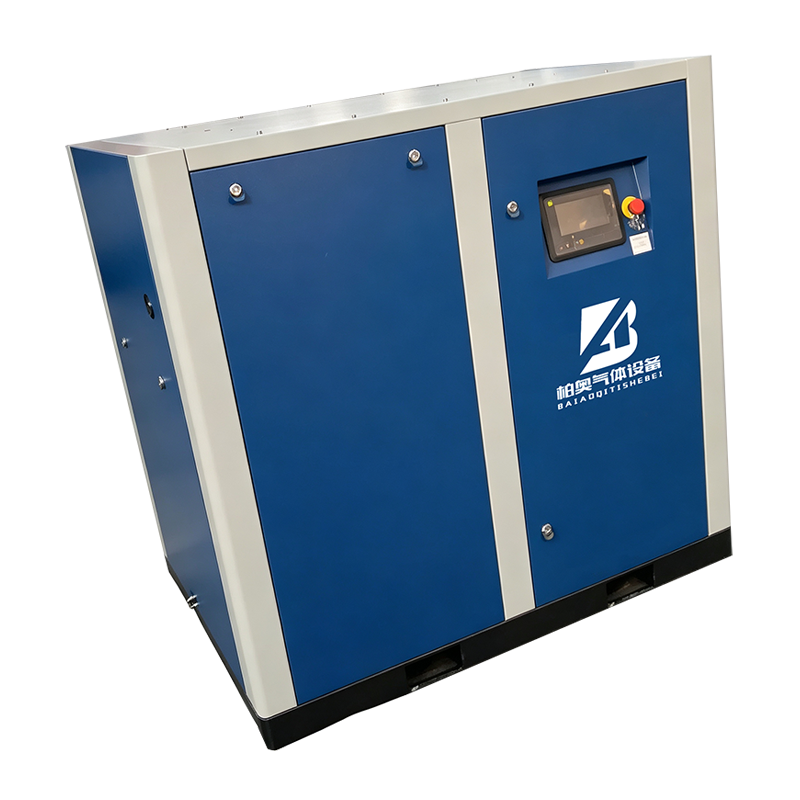 Oil-Free Rotary Screw Air Compressor for Clean Air ApplicationsThis oil-free compressor series meets ISO 8573-1 standards, ensuring zero oil carryover that could foul PSA sieves. It suits industries like food, pharmaceuticals, and electronics where clean air is critical for process integrity. Available in medium-pressure (7-10 bar) and low-pressure (2-3 bar) options.View Product →
Sizing the Gas Generator Engine: Flow, Pressure, and Purity Limits
Size the compressor from the separator's peak air demand plus a 15-20% margin, and verify the pressure at the filter inlet, not at the compressor discharge.
Start with the required nitrogen flow and purity. Read the air-to-nitrogen ratio from the separator datasheet. Add 15-20% of peak margin, then check the pressure band after the dryer and filters. A pressure drop of 0.5-1.0 bar across the air treatment train is normal. If the compressor discharges at 7.5 bar and the separator needs 7.0 bar at its inlet, the engine already has only 0.5 bar of margin.
| Nitrogen flow (Nm3/h) | Purity (%) | Feed air demand (m3/min) | Recommended engine (kW) |
| 50 | 99.9% | 2.6 | 30 |
| 100 | 99.9% | 5.2 | 45 |
| 200 | 99.9% | 10.5 | 90 |
| 100 | 99.5% | 3.6 | 37 |
Sizing rule: multiply the separator's peak feed air demand by 1.15, then select the next available compressor frame. Oversizing by more than 15% raises specific energy use. Undersizing produces purity dips at shift changes, seasonal peaks, or when a second packaging line starts.
For a 100 Nm3/h plant at 99.9% purity, the engine should be a 45-55 kW oil-free screw compressor. For the same flow at 99.5% purity, a 37 kW oil-injected unit can be acceptable.
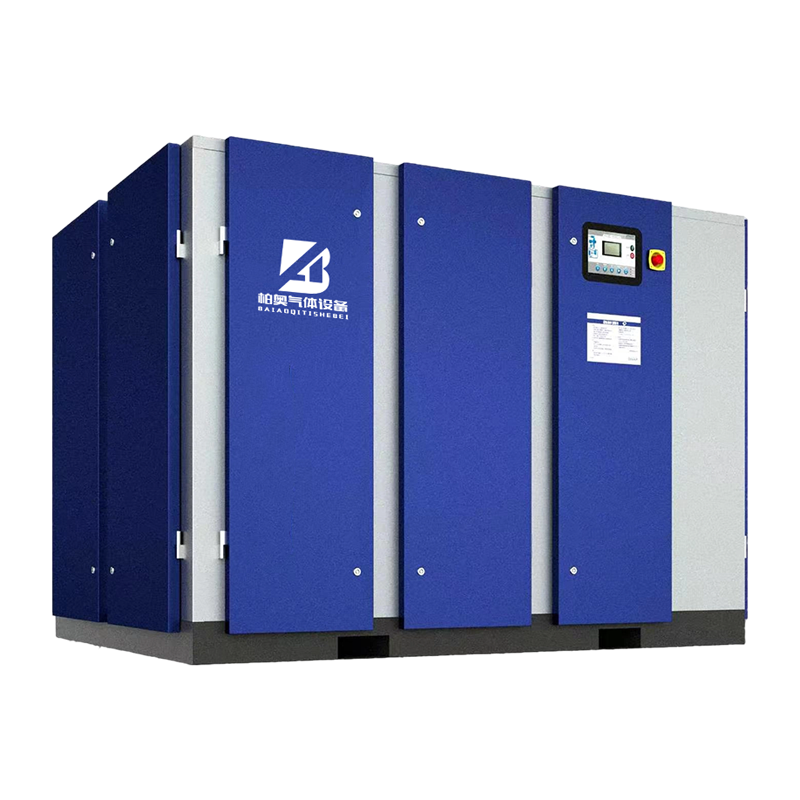 Oil-Injected Rotary Screw Air Compressor for General Industrial UseThe oil-injected series offers efficient compression with simplified oil injection for sealing, cooling, and lubrication. Two-stage models can save up to 25% energy, making them suitable for applications like nitrogen generation at 99.5% purity. It balances cost and performance for many industrial uses.View Product →
The Real Cost of Running a Gas Generator Engine
The compressor engine, not the separator, consumes most of the electricity in a gas generation plant. A 1% improvement in specific energy can pay back a larger capital investment within one year.
The chart below compares typical specific energy consumption by compressor type at a 7 bar discharge pressure. Values are shown in kWh per Nm3 of compressed feed air.
For a 100 Nm3/h nitrogen generator at 99.9% purity, the feed air requirement is about 5.2 m3/min, which equals 312 Nm3/h. Running an oil-free dry screw engine at 0.080 kWh/Nm3 for 8,000 hours gives 199,680 kWh per year. At an electricity price of USD 0.08/kWh, that is approximately USD 16,000 in annual energy cost.
An oil-injected engine at 0.070 kWh/Nm3 would consume about 175 MWh and save roughly USD 2,000 per year. But it cannot meet 99.9% purity without additional oil removal. The purity target, not the energy saving, decides the engine family.
Variable speed drive control reduces part-load consumption. If the plant runs at 70% average load, a VSD oil-free screw engine can cut specific energy by 8-12% compared with a fixed-speed unit.
Energy insight: A 10% reduction in specific energy on a 100 Nm3/h nitrogen generator is worth about USD 1,600 per year at 8,000 operating hours. Over a 10-year life, that is the same as the price difference between a fixed-speed and a variable-speed drive compressor.
Downstream Protection: Why the Engine Needs Filters and Dryers
A gas generator engine is only as reliable as the purification train between it and the separator. Clean feed air is not optional.
Compressor condensate, oil carryover, and particles must be removed before the feed air reaches the molecular sieve. A refrigerated dryer removes bulk water and brings the dew point to about 3-5 C. A desiccant dryer pushes the pressure dew point down to -40 C or lower.
Precision filters and high-efficiency oil removers protect the separator from hydrocarbon fouling. For a 99.9% nitrogen generator, a combination of an oil-free engine, a coalescing filter, and an activated carbon filter gives the cleanest, longest-lasting feed air.
Clean feed air is the difference between a 5-year sieve and a 15-month sieve. Never size a gas generator engine without planning the full air treatment train.
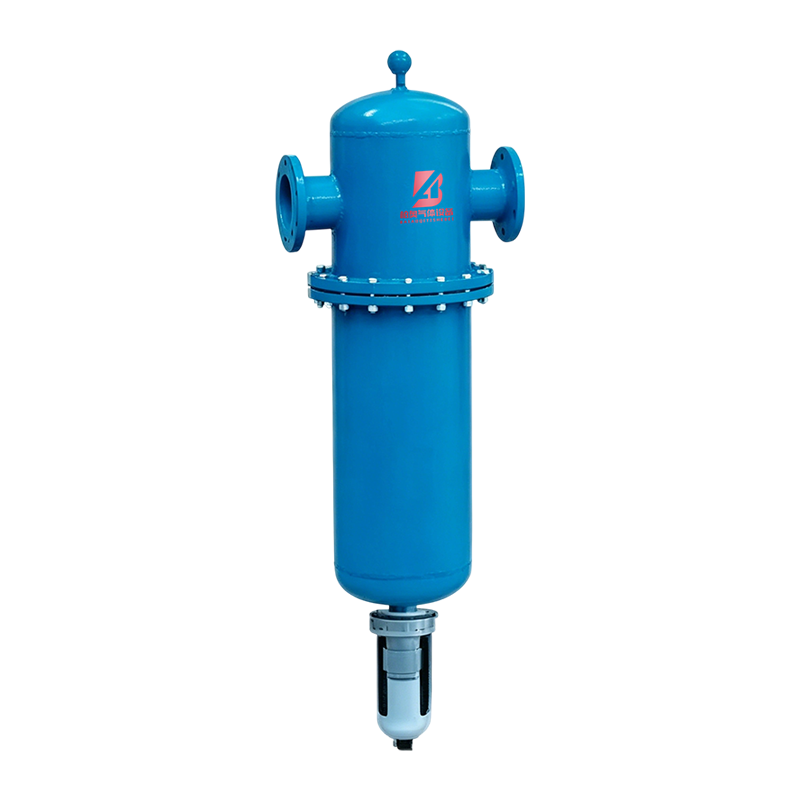 BAF Precision Filter for Compressed Air PurificationThis filter removes oil, water mist, and dust from compressed air to protect downstream equipment like PSA sieves. Available in C, T, and A stages with filtration precision from 3 μm to 0.01 μm, it ensures clean feed air and extends sieve life. Operating up to 1.0 MPa with low pressure drop.View Product →
Frequently Asked Questions About Gas Generator Engines
These are the choices that matter most when a buyer evaluates a gas generator engine for a nitrogen or oxygen plant.
What is the difference between a gas generator engine and a gas generator?
A gas generator is the full system that produces nitrogen or oxygen from compressed air using PSA, membrane, or VPSA technology. The gas generator engine is the air compressor that supplies the feed air. The engine sets the flow ceiling and consumes the majority of the energy.
How do I size a gas generator engine for a PSA nitrogen generator?
Take the target nitrogen flow in Nm3/h, read the feed air ratio from the separator datasheet, add a 15-20% margin, and check the pressure at the filter inlet. For a 100 Nm3/h plant at 99.9% purity, a 45-55 kW oil-free screw compressor is typical.
Can I use an oil-injected compressor for 99.9% nitrogen?
Technically possible with thorough oil removal, but not recommended. Hydrocarbon carryover will foul the molecular sieve over time and degrade purity. A true oil-free compressor core is the reliable choice for 99.9% and higher.
How much power does a gas generator engine consume?
As a rule, 70-80% of a gas generation plant's total electricity is consumed by the compressor. For a 100 Nm3/h nitrogen generator at 99.9% purity, the engine typically draws 25-30 kWh per hour, or about 200 MWh per year at 8,000 operating hours.
- Tel: +86-15057127179
+86-13588382771 - Email: huang.yifan0215@gmail.com
- Address: Huanshan Township, Fuyang District, Hangzhou City, Zhejiang Province
Copyright © Zhejiang Baiao Gas Equipment Co., Ltd. All Rights Reserved.
Privacy
Gas Generator Plant Manufacturer, Industrial Purification Equipment Plant
