|
Project categories
|
Cryogenic air separation oxygen production unit
|
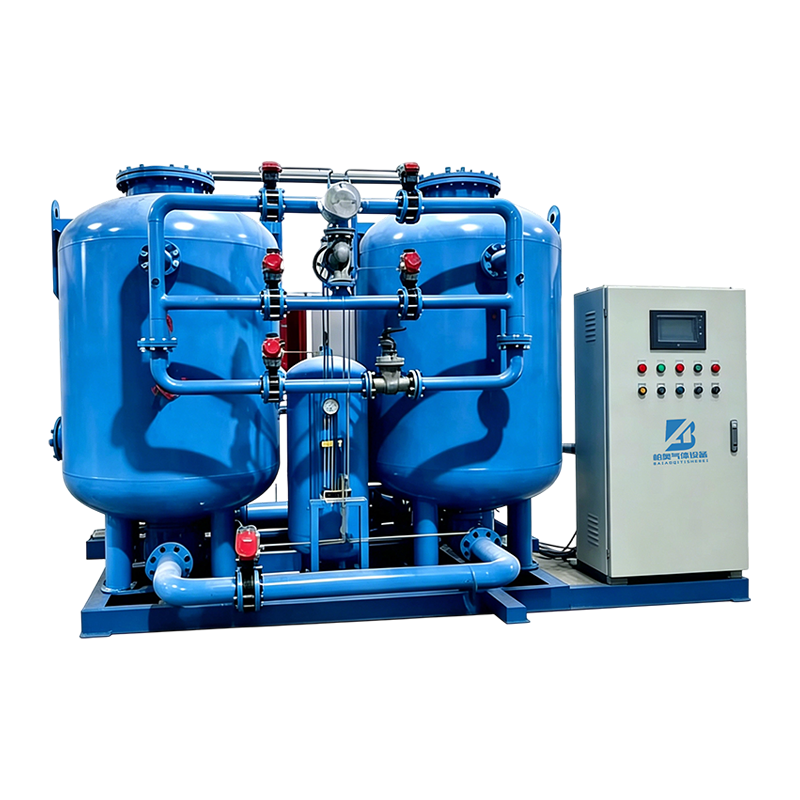
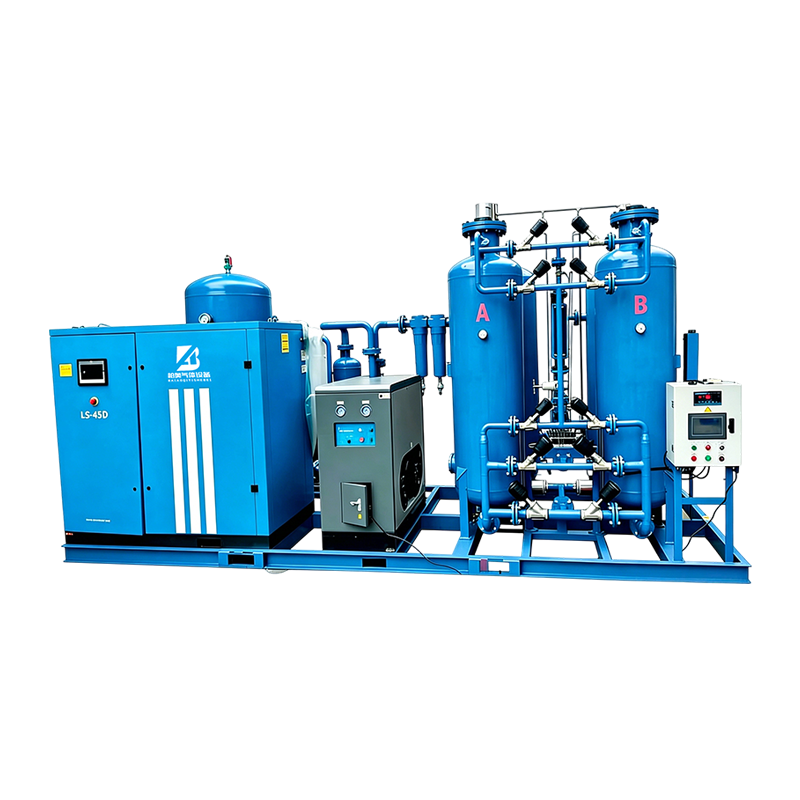
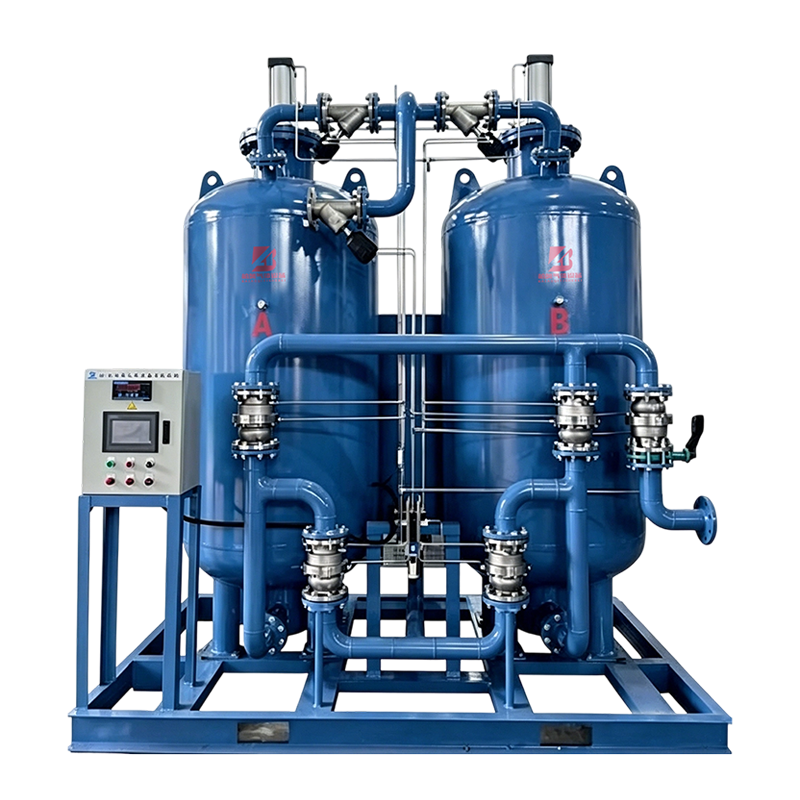
Pressure Swing Adsorption Vacuum Desorption Oxygen Generator
|
|
Separation Principle
|
Air is liquefied, and separation is achieved based on the different boiling points of oxygen and nitrogen.
|
Pressure adsorption and vacuum desorption are used to achieve separation by utilizing the different adsorption capacities of loxygen and nitrogen.
|
|
Process Characteristics
|
Complex process flow, requiring compression, cooling/freezing, pretreatment, expansion, liquefaction, fractionation, and operating temperature below-180 degrees Celsius
|
Simple process flow, requiring only compression/vacuum separation;operating temperature is ambient temperature.
|
|
Main Features of the Equipment
|
Many moving parts, complex structure, and many supporting instruments and control components, including centrifugal air compressor(or oil-free air compressor), vapor separator, air purifier, heat exchanger, reciprocating expander, and filter separation tower
|
Fewer moving parts, simple equipment, fewer supporting
instruments and control components, including blower, adsorption
tower, vacuum pump, and oxygen storage tank.
|
|
Operational characteristics
|
Complex operation, cannot be started immediately upon use. Because it operates at ultra-low temperatures, the equipment must undergo a pre-cooling start-up and a period of ineffective energy consumption (low-temperature liquid accumulation and heating purging)before being put into normal operation. The longer and more frequent the start-up and shutdown times, the higher the unit energy consumption of the finished gas. Operators require extensive specialized technical training and rich practical experience.
|
Simple operation, start-up and shutdown as needed. Operation control and monitoring are all implemented by PLC, with short start-up and shutdown times, less than 5 minutes. Furthermore, continuous operation and shutdown for extended periods will not affect the operating conditions. No need for regular shutdown for inspection and maintenance. Operators can start operating the equipment after a short technical training period.
|
|
Scope of application
|
Requires multiple gas products including oxygen, nitrogen, and argon; oxygen purity greater than 99.5%.
|
Extracts a single gas with a purity of 90-95%.
|
|
Maintenance characteristics
|
Centrifugal air compressor, condensing steam engine, and expander have high requirements and specifications; maintenance of heat exchangers in the fractionation tower requires specially trained and experienced personnel.
|
Maintenance of blowers, vacuum pumps, and programmable valves is routine and can be performed by ordinary maintenance personnel.
|
|
Civil Engineering and Installation Features
|
The unit is complex and occupies a large area, requiring a dedicated plant. The separation tower requires a freeze-proof foundation, resulting in high construction costs. An installation team with experience in air separation is required; the installation cycle is long, the difficulty is high (for fractionation towers), and the installation cost is high
|
The unit has a small external structure, saves space, and can be installed using conventional methods with a short installation cycle and low cost.
|
|
Automatic Program Safety
|
With multiple units, especially when using high-speed turbine expanders, malfunctions can easily affect the normal operation of the equipment. Skilled operators are required for supervision. Operation at extremely low temperatures or even high pressures poses a risk of explosion, as evidenced by numerous cases.
|
After startup, it can operate fully automatically and unattended. Because it operates at normal temperature and low pressure, there are no unsafe factors. There is no risk of explosion, as evidenced by numerous cases.
|
|
Purity Adjustment
|
Inconvenient purity adjustment, high oxygen production cost
|
Convenient purity adjustment, low oxygen production cost
|
|
Oxygen production cost
|
Energy consumption~1.25kwh/m³
|
Energy consumption less than 0.35kwh/m³
|
|
Total investment
|
High investment
|
Low investment
|

 en
en русский
 Español
 عربى
عربى