 en
en русский
 Español
 عربى
عربى
Industrial Gas Generator Plant Planning Guide: Capacity, Purity, and Cost Decisions
Whether you run laser cutting lines at 99.99% nitrogen purity or flush food packaging at 99.5%, the difference between a correctly sized industrial gas generator plant and an under-built one shows up in energy bills and rejected batches every single day. A plant that buys delivered liquid gas instead of producing it on site typically spends 40-70% more per cubic meter, but that margin disappears if the system is sized against peak demand instead of average demand, or if purity is set higher than the process actually needs.
This guide covers the decisions that matter when planning an on-site gas generation system: capacity sizing, technology selection, energy cost, and installation sequencing, with engineering data pulled from real operating plants.
Content
- 1 What an Industrial Gas Generator Plant Does and Why On-Site Generation Wins
- 2 Capacity Sizing: Match the Plant to Your Real Consumption
- 3 PSA, Membrane, or VPSA: Technology Selection Criteria
- 4 Energy Cost and Total Cost of Ownership
- 5 Installation Planning: Five Steps to a Reliable Industrial Gas Generator Plant
- 6 FAQ
What an Industrial Gas Generator Plant Does and Why On-Site Generation Wins
An industrial gas generator plant separates nitrogen, oxygen, or helium from ambient air at the point of use, replacing bottle, bulk liquid, or cryogenic deliveries with a controlled and continuous supply.
The system stack typically consists of a feed air compressor, a gas separation core (PSA, membrane, or VPSA), an air preparation train with dryers and filters, a buffer tank, and a control panel with online purity measurement.
When you own the generation asset, the cost of gas becomes a function of electricity, maintenance, and capital amortization, not a per-liter delivery fee. That change matters most in sectors like petrochemical processing and automotive manufacturing, where nitrogen or oxygen demand runs continuously across the full shift calendar.
Capacity Sizing: Match the Plant to Your Real Consumption
Size the industrial gas generator plant around average continuous demand plus a manageable peak factor of 10-20%, not around the highest spike or the longest single shift.
Oversizing is the most expensive mistake. A PSA nitrogen generator that is 30% larger than needed wastes electricity on excess air compression and forces the system to cycle between standby and load modes, which shortens valve life.
Purity Level and Typical Applications
| Purity | Typical process | Recommended technology | Energy per Nm3 |
| 95-97% | Food packaging, tire inflation | Membrane or PSA | 0.30-0.42 kWh |
| 98-99.5% | Laser cutting, welding shielding | PSA | 0.42-0.55 kWh |
| 99.9-99.99% | Electronics reflow, SMT | PSA plus purification | 0.62-0.78 kWh |
| Up to 99.999% | Pharmaceutical, semiconductor | PSA plus carbon purification | 0.78+ kWh |
For a manufacturing site that needs 98-99.5% purity at consistent flow, a PSA system delivers gas at the required specification with a specific energy in the 0.42-0.55 kWh/Nm3 band.
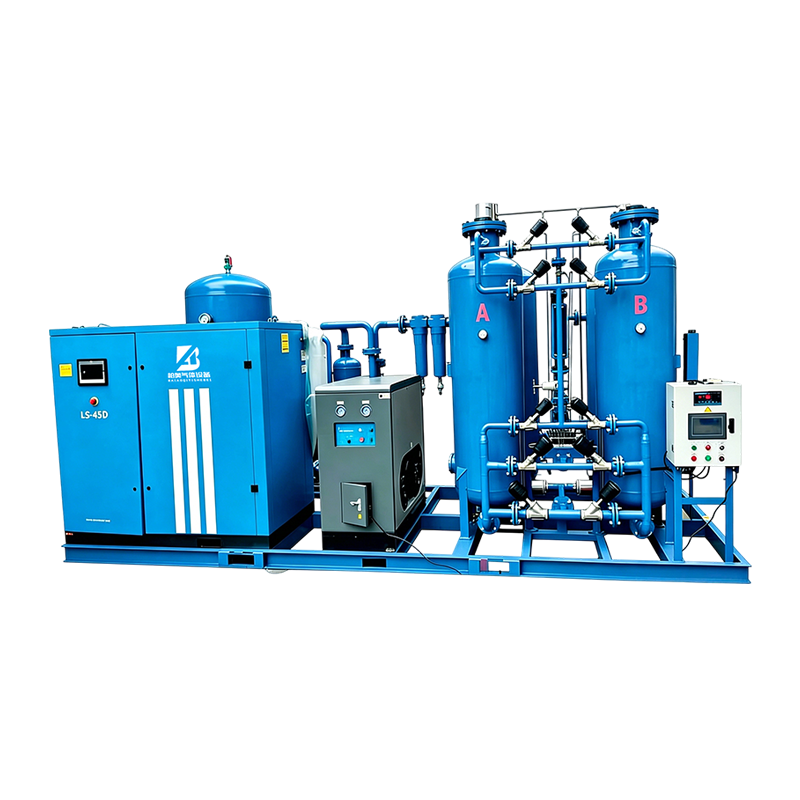
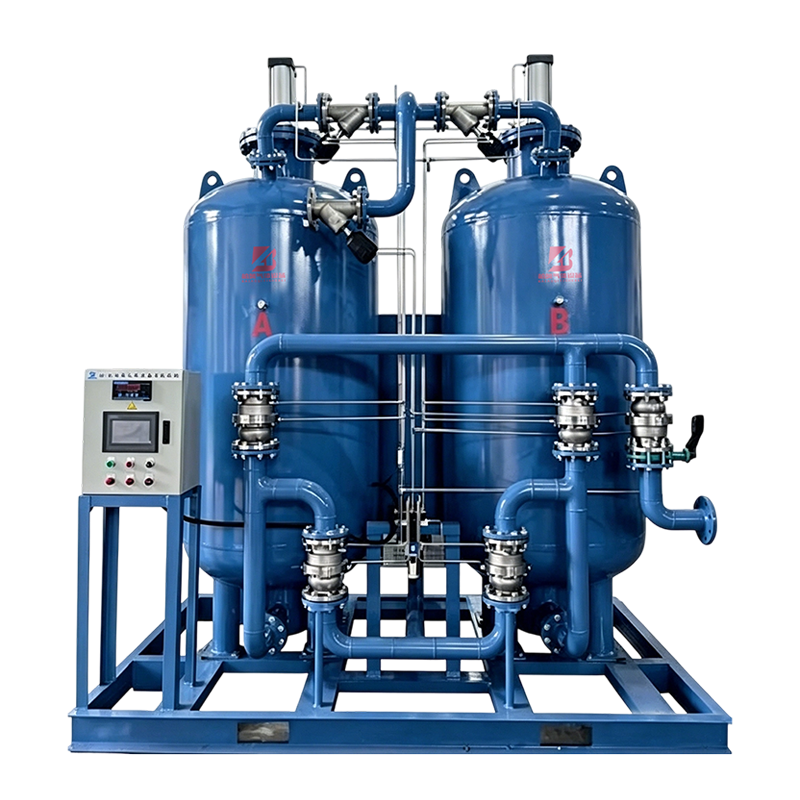 PSA Nitrogen Generator for Reliable On-Site Gas SupplyDesigned for continuous nitrogen production with adjustable purity from 0.1 to 0.8 MPa, this system uses carbon molecular sieves to meet steady flow and purity needs, supporting buffer tank integration for stable operation.View Product →
For variable loads, install a buffer tank sized at 20-30% of the hourly flow rate so the generator runs at steady state rather than chasing demand spikes. That single design decision keeps purity stable and reduces valve cycling by a measurable margin.
PSA, Membrane, or VPSA: Technology Selection Criteria
The three main technologies for an industrial gas generator plant are pressure swing adsorption (PSA), membrane separation, and vacuum pressure swing adsorption (VPSA), and each one wins in a different part of the purity-capacity map.
PSA systems use adsorbent material that captures oxygen at high pressure and releases it at low pressure. They produce nitrogen from 95% to 99.99% with reliable purity control. PSA is the default choice for most manufacturing plants because its modular footprint fits well in existing utility rooms.
Membrane separators use hollow fiber membranes to fractionate air at low energy cost. They are simpler, have no moving parts in the separation step, and are best for purity requirements below 98%, where their higher oxygen residue is acceptable.
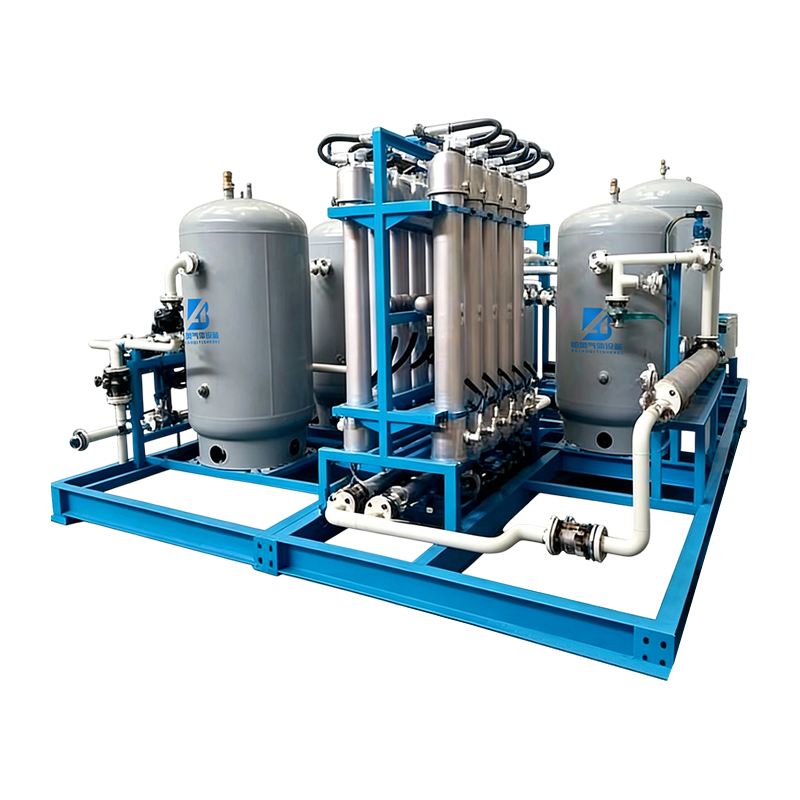
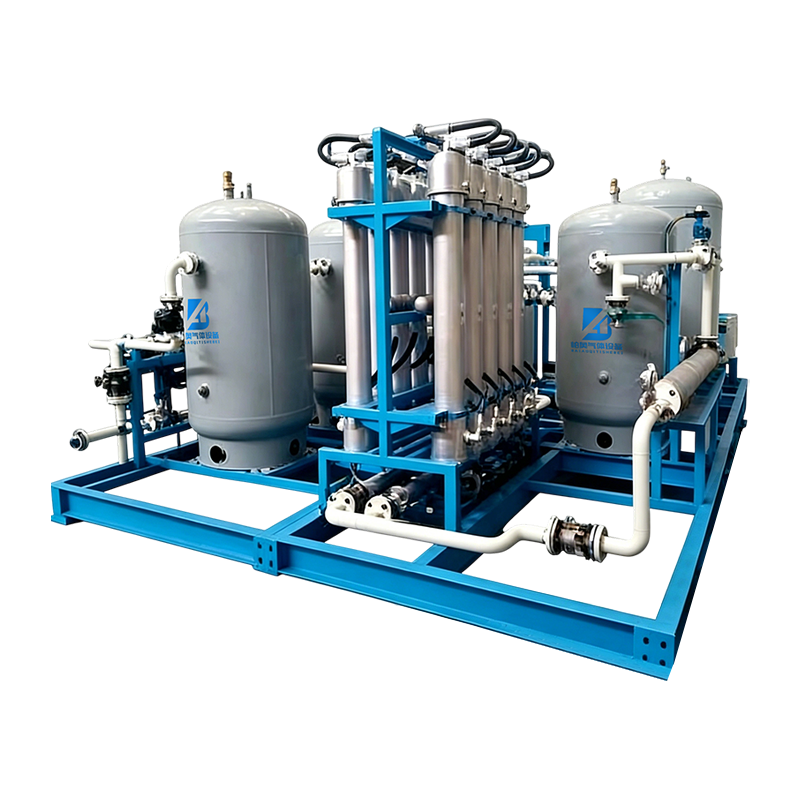 Membrane Separation Nitrogen Generator for Low-Purity ApplicationsOffering rapid startup and simple, fully automatic operation, this generator delivers nitrogen at 95-99.9% purity, ideal for processes where lower purity is acceptable and energy efficiency is key.View Product →
VPSA units operate at near-ambient pressure and use a vacuum to regenerate the adsorbent. They are best when oxygen demand exceeds roughly 500 Nm3/h, because the energy cost per cubic meter falls well below PSA-based oxygen generation.
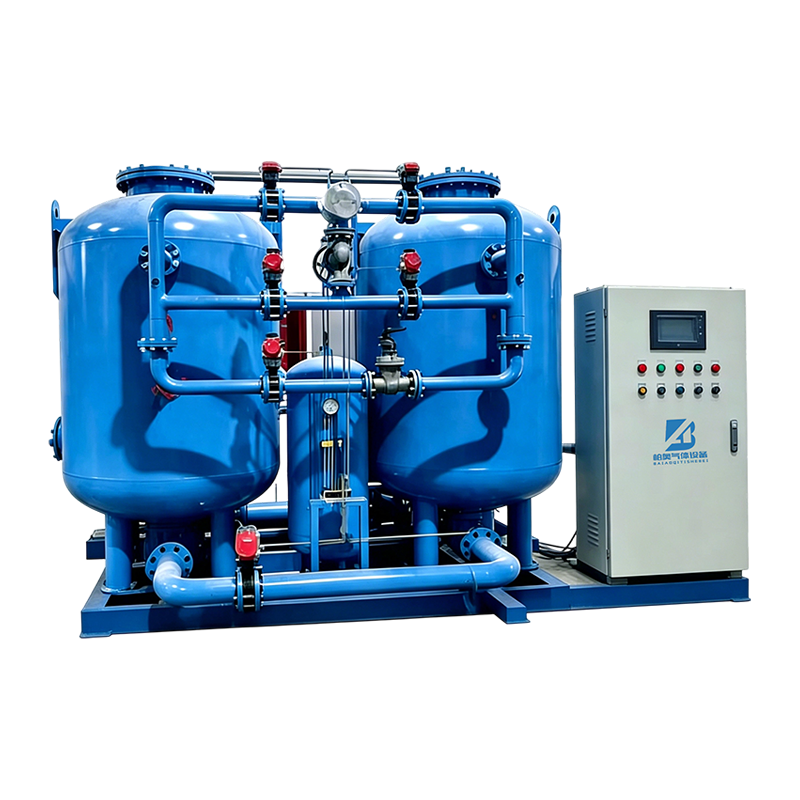
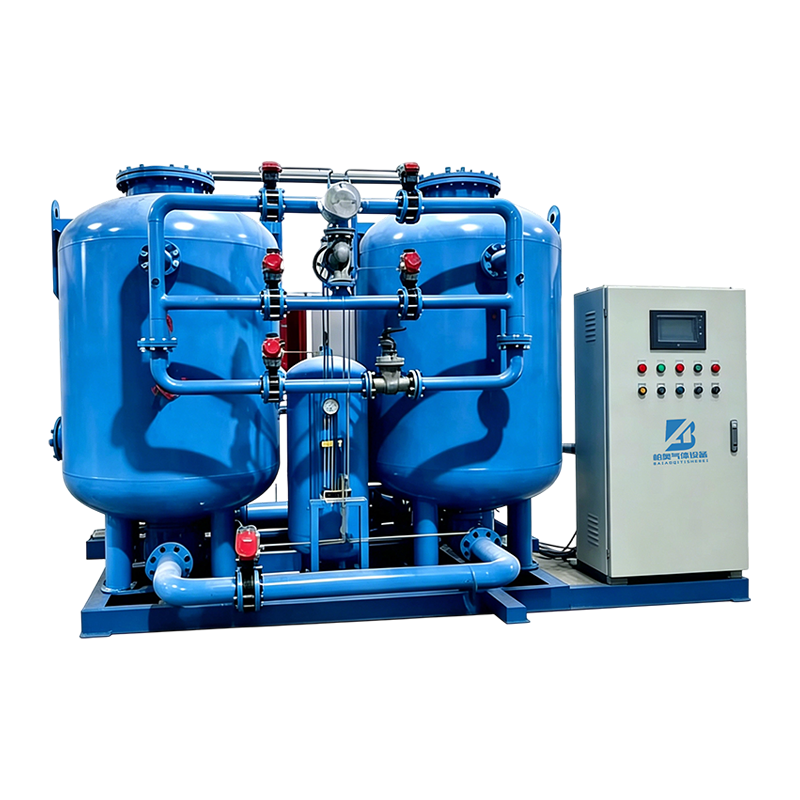 VPSA Oxygen Generator for High-Volume Industrial DemandBuilt for oxygen demands above 500 Nm3/h, this vacuum swing adsorption system minimizes energy cost per cubic meter and ensures high annual operating rates, making it a cost-effective choice for large-scale use.View Product →
PSA strengths
- Consistent high purity
- Fast on/off switching
- Many size options
Membrane limitations
- Purity ceiling near 99%
- Higher feed air pressure
- More sensitive to airflow
For an electronics plant that needs ultra-high purity nitrogen, the combination of PSA plus a carbon-supported purification stage is significantly cheaper per Nm3 than delivered liquid nitrogen. In that case, the correct answer is a PSA industrial gas generator plant with purification, not a membrane system.
Energy Cost and Total Cost of Ownership
Energy is the largest single variable cost in an industrial gas generator plant, typically accounting for 60-70% of the lifetime operational expense.
The chart below shows how specific energy consumption rises as nitrogen purity increases in a standard PSA system. This is the value to watch during design.
Lifecycle cost breakdown
- Energy: 60-70% of lifetime cost
- Maintenance and filter replacement: 10-15%
- Capital amortization: 15-20%
- Consumables and adsorbent: 5-10%
When comparing a proposed plant against delivered gas, ask the supplier for a specific energy guarantee at the design purity. A 0.05 kWh/Nm3 difference may look small, but over 5,000 hours per year and 100 Nm3/h, it is 25,000 kWh per year. At an industrial tariff of 0.10 USD/kWh, that is 2,500 USD of unnecessary annual cost in a single line item.
Installation Planning: Five Steps to a Reliable Industrial Gas Generator Plant
A reliable on-site gas plant is designed around five steps: demand profiling, air preparation, separation stage selection, buffer storage sizing, and commissioning with traceable purity meters.
Profile hourly demand
Log actual consumption for at least 30 days at the factory, counting both average and peak hours. Separate weekend and maintenance loads from production days.
Design the air preparation
Match a refrigerated air dryer and precision filters to the feed compressor output so the separation stage receives stable, dew-point-controlled air.
Select the separation stage
Choose between PSA, membrane, and VPSA based on purity, capacity, and the pressure range your process demands.
Size the buffer tank
Allow 20-30% of hourly demand to smooth load swings and let the generator hold a steady operating point.
Commission with purity meters
Install online purity sensors and run an acceptance test over 72 hours at the design flow and pressure. Zhejiang Baiao Gas Equipment Co., Ltd. supports this stage with factory-trained technicians.
FAQ
What is the best purity for an industrial gas generator plant?
Set the purity 0.2% above the process limit, not higher. Running nitrogen at 99.9% when the process only needs 99.0% raises energy consumption by about 20%. The cost of purity is exponential, so a good supplier will ask for your actual process specification and reject vague requests.
How much space does an industrial gas generator plant need?
A compact PSA nitrogen plant for 50 Nm3/h at 99% fits in a 20 m2 utility room, with a separate footprint for the feed compressor, dryer, filters, and buffer tank. For VPSA oxygen at 1,000 Nm3/h, plan around 80-120 m2 outdoors. Always leave 1.2 m clearance around the equipment for valve maintenance.
Why does purity drop after the dryer and filters?
Purity drop after the air preparation stage is usually caused by moisture carryover. An undersized refrigerated dryer allows water to enter the adsorbent bed, damaging zeolite sieves and reducing purity. The dryer size must be calculated against the actual ambient dew point, not the compressor nominal flow.
Can an industrial gas generator plant run without an operator?
Yes. Modern control systems start, run, and unload the generator automatically with remote telemetry. However, a trained operator should review purity logs monthly and replace filters on schedule. Preventive maintenance contracts from the manufacturer cover this and remove the need for a dedicated gas technician.
- Tel: +86-15057127179
+86-13588382771 - Email: huang.yifan0215@gmail.com
- Address: Huanshan Township, Fuyang District, Hangzhou City, Zhejiang Province
Copyright © Zhejiang Baiao Gas Equipment Co., Ltd. All Rights Reserved.
Privacy
Gas Generator Plant Manufacturer, Industrial Purification Equipment Plant
