 en
en русский
 Español
 عربى
عربى
Industrial Gas Separation Equipment: A Practical Selection Guide for Reliable Gas Supply
Content
- 1 Why gas separation equipment decisions matter more than the purchase price
- 2 The four technologies that dominate industrial gas separation
- 3 Nitrogen generation: pressure swing adsorption versus membranes
- 4 Oxygen generation: PSA for moderate flows, VPSA for larger volumes
- 5 Helium recovery: where membrane technology pays for itself
- 6 Do not overlook gas purification after the separator
- 7 A practical framework for selecting gas separation equipment
- 8 What to check before buying industrial gas separation equipment
- 9 Start from the process requirement, then work backward to the equipment
Why gas separation equipment decisions matter more than the purchase price
A petrochemical plant that replaces delivered liquid nitrogen with two on-site pressure swing adsorption generators can cut its unit nitrogen cost by 30 to 40 percent. A food packaging line that moves from cylinder supply to a membrane separator can recover the equipment investment in 12 to 18 months. Neither result comes from buying the cheapest machine. Both come from matching the separation technology to the actual purity requirement, flow profile, and running hours.
Industrial gas separation equipment covers the systems that extract oxygen, nitrogen, or helium from compressed air or process gas streams. The most widely deployed non-cryogenic technologies are pressure swing adsorption, membrane separation, and vacuum pressure swing adsorption. The choice between them is not about which technology is newer; it is about matching purity, capacity, pressure, and long-term operating cost to the specific process. This guide explains how those technologies compare, where each one fits, and what to verify before committing to a supplier.
The four technologies that dominate industrial gas separation
All non-cryogenic gas separation equipment works by exploiting differences in how gas molecules move through or adsorb onto a medium. The practical differences appear in energy consumption, achievable purity, footprint, and behavior under variable demand.
Pressure swing adsorption
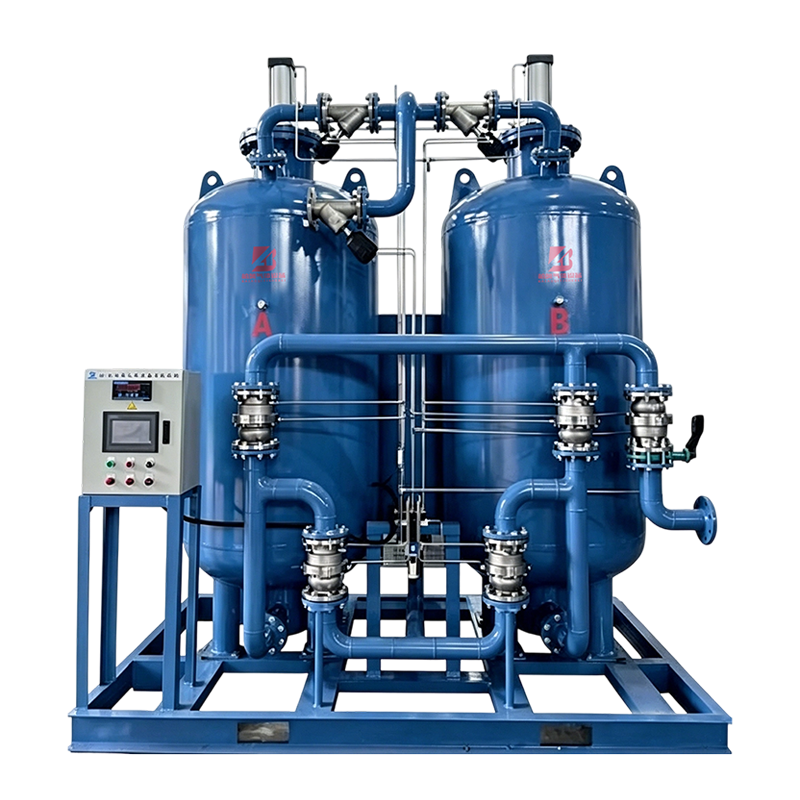
A PSA system uses one or more vessels filled with an adsorbent, typically carbon molecular sieve for nitrogen and zeolite for oxygen. At elevated pressure, the adsorbent captures one component of the air while the other components pass through. When the bed is saturated, the pressure is released and the captured component is desorbed. Two or more beds alternate so the product gas stream is continuous.
The strength of PSA is consistent purity at a stable flow. A PSA-based nitrogen generator reaches 99.9 percent purity without difficulty, and a downstream purification unit can raise that to 99.999 percent or higher. Oxygen generators using PSA deliver 90 to 95 percent purity, which is sufficient for most combustion, ozone, and aeration applications.
Membrane separation
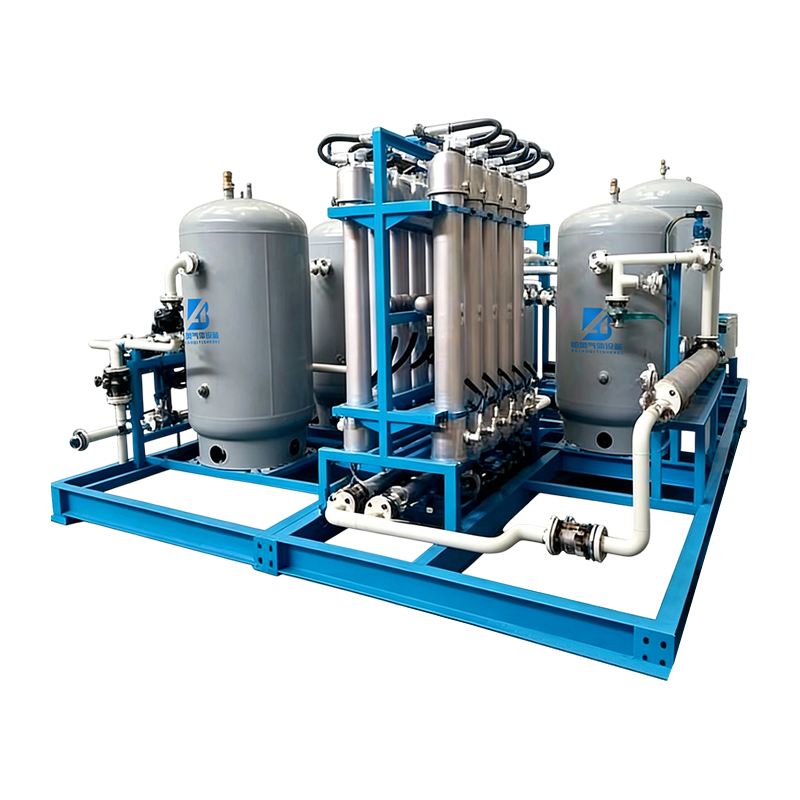
Membrane systems pass compressed air through bundles of hollow polymer fibers. Oxygen, water vapor, and carbon dioxide permeate through the fiber wall faster than nitrogen, so nitrogen remains in the product stream. There are no moving parts in the separation core, no regeneration cycle, and no purge loss. The trade-off is purity: a single membrane stage typically produces 95 to 99.5 percent nitrogen, depending on feed pressure and flow.
Vacuum pressure swing adsorption
VPSA operates on the same adsorption principle as PSA but uses a vacuum blower to regenerate the bed rather than simply venting it to atmosphere. This reduces the feed pressure required and cuts energy consumption per cubic meter of product. VPSA systems are used mainly for oxygen production at flows from roughly 50 to several thousand cubic meters per hour.
Cryogenic separation: the right choice only at large scale
Cryogenic air separation liquefies air and distills it into oxygen, nitrogen, and argon. It remains the best option when demand exceeds roughly 5,000 Nm³/h or when liquid product is required. For the majority of mid-size plants, the capital cost and energy intensity of a cryogenic plant are not justified, and PSA or membrane systems deliver the same usable gas at a fraction of the investment.
Nitrogen generation: pressure swing adsorption versus membranes
Nitrogen is the most common product of on-site gas separation, so the choice between PSA and membrane technology comes down to three numbers: the purity your process requires, the flow you need to sustain, and the price of electricity at your site.
For applications such as SMT reflow soldering, heat treatment atmospheres, pharmaceutical blanketing, and metal sintering, purity above 99.9 percent is the norm. A pressure swing adsorption nitrogen generator is the established configuration for this duty. It maintains a stable product purity at varying ambient conditions, and with a carbon-supported purification stage it can produce nitrogen with residual oxygen below 10 parts per million.
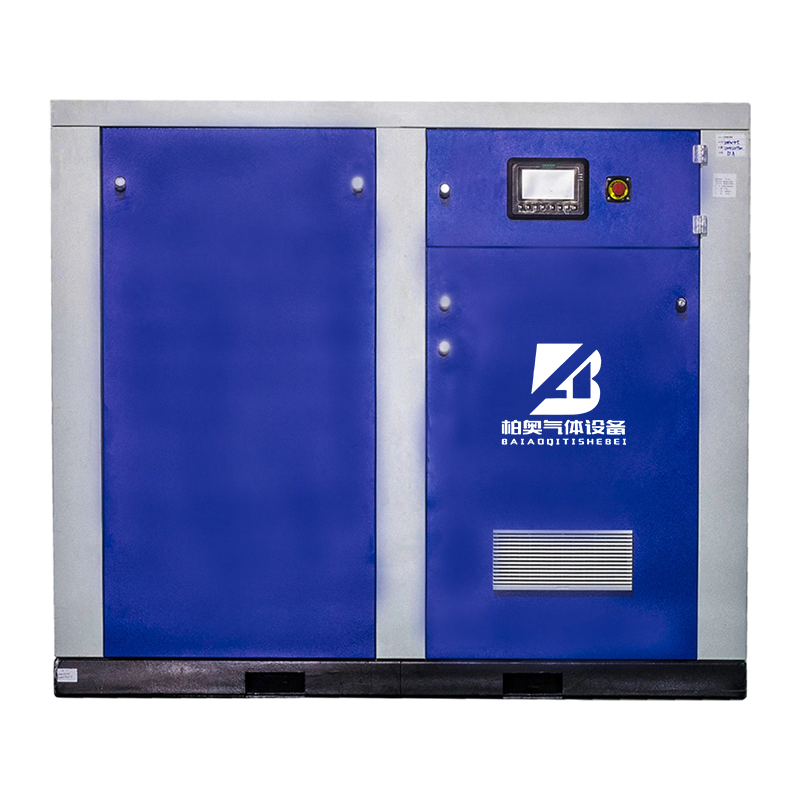
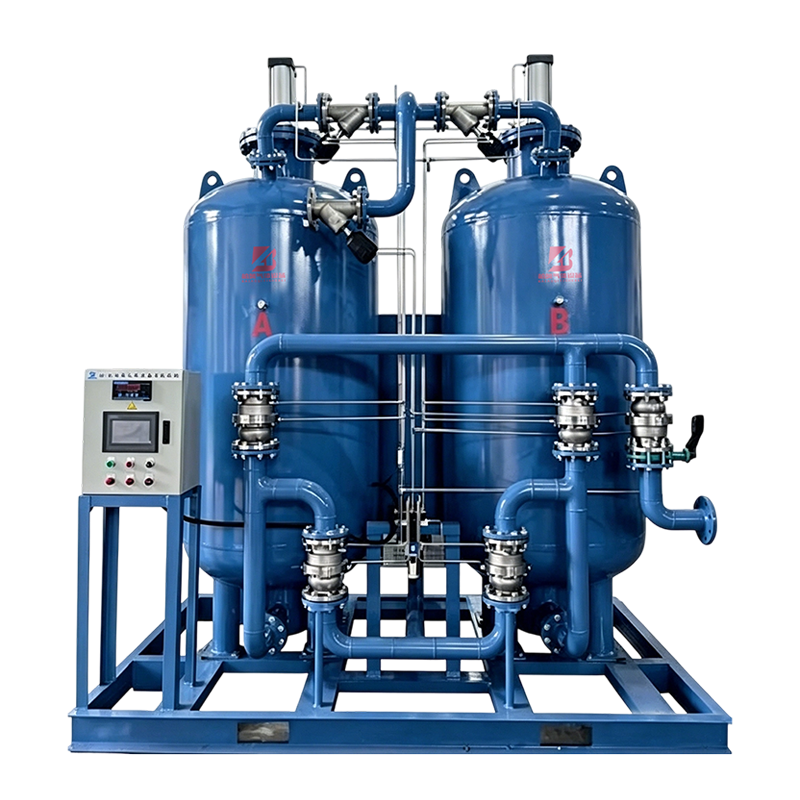 Industrial PSA Nitrogen Generator Unit & Plant Manufacturer, SupplierAs China Industrial Explosion-proof PSA Nitrogen Generator Unit & Plant Manufacturer, Exporter, Company, Baiao Gas Equipment Co., Ltd Sup...View Product →
When the purity target sits between 95 and 99.5 percent, for applications such as food packaging, tank blanketing, modified atmosphere storage, or fire suppression, a membrane system offers faster startup, a smaller footprint, and lower maintenance. The membrane separation nitrogen generator is designed for this range and is a practical alternative when the site does not need the additional purification hardware that high-purity PSA nitrogen demands.
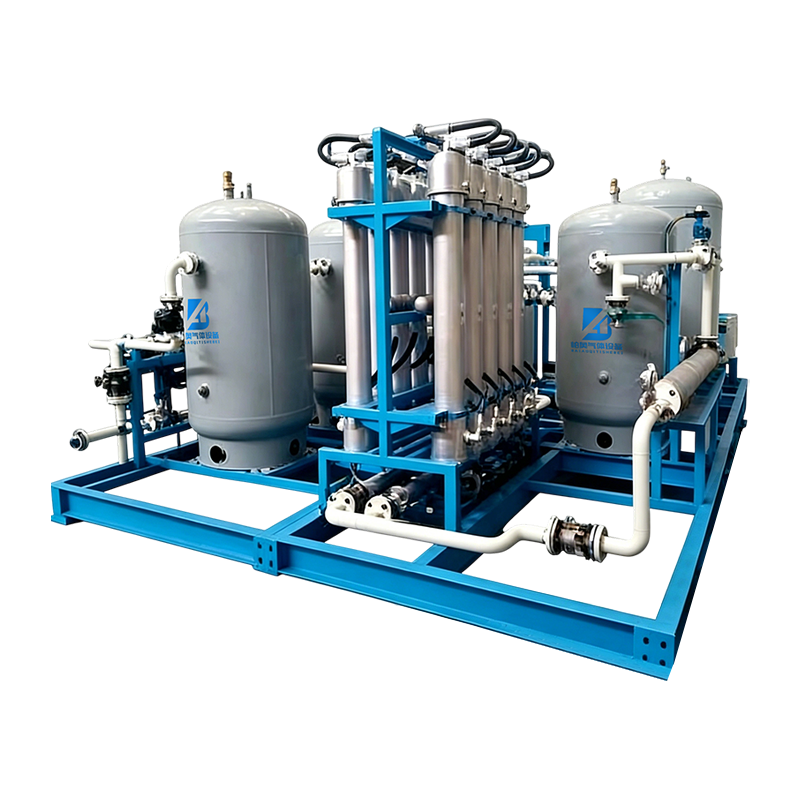 BAM Membrane Separation Nitrogen Generator Manufacturer , SuppliersZhejiang Baiao Gas Equipment Co., Ltd is China Custom BAM Membrane Separation Nitrogen Generator Manufacturer and Supplier. Working Princ...View Product →
Oxygen generation: PSA for moderate flows, VPSA for larger volumes
Oxygen generators are used in wastewater aeration, glass melting, copper and gold leaching, pulp bleaching, and ozone production. The purity target in these applications is typically 90 to 94 percent, which is below what many buyers associate with commercial oxygen but exactly where adsorption systems are most economical.
A pressure swing adsorption oxygen generator fits flows up to roughly 50 Nm³/h, where its installed cost is far below a cryogenic supply chain and the payback against delivered liquid oxygen is often shorter than two years. Above that flow, VPSA becomes more attractive because the vacuum-assisted regeneration lowers the feed pressure requirement and the specific energy consumption. Both technologies use the same zeolite adsorbent; the difference is in how the bed is regenerated and how the energy is balanced between the blower and the vacuum pump.
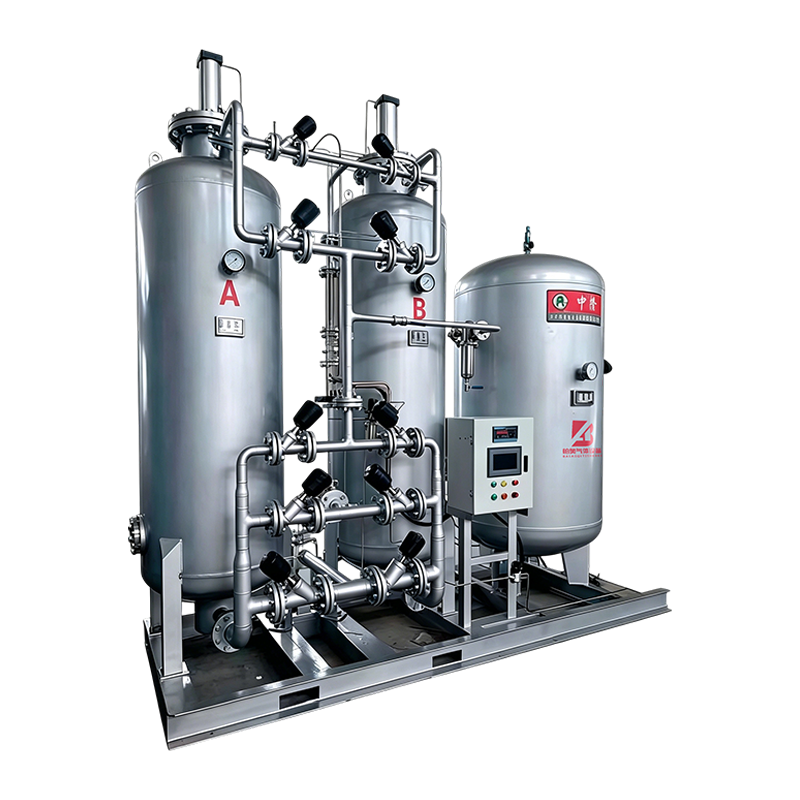 Pressure Swing Adsorption Oxygen Generator Exporter, CompanyAs China Pressure Swing Adsorption Oxygen Generator Exporter, Company, Zhejiang Baiao Gas Equipment Co., Ltd Offer Custom-engineered BAO ...View Product →
Helium recovery: where membrane technology pays for itself
Helium is expensive because it is scarce. In fiber optic cable drawing, semiconductor fabrication, and leak testing, helium is consumed in large volumes and, in many plants, still vented after a single pass. A membrane helium recovery unit captures the vented gas, removes oil vapor, water, and other contaminants, and returns helium at a concentration high enough for reuse.
Recovery rates with membrane technology typically reach 90 to 98 percent, depending on feed concentration and the number of membrane stages. For a plant running helium continuously, the payback period is usually measured in months. Unlike nitrogen and oxygen generators, helium recovery systems are always tailored to the specific feed stream, because composition and contaminant levels vary from site to site.
Do not overlook gas purification after the separator
Separation equipment removes the target component, but the gas that reaches your process still carries moisture, oil vapor, and particles from the compressed air feed. Humidity shortens the life of carbon molecular sieve in a PSA nitrogen generator. Trace oxygen and moisture at parts-per-million levels can ruin a pharmaceutical batch or an electronics component.
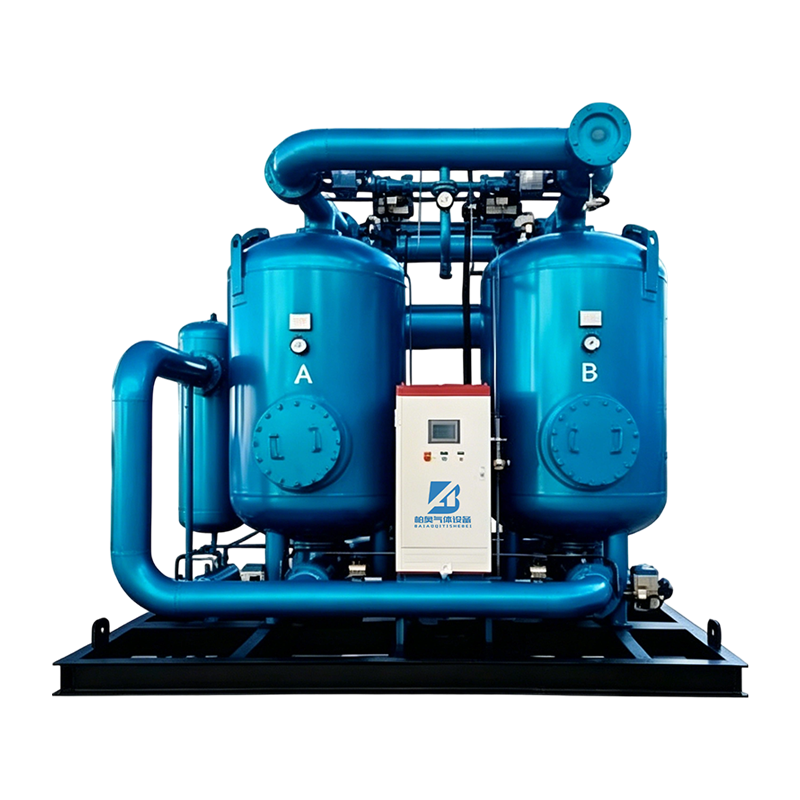
A reliable gas supply chain therefore includes a refrigerated or adsorption dryer, precision filters, and, where the process demands it, a deoxygenation or carbon-supported purification unit downstream of the separator. Buyers who leave these components out of the initial specification usually add them later at higher installation cost, and sometimes after an avoidable production loss.
A practical framework for selecting gas separation equipment
Once you define four parameters, the technology choice becomes largely deterministic. Define these numbers before comparing equipment:
- Required purity at the point of use, including the permissible oxygen or moisture content.
- Average and peak flow over the day, not just the nameplate demand.
- Available feed pressure from the compressor you already have or plan to install.
- Annual running hours, which determine how much of the lifetime cost is energy.
The table below summarizes the typical operating envelope for the main non-cryogenic technologies.
| Technology | Product | Purity range | Typical flow | Typical applications |
|---|---|---|---|---|
| PSA nitrogen generator | Nitrogen | 95 – 99.999% | 1 – 2,000 Nm³/h | Heat treatment, electronics, pharmaceuticals |
| Membrane nitrogen generator | Nitrogen | 95 – 99.5% | 1 – 1,000 Nm³/h | Food packaging, inerting, fire prevention |
| PSA oxygen generator | Oxygen | 90 – 95% | 1 – 50 Nm³/h | Ozone feed, aquaculture, small combustion |
| VPSA oxygen generator | Oxygen | 90 – 94% | 50 – 5,000 Nm³/h | Glass melting, smelting, large aeration |
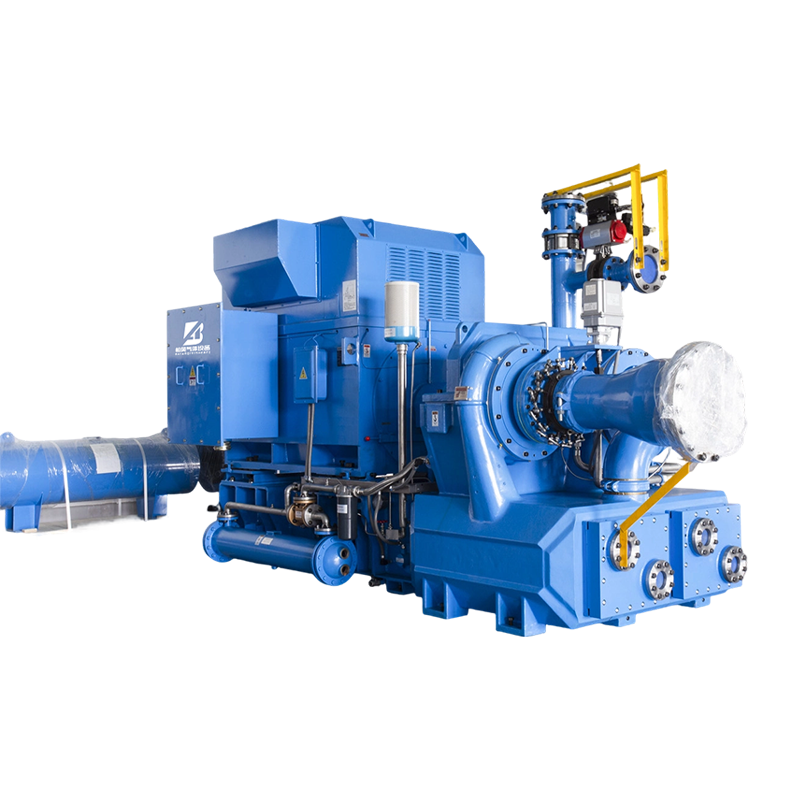
The flow figures are indicative because real values depend on feed pressure, temperature, and the design of the adsorption vessels or membrane bundles. The more important comparison is unit energy cost. PSA systems consume compressed air continuously and use a small purge flow during regeneration; membrane systems use no purge gas but require a higher feed pressure to reach the same purity. In both cases, the compressor is a major part of the total energy bill, which is why a gas separation skid should be specified together with the compressor rather than as an isolated unit.
What to check before buying industrial gas separation equipment
The purchase price of a gas separation system is a small part of its lifetime cost. Electricity, adsorbent replacement, membrane cartridge renewal, maintenance, and unscheduled downtime decide whether the investment earns its keep. Supplier evaluation therefore matters as much as technology selection.
Ask for a calculated unit cost
A credible proposal states the feed air consumption, the specific energy demand in kilowatt-hours per cubic meter of product, and the expected service life of the adsorbent or membrane cartridges at your operating conditions. If a supplier cannot provide these numbers, the proposal is not complete.
Inspect the manufacturing and project execution capability
A gas separation skid is the result of welding, piping, wiring, and pressure testing hundreds of components. The difference between a disciplined factory and an assembly shop shows up in the pressure test records, the panel layout, and the documentation quality. Visiting the manufacturing facility before ordering is routine for experienced buyers, and a factory with standardized production space and in-house testing is more likely to deliver on schedule.
Confirm the after-sales structure
Adsorbent degrades, valves wear, and analyzers drift. Check that the supplier stocks spare parts and can provide commissioning assistance. The most common causes of poor performance in PSA and membrane systems are incorrect feed conditioning and control settings that drift over time, not hardware failure. A supplier whose service team supports commissioning and periodic tuning will prevent most of these problems.
Start from the process requirement, then work backward to the equipment
Every gas separation project should begin with a written process requirement: what the gas is used for, which purity it needs at the point of use, how flow varies over the day, and what happens to product quality if the gas supply stops for an hour. Once these conditions are fixed, the technology decision follows: PSA when purity is the priority, membranes when simplicity and fast response matter, and VPSA when the volume exceeds the economical range of a small PSA package.
The same logic applies whether the project is a single nitrogen skid for a food packaging hall or a complete gas supply package for a petrochemical facility. In food and beverage processing, nitrogen purity and oil-free compression are often more critical than flow; in other industries, flow and energy cost dominate. The products referenced in this article represent the common configurations of these technologies, and the selection rules remain the same.
If you are evaluating industrial gas separation equipment for a new line or an existing plant, document your purity, flow, and pressure requirements first. Then discuss the system configuration with an equipment specialist who can translate those numbers into a PSA, membrane, or VPSA design with a realistic operating cost.
- Tel: +86-15057127179
+86-13588382771 - Email: huang.yifan0215@gmail.com
- Address: Huanshan Township, Fuyang District, Hangzhou City, Zhejiang Province
Copyright © Zhejiang Baiao Gas Equipment Co., Ltd. All Rights Reserved.
Privacy
Gas Generator Plant Manufacturer, Industrial Purification Equipment Plant
