 en
en русский
 Español
 عربى
عربى
Industrial Nitrogen Generator: On-Site N2 Systems, PSA vs Membrane Technology
Content
The Reliability and Cost Case for On-Site Nitrogen Generation
Every afternoon at a food packaging plant, the production supervisor checks the nitrogen delivery schedule. If the truck is late, the packaging line slows down—and each hour of downtime costs thousands of dollars. The same tension appears in laser cutting shops, electronics cleanrooms, and pharmaceutical labs that depend on bottled nitrogen or liquid nitrogen deliveries.
An on-site nitrogen generator removes that dependency by producing nitrogen from compressed air at the point of use. For most industrial operations, it is the more predictable, lower-cost answer—provided you choose the right technology and size the system correctly. In this guide, we explain how nitrogen generators work, compare PSA and membrane designs, and outline the selection criteria that avoid costly mistakes.
How a Nitrogen Generator Works
A nitrogen generator is a machine that separates nitrogen molecules from the surrounding air. Ambient air is roughly 78% nitrogen and 21% oxygen, with small amounts of argon, carbon dioxide, and moisture. The generator removes most of the oxygen and other components, delivering a continuous stream of nitrogen at the required purity and pressure. Two proven technologies dominate industrial applications: pressure swing adsorption (PSA) and membrane separation.
Pressure Swing Adsorption (PSA) Technology
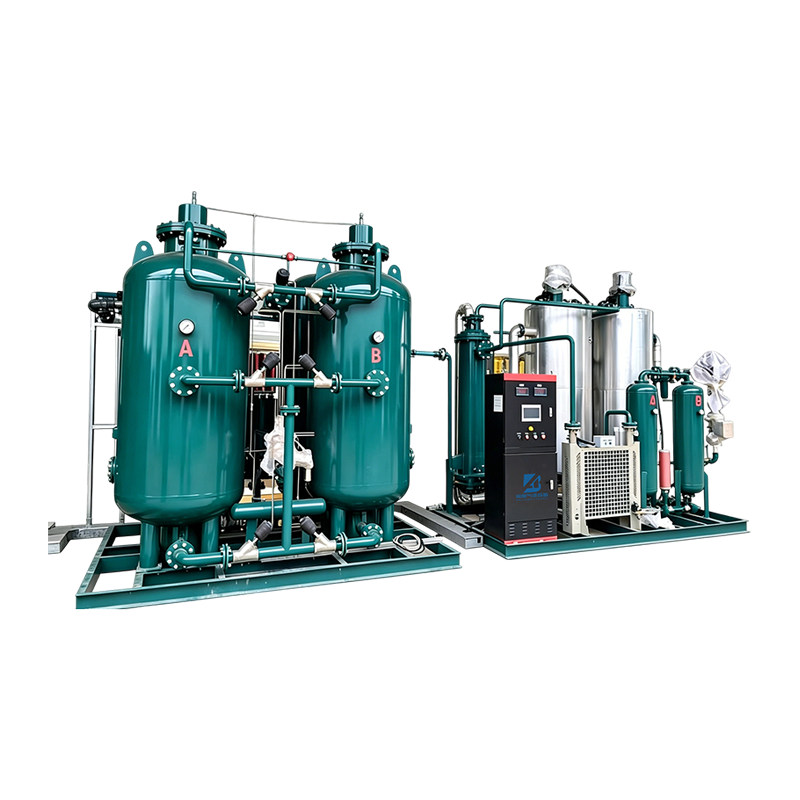
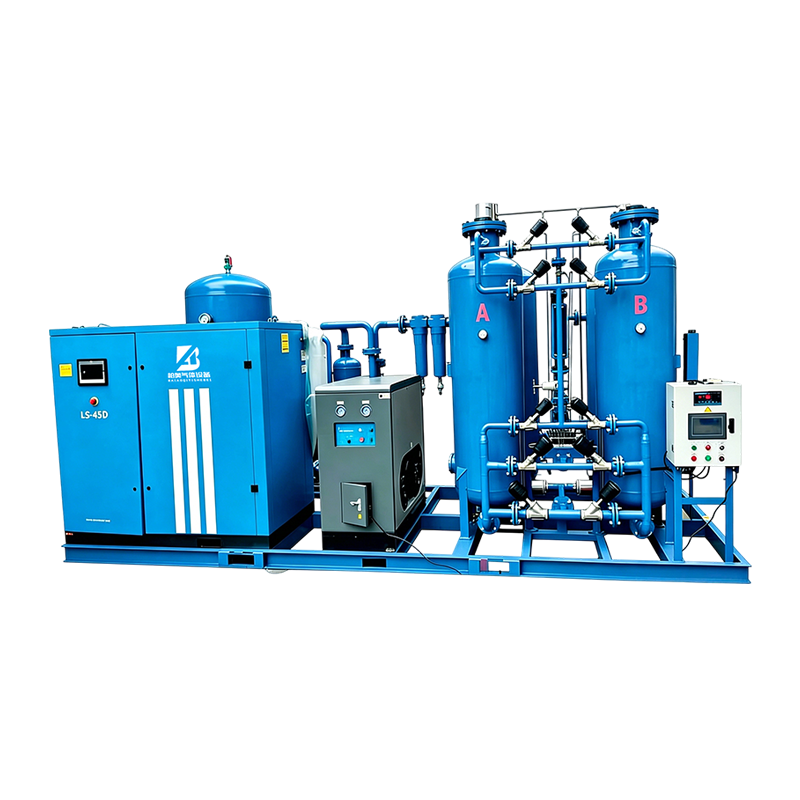
PSA nitrogen generators use vessels filled with carbon molecular sieve material. Compressed air flows through the vessel, and the sieve preferentially adsorbs oxygen molecules under pressure. Nitrogen passes through the bed into a buffer tank. When the adsorbent becomes saturated, the pressure is released, oxygen is desorbed, and the bed regenerates. Two beds alternate between adsorption and regeneration, so nitrogen production is continuous. PSA systems are ideal for medium to high flow rates and can achieve nitrogen purities from 97% up to 99.999% when combined with a final purification stage. They are a reliable choice for laser cutting, heat treatment, food packaging, and chemical blanketing. You can see a typical industrial configuration in this PSA nitrogen generator from Baiao Gas Equipment.
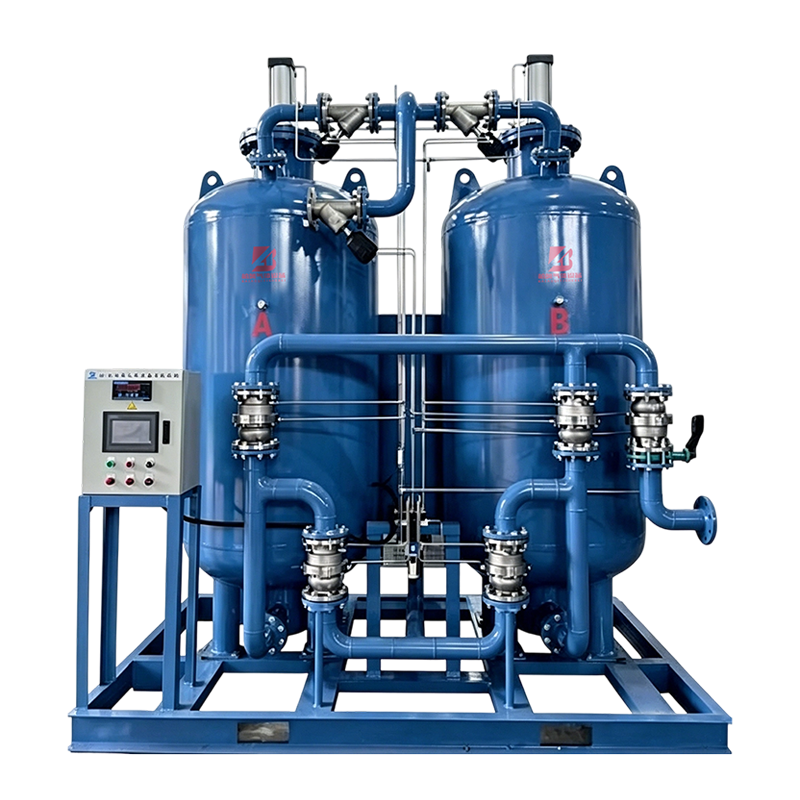 Industrial PSA Nitrogen Generator Unit & Plant Manufacturer, SupplierAs China Industrial Explosion-proof PSA Nitrogen Generator Unit & Plant Manufacturer, Exporter, Company, Baiao Gas Equipment Co., Ltd Sup...View Product →
Membrane Separation Technology
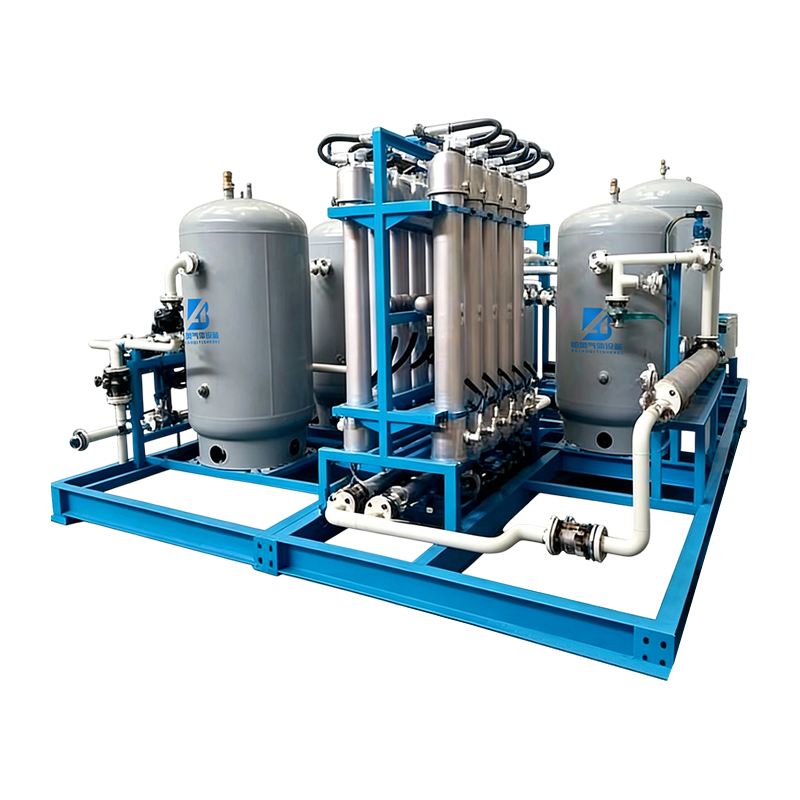
Membrane nitrogen generators rely on hollow-fiber membranes. Compressed air passes through millions of microscopic fibers, and gas molecules permeate through the fiber wall at different rates. Oxygen, water vapor, and carbon dioxide permeate quickly and are vented away; nitrogen travels along the fiber and exits as product gas. Membrane systems are compact, have no moving parts in the separation module, and reach operating conditions almost immediately. They are generally more economical for lower purity levels (95% to 99.5%) and lower-to-medium flow demands, such as inerting fuel tanks, food flushing, or purging pipelines. A typical compact unit is the membrane nitrogen generator, which can fit into applications where space is tight and startup speed matters.
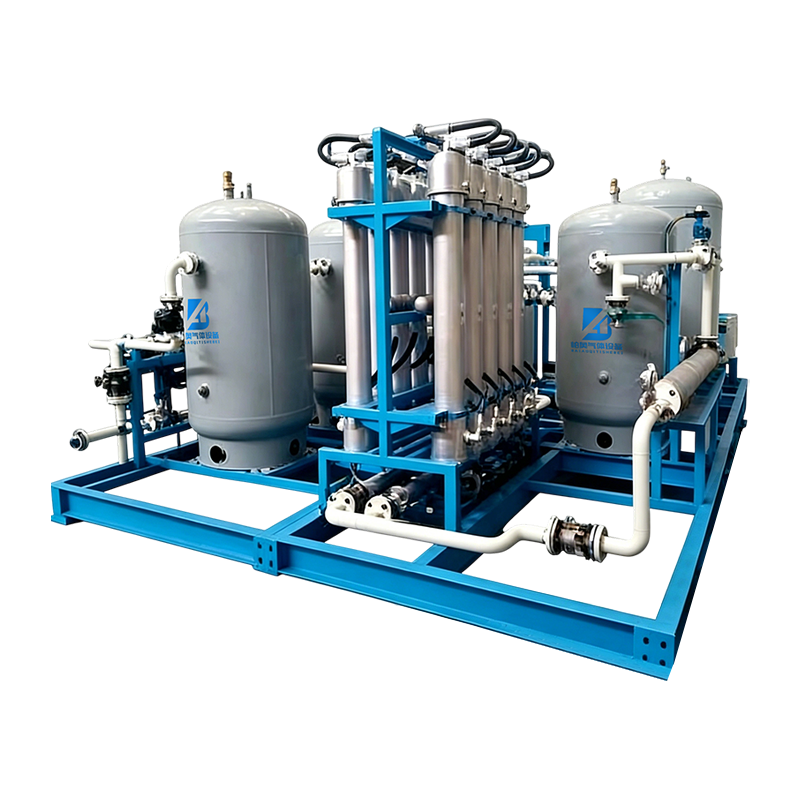 BAM Membrane Separation Nitrogen Generator Manufacturer , SuppliersZhejiang Baiao Gas Equipment Co., Ltd is China Custom BAM Membrane Separation Nitrogen Generator Manufacturer and Supplier. Working Princ...View Product →
| Parameter | PSA | Membrane |
|---|---|---|
| Typical purity | 97% – 99.999% | 95% – 99.5% |
| Flow range | Wide, up to very high | Low to medium |
| Startup time | Few minutes to stabilize | Almost immediate |
| Maintenance | Valves and sieve replacement | Filter changes, membrane long-life |
| Best suited for | High purity, metals, chemical, electronics | Inerting, food, marine, lower purity |
On-Site Generation vs. Delivered Nitrogen
For many buyers, the initial decision is not about PSA versus membrane, but about whether to generate nitrogen at all. Delivered nitrogen—either as compressed gas cylinders or liquid nitrogen in bulk tanks—has been the traditional route. But it comes with recurring logistics, handling risks, and a constant cost per cubic meter. An on-site generator changes the economics because the only ongoing input is electricity and compressed air.
Let’s look at what that means in practice. Cylinder nitrogen requires a contract, rental deposits, and scheduled deliveries. A liquid nitrogen tank also incurs delivery charges and evaporative losses (boil-off) that increase operating cost even when you are not using gas. An on-site generator, by contrast, produces nitrogen only when you need it, and the cost per cubic meter is typically a fraction of delivered product. It also removes the safety concerns of high-pressure cylinders and cryogenic storage, and it eliminates production interruptions caused by missed deliveries.
That said, delivered nitrogen can still make sense for very small consumption, short-term projects, or extremely high purity requirements that would make generator purification stages expensive. For most continuous industrial operations, however, the payback period for a generator is often less than two years. If you are still evaluating the options, asking your supplier for a cost-per-Nm³ comparison based on your actual demand is the fastest way to get a clear answer.
Where Nitrogen Generators Deliver the Most Value
Across industry, almost any process that needs inert gas can benefit from on-site generation. The technology is already used in metal fabrication, chemical plants, food and beverage, automotive, electronics, mining, and renewable energy. The most cost-effective applications are those with continuous demand, because a generator running several shifts per day maximizes the return on capital.
In the food and beverage industry, nitrogen flushes packages to displace oxygen that would spoil product and create an atmosphere that extends shelf life. A membrane generator is often enough here because purities of 99% to 99.5% are sufficient and the volumes can be flexibly adjusted on the packaging line. In electronics manufacturing, nitrogen is used in soldering and component assembly to prevent oxidation. These processes often need higher purity, so PSA-based systems are preferred, sometimes with an additional nitrogen purification equipment stage to reach 99.999% or above. Automotive plants also use on-site nitrogen for laser cutting and heat treatment, where consistent purity protects both product quality and equipment life.
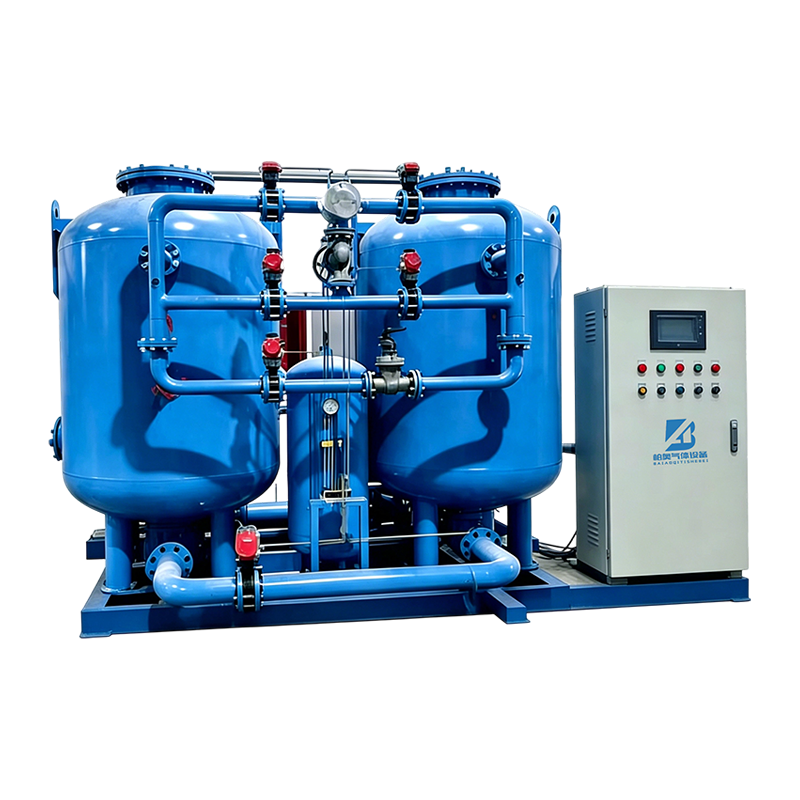
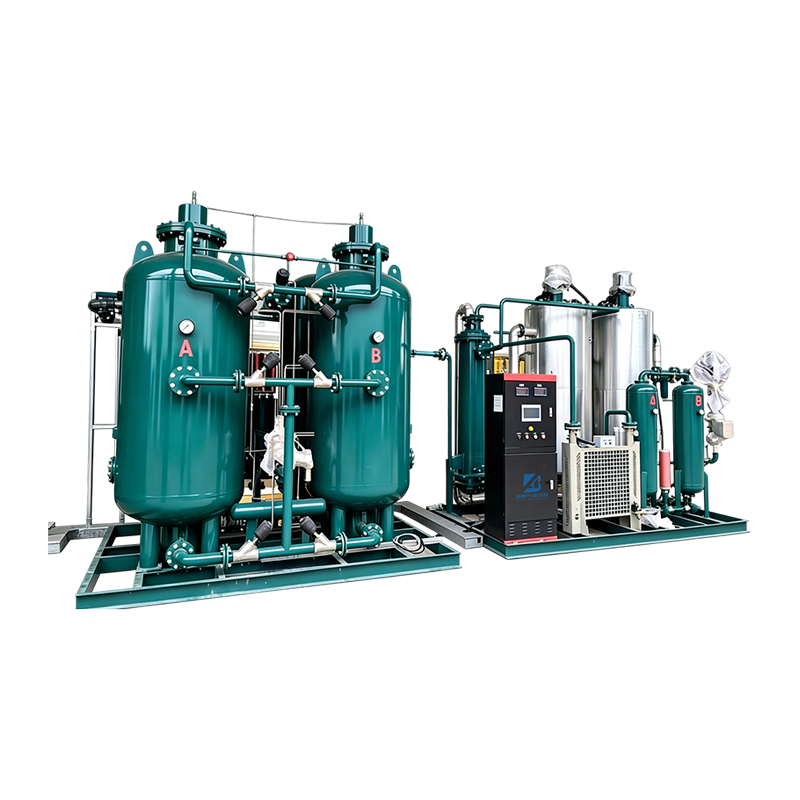 BCN Carbon-supported Nitrogen Purification Equipment Manufacturer , SuppliersZhejiang Baiao Gas Equipment Co., Ltd is China Custom BCN Carbon-supported Nitrogen Purification Equipment Manufacturer and Supplier. Sys...View Product →
Specific industry pages on the Baiao website cover these applications in more detail, including the typical system layout for each sector. Regardless of the industry, the common denominator is that on-site nitrogen generation turns a recurring supply headache into an internal utility that you control.
How to Specify the Right Nitrogen Generator
Choosing between PSA and membrane is only one part of the selection. You also need to define the purity, flow, pressure, and the quality of the incoming compressed air. Under-specifying these parameters leads to startup problems, frequent maintenance, or a system that cannot deliver the required gas quality. Over-specifying increases capital cost and operating waste. A smart specification starts with numbers, not guesses.
Purity: The Starting Point
Nitrogen purity is usually expressed as a percentage or in parts per million of residual oxygen. For example, 99.5% nitrogen contains 0.5% (5000 ppm) oxygen. Some applications accept this level; others need 99.99% with only 100 ppm oxygen. Every additional 9 in the purity target changes the technology and cost. Define the purity precisely, not as "high purity." If your process needs 99.99%, a membrane generator will likely not be the right choice. If you only need 98%, a PSA system can be misconfigured to deliver more purity than needed, which wastes energy and requires a larger system.
Flow Rate and Pressure
Flow is measured in normal cubic meters per hour (Nm³/h). You need peak flow, not average. A generator that supplies average flow will fail during peak demand, so many installers add a buffer tank to smooth out fluctuations. Pressure is just as critical. The generator must be able to deliver nitrogen at the pressure your process needs—typically 7 to 10 bar for most industrial uses. Higher pressure reduces the effective flow capacity of the system, so the compressor package must be sized to match the generator outlet flow and pressure simultaneously.
Incoming Air Quality
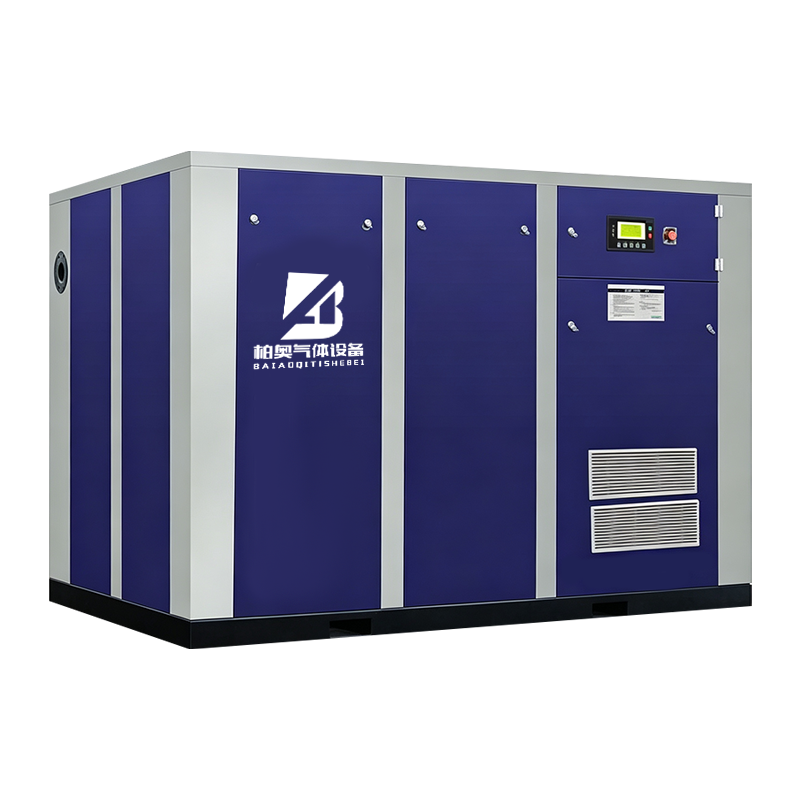
All nitrogen generators consume compressed air, and the quality of that air directly affects the generator’s life and output purity. Moisture, oil, and dust damage membranes and degrade carbon molecular sieve material. A proper system includes a refrigerated dryer, particulate filters, and sometimes an oil-removal filter upstream. For PSA units, the compressor should be oil-lubricated or oil-free depending on the generator specification. Neglecting this upstream conditioning is one of the most frequent causes of premature failure.
Maintenance and Support
Membrane generators have fewer moving parts, but the pre-filters need regular replacement. PSA generators contain valves and sieve material that should be replaced according to the manufacturer’s schedule. Check the expected maintenance intervals and the availability of spare parts before purchase. A supplier with in-house engineering and responsive after-sales support reduces your long-term risk. The Baiao product lineup spans both technologies and includes downstream purification equipment, so a single supplier can integrate the full train from compressor to final gas outlet.
Start with Your Actual Demand Profile
The most reliable way to choose a nitrogen generator is to start from real data: your required purity in ppm or percentage, your peak and average flow rate, your operating pressure, and the number of hours per year the generator will run. With those figures, the engineering team can calculate the cost, footprint, and payback for both PSA and membrane options. The final recommendation becomes a business case, not a preference.
On-site nitrogen generation has moved from a niche solution to a mainstream industrial utility. It offers lower cost per cubic meter, no delivery dependencies, and a consistent gas quality that you can verify in real time. Whether you need 95% for tank blanketing or 99.999% for electronics, the right generator will pay for itself while giving your production team one less variable to worry about. If you are ready to evaluate your options, discuss your specific application with the Baiao team through the contact page, and they can help you define the system parameters and expected return on investment.
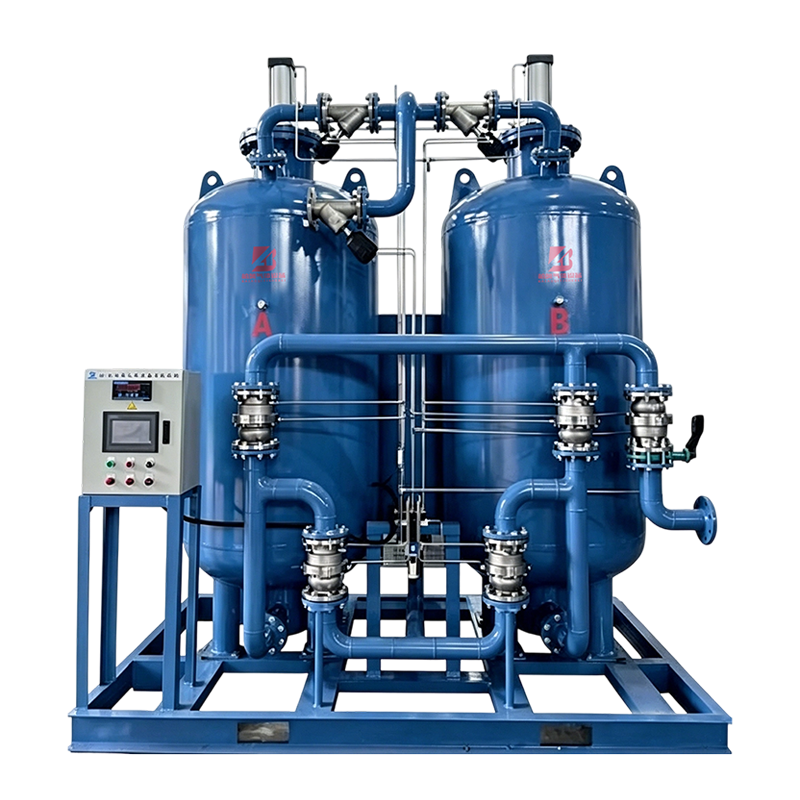
- Tel: +86-15057127179
+86-13588382771 - Email: huang.yifan0215@gmail.com
- Address: Huanshan Township, Fuyang District, Hangzhou City, Zhejiang Province
Copyright © Zhejiang Baiao Gas Equipment Co., Ltd. All Rights Reserved.
Privacy
Gas Generator Plant Manufacturer, Industrial Purification Equipment Plant
