en
 русский
 Español
 عربى
Air Separation Unit
BAM PSA Biogas Upgrading System
Product Introduction

Biogas Decarbonization and Purification
I. Principles of Biogas Purification
Overview: Raw biogas typically consists of 55%–65% CH₄ and 35%–45% CO₂, along with impurities such as H₂S, water vapor, siloxanes, and dust. Decarbonization involves removing CO₂ to increase the methane concentration to ≥96%, meeting the standards for pipeline-grade biomethane or compressed natural gas (CNG) for vehicles. The complete process flow is: Raw biogas → Pretreatment (dust removal, cooling, desulfurization, and dehydration) → Decarbonization and purification → Finished biomethane (with CO₂ as a by-product).
II. Process Flow
Raw biogas → Pretreatment (desulfurization, dust removal, dehydration, and siloxane removal) → Pressurization → PSA (Pressure Swing Adsorption) tower system → Finished biomethane (methane ≥96%)

III. Pressure Swing Adsorption (PSA) for Biogas Decarbonization and Purification
Principle:
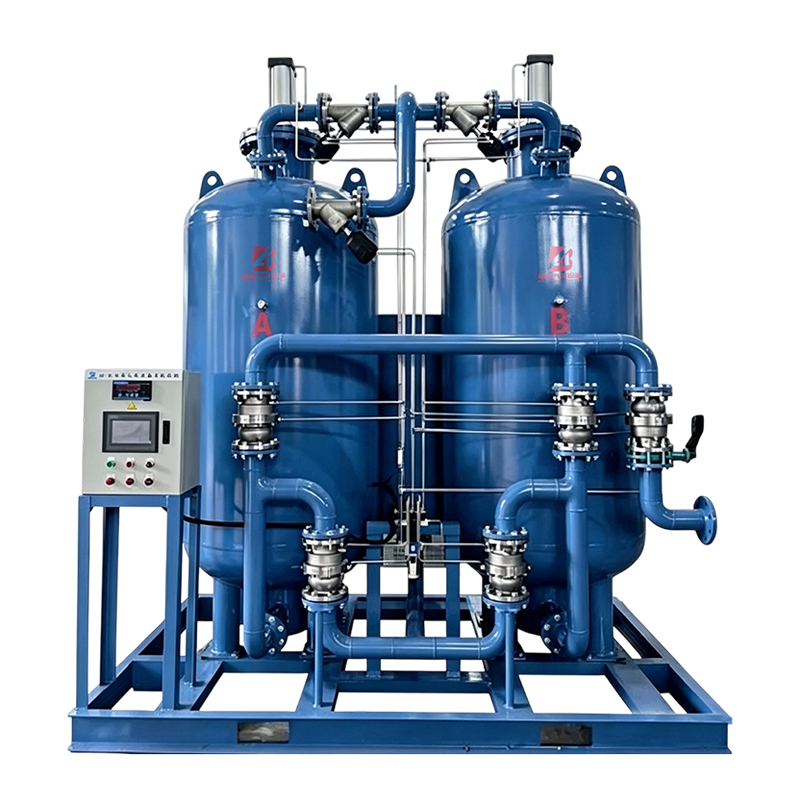
PSA is a physical separation process that operates at ambient temperature, utilizing molecular sieve adsorbents. It exploits the difference in adsorption capacity between CO₂ and methane molecules on the adsorbent:
1. High-pressure adsorption: The pretreated biogas is pressurized and fed into an adsorption tower. CO₂ is selectively adsorbed by the molecular sieves, while methane—which is not adsorbed—passes through as the product gas.
2. Low-pressure desorption/regeneration: Once the adsorbent reaches saturation, the pressure in the tower is reduced. The CO₂ is desorbed and discharged, restoring the adsorbent’s capacity.
3. Multi-tower cyclic operation: Through the automated switching of control valves across multiple adsorption towers, the system ensures continuous production of biomethane. The entire process operates at ambient temperature, requiring neither external heating nor chemical agents. Process
Advantages:
1. No chemicals or process wastewater are used or generated, ensuring high environmental friendliness and eliminating the need for auxiliary wastewater treatment facilities.
2. Fully automated PLC control with programmable valve switching allows for minimal manual oversight and long-term, continuous operation.
3. Operates at ambient temperature without the need for steam or other external heat sources, simplifying the overall system configuration.
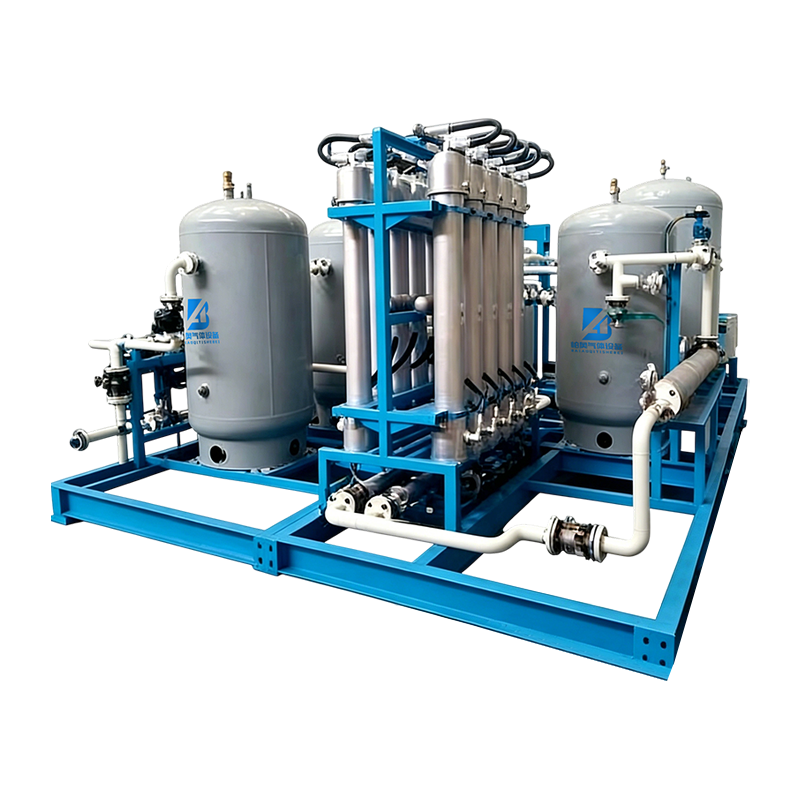
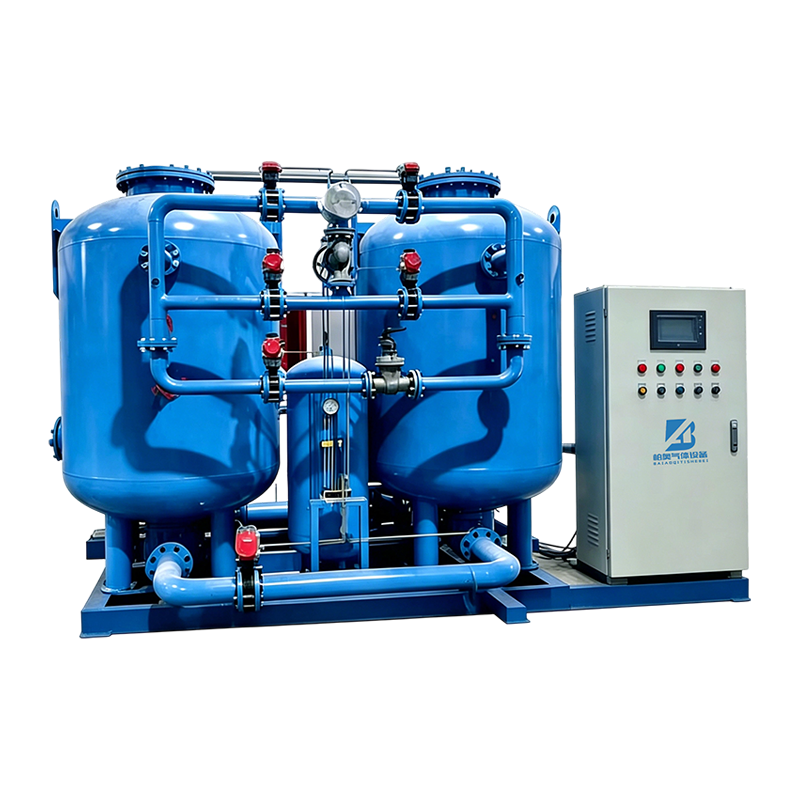
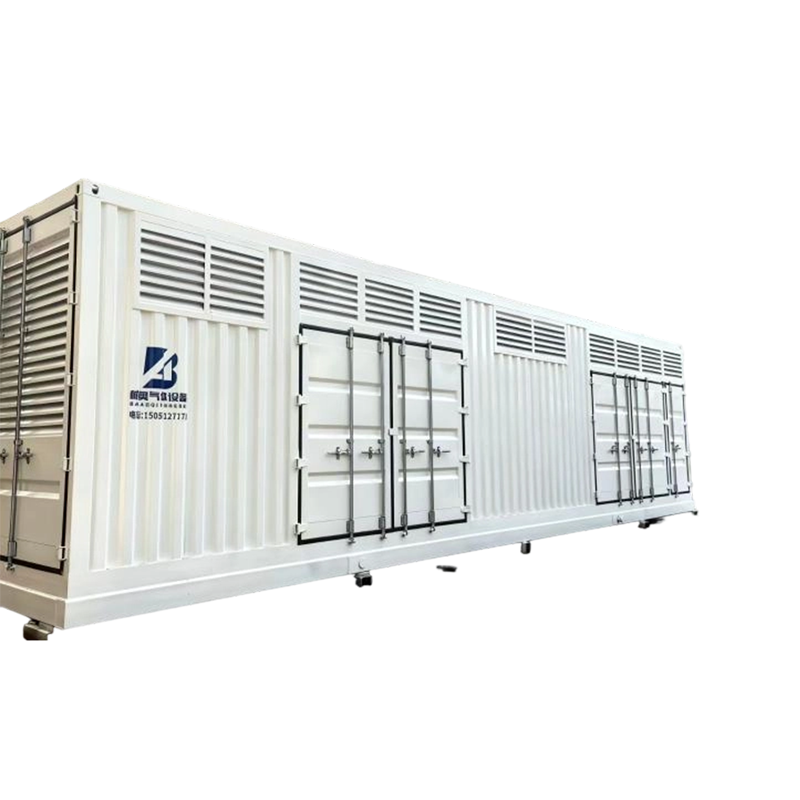
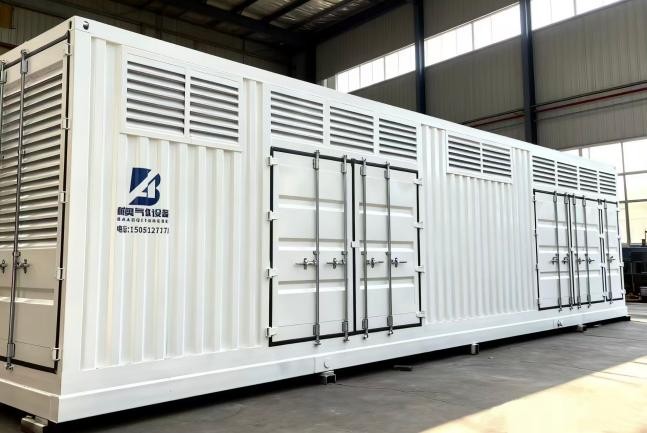
4. Modular, skid-mounted design ensures a compact footprint, short installation time, and suitability for containerized deployment.
5. Produces high-purity methane that consistently meets standards for grid-injected biomethane, boiler fuel, and compressed natural gas (CNG) for vehicles.
6. High degree of domestic (local) component sourcing, easy maintenance, and low operating costs.
Process Characteristics:
1. High purification efficiency and superior gas quality: Through an optimized molecular sieve adsorption ratio and a multi-tower cyclic process, the system reliably achieves a methane purity of ≥96% and a methane recovery rate of ≥96%. The resulting biomethane is stable in quality and fully complies with standards for grid injection, vehicular CNG, and industrial fuel applications.
2. Broad operational range and high versatility: The equipment covers processing capacities from 100 to 6,000 m³/h. It operates at ambient temperatures with a working pressure of 0.4–1.0 MPa (gauge), requiring no auxiliary systems such as steam or refrigeration, making it suitable for biogas projects of all scales—large, medium, and small.
3. Flexible load adjustment and continuous, year-round operation: Equipped with an intelligent programmable switching system, the unit allows for load adjustment between 30% and 110% of its rated flow. It is highly adaptable to scenarios with significant fluctuations in biogas production or unstable gas sources, ensuring safe, stable, and uninterrupted operation throughout the year—meeting the requirements for continuous industrial production.
4. Scientific structural design with a compact footprint: The system utilizes a modular, skid-mounted integrated design. With a logical and efficient process layout, the equipment features a high degree of integration and well-organized piping, which effectively reduces the required footprint. This facilitates convenient on-site installation and shortens construction timelines, making it well-suited for projects with space constraints.
|
Model Specification |
Raw Biogas Processing Capacity (Nm³/h) |
Biomethane Output (Nm³/h) |
Operating Pressure (MPaG) |
Operating Temperature |
Equipment Footprint (mm) |
|
BA-M100 |
100 |
53 |
0.4~1.0 |
常温 |
3800×1500×2600 |
|
BA-M200 |
200 |
106 |
0.4~1.0 |
常温 |
4700×1800×2800 |
|
BA-M300 |
300 |
159 |
0.4~1.0 |
常温 |
5600×2000×3000 |
|
BA-M500 |
500 |
265 |
0.4~1.0 |
常温 |
6800×2400×3200 |
|
BA-M800 |
800 |
424 |
0.4~1.0 |
常温 |
7800×2600×3400 |
|
BA-M1000 |
1000 |
530 |
0.4~1.0 |
常温 |
8800×2800×3600 |
|
BA-M1500 |
1500 |
795 |
0.4~1.0 |
常温 |
10200×3000×3700 |
|
BA-M2000 |
2000 |
1060 |
0.4~1.0 |
常温 |
11500×3200×3800 |
|
BA-M3000 |
3000 |
1590 |
0.4~1.0 |
常温 |
13500×3600×4000 |
|
BA-M4000 |
4000 |
2120 |
0.4~1.0 |
常温 |
15200×3800×4100 |
|
BA-M5000 |
5000 |
2650 |
0.4~1.0 |
常温 |
16500×4000×4200 |
|
BA-M6000 |
6000 |
3180 |
0.4~1.0 |
常温 |
17800×4200×4400 |
Performance Guarantees: Methane purity ≥96%, methane recovery rate ≥96%; supports a wide load-adjustment range of 30%–110%, fully automated operation, capable of continuous year-round running, compact footprint, and space-efficient layout.
IV. Safety Essentials
1. Biogas is highly flammable and explosive; the entire system must include inert gas purging, combustible gas detection/alarms, and flame arresters.
2. Oxygen levels must be strictly and automatically controlled to prevent the risk of explosion.
3. The desulfurization unit should be positioned upstream to protect the downstream decarbonization (CO2 removal) equipment.
V. Applicable Industries and Scenarios
Applicable Industries
1. Livestock and Poultry Farming: Large-scale pig farms, dairy farms, poultry farms, etc., utilizing biogas generated from the anaerobic fermentation of manure and waste.
2. Food Waste/Kitchen Waste Treatment: Centralized processing facilities for food and kitchen waste, utilizing anaerobic digestion to produce biogas from organic matter.
3. Solid Waste Treatment: Landfill gas recovery, municipal sludge treatment, and projects for the resource recovery of straw or agricultural/forestry waste.
4. High-Concentration Organic Wastewater: Industries such as food processing, brewing, starch production, and pharmaceuticals, where production wastewater undergoes anaerobic fermentation to generate gas.
5. Integrated Organic Waste Utilization (Industrial Parks/Regions): Regional bio-natural gas industrial parks.
Applicable Scenarios
1. The project generates no process wastewater and requires a small physical footprint.
2. Capable of handling fluctuations in biogas flow, with a wide load-adjustment range (30%–110%) and the ability to operate continuously throughout the year.
3. The resulting biomethane can be used as fuel for industrial boilers, in distributed combined heat and power (CHP) systems, or as compressed natural gas (CNG) for vehicles.
4. Supports automated operation, requiring only one on-site technician for maintenance and oversight.
5. Does not require an external steam heat source or a chemical dosing system.
VI. Equipment Configuration
Skid-mounted: Integrates adsorption towers, piping, and an automated control system; prefabricated at the factory and hoisted into position on-site.
Containerized: Can be configured as a containerized skid-mounted unit, facilitating outdoor installation.
Copyright © Zhejiang Baiao Gas Equipment Co., Ltd. All Rights Reserved.
Privacy
BAM PSA Biogas Upgrading System Manufacturer
China BAM PSA Biogas Upgrading System Suppliers