 en
 русский
 Español
 عربى

gas generators education: Applications, Selection Criteria, and Practical Guidance
Content
- 1 Defining the Core Gas Generation Problem Before Buying
- 2 PSA vs. Membrane: The Two Core Nitrogen Generation Technologies
- 3 Total Cost of Ownership: Energy, Maintenance, and Downtime
- 4 The Role of Air Treatment in Gas Generator Performance
- 5 System Sizing and Integration: The Hidden Engineering Work
- 6 Oxygen and Helium Recovery: Additional Applications of the Same Core Technologies
- 7 Selecting an Industrial Gas Generator Supplier
- 8 FAQ: Common Questions About Gas Generator Installation and Operation
When a food packaging plant in Hangzhou needed to switch from delivered liquid nitrogen to on-site generation, the project team faced a two-week shutdown window and a production schedule that could not slip. The selection process was not about picking the cheapest nitrogen generator off a brochure. It was about mapping the exact purity demand, the pressure drop in the existing air line, the dew point tolerance of the packaging process, and the electrical budget available in the compressor room. On-site air separation is a systems decision, not an equipment purchase. This guide walks through the engineering and procurement considerations that determine whether a gas generator investment actually pays off.
Defining the Core Gas Generation Problem Before Buying
The starting point for any gas generator project is a precise definition of the required gas demand. A common mistake is to size the system based on average flow while ignoring peak flow, pressure fluctuations, and the intermittency of the production schedule.
Industrial gas generators produce nitrogen, oxygen, or helium recovery from compressed air. The compressed air supply itself must be treated as part of the system because the quality of the inlet air directly determines the performance and service life of the separation unit. For most industrial nitrogen generators, the feed air must be dry and oil-free to protect the membrane modules or the molecular sieve beds.
Key parameters that define the system specification
- Purity: measured as a percentage of nitrogen or oxygen in the output gas stream. A 99.9% nitrogen purity is far more expensive to achieve than 95% purity.
- Flow rate: the actual volumetric flow at the operating pressure, not the theoretical maximum capacity of the compressor.
- Dew point: the moisture level of the generated gas. The required dew point depends on the application, with food packaging often requiring a dew point below -40 degrees Celsius.
- Operating pressure: the pressure at which the generator must deliver gas. Higher pressure increases the power consumption of the air compressor.
- Duty cycle: the percentage of time the generator runs. A continuous duty cycle demands a fundamentally different configuration than an intermittent one.
PSA vs. Membrane: The Two Core Nitrogen Generation Technologies
For nitrogen generation, the practical choice is between Pressure Swing Adsorption (PSA) and membrane separation. Each technology has a distinct operating envelope, and the selection has a direct impact on capital expenditure, energy consumption, and maintenance complexity.
PSA nitrogen generators use two adsorption vessels filled with carbon molecular sieve. At high pressure, the sieve adsorbs oxygen and some trace gases, allowing nitrogen to flow through. The vessels then depressurize to regenerate the sieve. This process produces high-purity nitrogen, typically in the 98% to 99.999% range, with a large flow capacity if the system is properly sized. A membrane nitrogen generator uses compressed air that passes through a bundle of hollow fiber membranes. Oxygen permeates through the fiber walls faster than nitrogen, leaving a nitrogen-rich stream at the outlet. Membrane generators are simple and quiet but are usually limited to purities around 95% to 99.5%, and they require more compressor air per unit of nitrogen produced at high purity.
PSA nitrogen generator
- Purity range: 98% to 99.999%
- Best for: precision electronics, pharmaceutical, and food packaging
- Maintenance: media replacement every 5 to 8 years
- Efficiency: lower air consumption per cubic meter of nitrogen at high purity
Membrane nitrogen generator
- Purity range: 95% to 99.5%
- Best for: oil and gas, tire inflation, and storage tank blanketing
- Maintenance: no moving parts, minimal maintenance
- Efficiency: requires more feed air at higher purities
Baiao manufactures both PSA and membrane based systems, which means selection can be driven by the application rather than by a single product line. A production manager in a biopharmaceutical facility with a 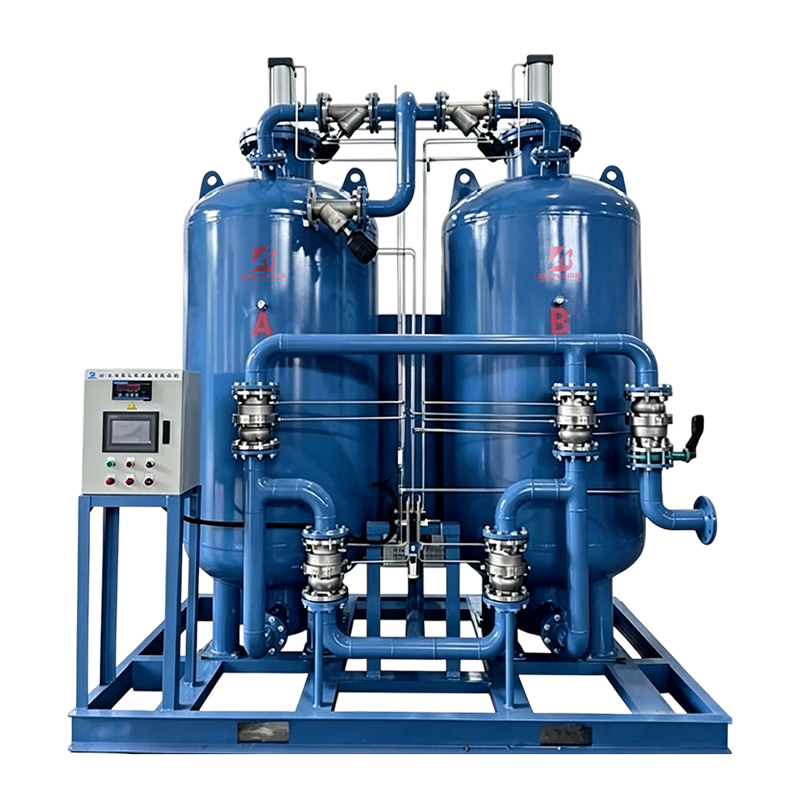 BAN Pressure Swing Adsorption Nitrogen Generator for High-Purity ApplicationsThis PSA nitrogen generator uses carbon molecular sieves to separate oxygen from compressed air, delivering adjustable purity from 99% to 99.99%. Suitable for biopharmaceutical and other industries requiring high-purity nitrogen, it features energy-efficient operation and intelligent monitoring.View Product → requirement for 99.99% nitrogen would typically select a PSA unit. A metal processing plant using nitrogen for laser cutting might find a
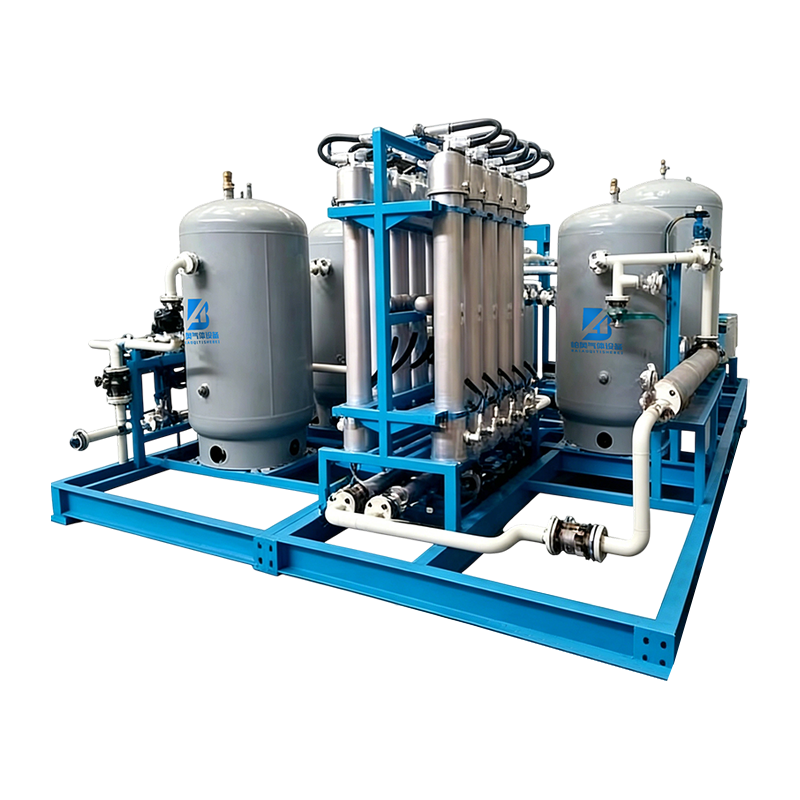 BAM Membrane Separation Nitrogen Generator for Cost-Effective Laser CuttingThis membrane-based nitrogen generator produces nitrogen from compressed air with purity adjustable between 95% and 99.9%. It offers quick startup, compact design, and low operating costs, making it ideal for metal processing applications like laser cutting where a steady supply is needed.View Product → adequate and cheaper to operate.
Total Cost of Ownership: Energy, Maintenance, and Downtime
Energy is the largest operating cost for any gas generator. The air compressor consumes approximately 80% of the total electrical energy used by the system, while the gas generator itself accounts for the remaining 20%. A compressed air system with an efficiency of 6.5 kW per cubic meter per minute of air flow is considered fair; modern systems can reach 6.0 kW per cubic meter per minute or better.
The table below compares the typical annual energy cost for nitrogen production using three common purity configurations, based on a continuous flow of 100 cubic meters per hour and an electricity cost of 0.11 USD per kWh.
| Configuration | Purity | Feed air requirement (m3/h) | Annual energy cost (USD) |
| Membrane generation | 95% | 320 | 61,000 |
| PSA generation | 99.9% | 180 | 34,500 |
| PSA generation with purification | 99.999% | 220 | 42,000 |
This data shows why purity selection should be as precise as possible. Pushing from 99.9% to 99.999% nitrogen purity can require additional purification equipment and more feed air, which inflates both capex and opex.
The Role of Air Treatment in Gas Generator Performance
Gas generators do not operate in isolation. The compressed air entering a PSA or membrane unit must be cleaned and dried to specification. Without proper treatment, the molecular sieve in a PSA unit becomes contaminated by oil, and the hollow fiber membranes in a membrane generator lose their separation efficiency. The economic consequence is not a nuisance; it is a total loss of gas quality and potentially a full rebuild of the separation core.
Baiao's product range includes the full chain of compression and purification, which simplifies system procurement and ensures compatibility between components. The recommended air treatment chain for a PSA or membrane generator consists of:
- A coarse filter to remove liquid water and large particles, with a filtration rating of 3 to 5 micrometers.
- An oil separator or high-efficiency oil remover to reduce oil carryover to less than 0.01 ppm.
- A refrigeration dryer or adsorption dryer to achieve the required pressure dew point.
- A fine or micro filter to capture fine particles and residual oil aerosol.
The choice of dryer directly affects the performance of the gas generator. For a dew point requirement of -40 degrees Celsius and below, a heatless regeneration adsorption dryer is typically required. A refrigeration dryer only can achieve a pressure dew point of around 3 degrees Celsius, which is insufficient for many PSA systems.
Baiao's BDC high-efficiency oil remover can reduce oil content to 0.01 ppm, while their BAL heatless regenerative adsorption dryer can bring the pressure dew point down to -70 degrees Celsius. These components are engineered to work with the company's own air separation systems.
System Sizing and Integration: The Hidden Engineering Work
Once the purity and flow requirements are locked, the project moves to system sizing. A common failure mode is to size the compressor and generator separately without considering that the generator pressure drop reduces the available pressure at the point of use. The layout must account for the pressure loss in the after-treatment chain, the piping, and the generator itself.
A robust sizing process follows these steps:
- Determine the maximum and average gas consumption of the production process over a 24-hour cycle.
- Add a safety factor of 10% to 15% to account for future demand growth and measurement uncertainty.
- Calculate the air flow needed by the generator at the target purity using manufacturer data for air-to-gas ratio.
- Select an air compressor that can supply the required air flow at the pressure the generator inlet needs, including the pressure drop of the after-treatment chain.
- Evaluate the dew point and oil content requirements to select the appropriate dryer and filters.
A properly sized system stops the compressor from running at its maximum load during average demand, which improves efficiency and extends equipment life. It also prevents a situation where the generator reaches its purity limit while flow is still lower than required.
Oxygen and Helium Recovery: Additional Applications of the Same Core Technologies
The same engineering principles used for nitrogen apply to oxygen generation and helium recovery, but with modified separation materials and process parameters. Baiao's oxygen product line includes VPSA (vacuum pressure swing adsorption) systems for large industrial flow and PSA units for smaller requirements.
For oxygen, the main application is industrial combustion, fish farming, and wastewater treatment. The critical specification is oxygen concentration, because an oxygen-enriched stream of 90% purity behaves differently than a 99.9% high-purity oxygen stream. The equipment is not interchangeable between these purity levels, and the design must match the actual process requirement.
Helium recovery is a different problem entirely. The 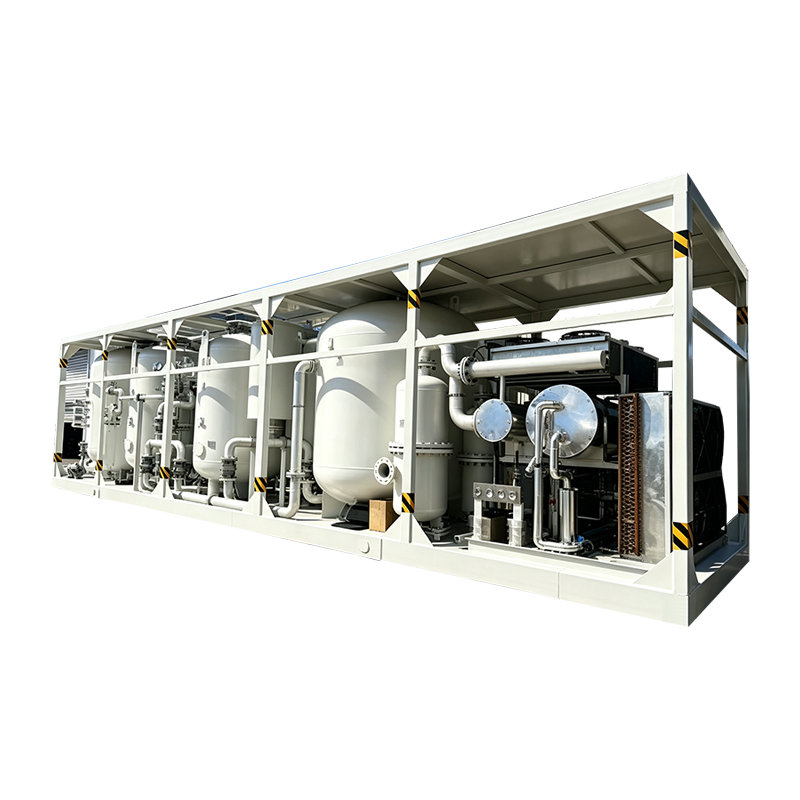 BHM Membrane Helium Recovery Unit for Efficient Gas ReuseThis membrane separation unit recovers helium from gas mixtures using selective permeation, enabling concentration and reuse. It helps reduce helium costs and supply risks, applicable in leak detection and high-temperature inert atmospheres. The system includes pretreatment for oil, water, and dust removal.View Product → is designed for applications where helium is used in leak detection or in the inert atmosphere of high-temperature processes. Recovery units collect the gas mixture and return a concentrated helium stream that can be reused. This reduces the cost of helium, which is a constrained domestic resource in many countries and strongly exposed to global supply volatility.
Selecting an Industrial Gas Generator Supplier
Supplier selection is not about comparing product images or stated technical parameters. It is about evaluating project delivery capability and the willingness to guarantee performance over the lifetime of the system. The supplier should demonstrate the ability to provide not only the gas generator but also the compressor, after-treatment equipment, and installation support.
Baiao operates 3000 square meters of standardized workshops and 500 square meters of warehouse space in Fuyang, Hangzhou. The company positions itself as a manufacturer that covers research and development, design, production, and installation. This scope allows a single point of responsibility for the full gas generation system. A supplier that assembles components but cannot manufacture its own dryers or filters can become a coordination risk during commissioning and maintenance.
Three questions should form part of the final supplier evaluation:
- Does the supplier manufacture the critical components in-house, or are they reselling third-party products?
- Is after-sales service available in the target region, and what is the response time for spare parts?
- Can the supplier provide a system-level performance guarantee, not just a component-level warranty?
FAQ: Common Questions About Gas Generator Installation and Operation
What is the difference between PSA and membrane nitrogen generation?
PSA uses carbon molecular sieve to adsorb oxygen and produces nitrogen at high purity, typically 98% to 99.999%. Membrane nitrogen generation uses hollow fiber membranes and generally achieves 95% to 99.5% purity. PSA is more suitable for high-purity applications, while membrane systems tend to have lower maintenance and simpler operation.
What purity of nitrogen do I need for food packaging?
Nitrogen purity for food packaging usually falls between 99.9% and 99.99%, depending on the type of food and the packaging method. Modified atmosphere packaging for fresh produce may require 99.9% purity, while snack food packaging with oxygen-sensitive ingredients may benefit from 99.99% purity.
How often should the molecular sieve in a PSA nitrogen generator be replaced?
The molecular sieve in a PSA nitrogen generator typically has a service life of 5 to 8 years under normal operating conditions with properly filtered and dried compressed air. The warranty period for the molecular sieve may be shorter, and the actual life depends on feed air quality and the number of operating cycles.
Can an existing compressed air system be upgraded to support a gas generator?
Yes, but only after an audit of the current air compressor capacity and air quality. The upgrade may require adding a dryer, upgrading filters, or installing a larger screw compressor. Baiao's product range includes a full line of oil-free screw compressors and gas purification equipment that can be configured with the existing system.
- Tel: +86-15057127179
+86-13588382771 - Email: huang.yifan0215@gmail.com
- Address: Huanshan Township, Fuyang District, Hangzhou City, Zhejiang Province
Copyright © Zhejiang Baiao Gas Equipment Co., Ltd. All Rights Reserved.
Privacy
Gas Generator Plant Manufacturer, Industrial Purification Equipment Plant
