 en
 русский
 Español
 عربى

Explosion Proof PSA Nitrogen Generator for Chemical Plants: Purity, Zones, Cost
Content
- 1 What Explosion Proof Classification Actually Covers on a PSA Nitrogen Generator
- 2 How PSA Separation Works Inside a Chemical Nitrogen Skid
- 3 Matching Purity and Flow Rate to the Duty Your Process Actually Has
- 4 The Compressed Air Side Decides Whether Purity Holds Over Time
- 5 Onsite Generation versus Delivered Liquid Nitrogen: The Cost Arithmetic
- 6 Specification Checklist Before You Issue the Purchase Order
- 7 Frequently Asked Questions
A specialty chemicals plant running a 400 Nm3/h nitrogen blanketing loop burns through one 20-tonne liquid nitrogen delivery every five or six days. A single late tanker forces the reactor to vent product or shut down. That arithmetic, not a product catalogue, is what pushes most chemical sites toward an on-site explosion proof PSA nitrogen generator.
What Explosion Proof Classification Actually Covers on a PSA Nitrogen Generator
Explosion proof classification applies to the electrical and instrumentation package of a PSA nitrogen generator, not to the nitrogen it produces. Nitrogen is inert. The ignition risk on a chemical site comes from the hydrocarbon vapour, hydrogen or solvent mist present in the area where the skid is installed.
Under IEC 60079-10-1 and the equivalent GB/T 3836 series, that area is classified as Zone 0, 1 or 2. The zone classification then determines which components must carry an Ex certificate. In practice that list is short: the motor, solenoid valves, pressure and flow transmitters, the oxygen analyser and the PLC cabinet. Vessels, piping, carbon molecular sieve beds and manual valves are process-wetted parts and do not require certification.
A typical chemical-site specification reads Ex d IIB T4 Gb. Gas group IIB covers ethylene and propylene; temperature class T4 caps surface temperature at 135 degrees Celsius. Hydrogen duty moves the gas group to IIC, and that single change can add weeks to the electrical procurement lead time.
Standard industrial skid
- Uncertified IEC motor with an open terminal box
- Panel-mounted transmitters outside the Ex scope
- IP54 control cabinet mounted on the skid
- Standard cable tray and gland arrangement
Explosion proof skid
- Ex d motor and solenoid valves with certified glands
- Ex ia intrinsically safe loops routed through isolators
- Purged cabinet, or cabinet relocated outside the hazardous area
- Armoured cable with certified entry fittings
The electrical package typically adds 15 to 25 percent to project cost. That number is worth stating early, because it is the part of the budget most often understated at the enquiry stage.
How PSA Separation Works Inside a Chemical Nitrogen Skid
PSA nitrogen generation separates nitrogen from compressed air by exploiting one physical fact: carbon molecular sieve adsorbs oxygen faster than it adsorbs nitrogen. Filtered air enters a vessel at 0.7 to 0.8 MPa. Oxygen, carbon dioxide and water vapour are held on the sieve surface while the nitrogen-rich stream passes through to a buffer vessel.
After roughly 60 seconds the first vessel saturates. The cycle switches to the second vessel while the first is depressurised to release the adsorbed oxygen to atmosphere. Continuous output is maintained by the buffer vessel and the switching sequence, which is why a well-designed skid shows very little pressure ripple at the outlet.
- Air treatment. Oil, water and particulate are removed before the sieve sees the air.
- Adsorption. Vessel A is pressurised and oxygen is held on the sieve bed.
- Equalisation. The two vessels share pressure to recover energy instead of venting it.
- Regeneration. Vessel A depressurises and releases the captured oxygen.
- Switchover. Vessel B takes the load while the buffer vessel smooths the swing.
- Purification, where required. Residual oxygen is removed to reach 99.999 percent.
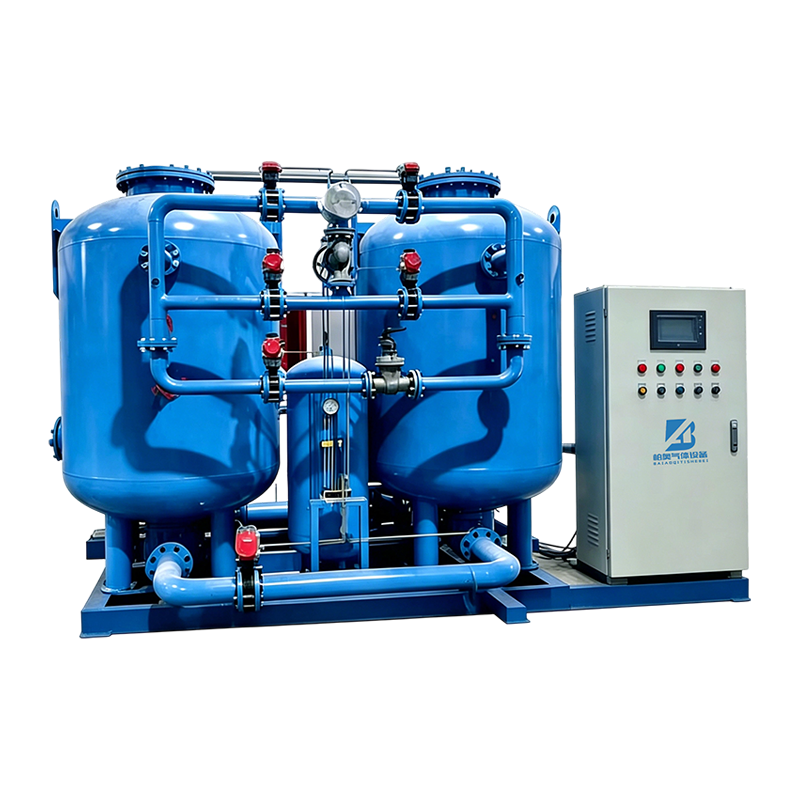
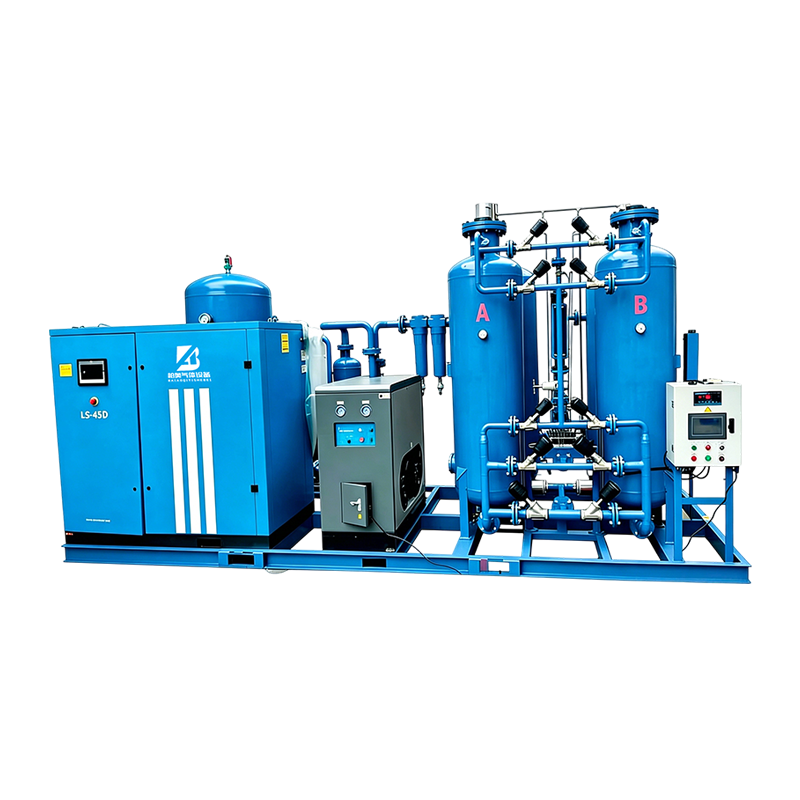
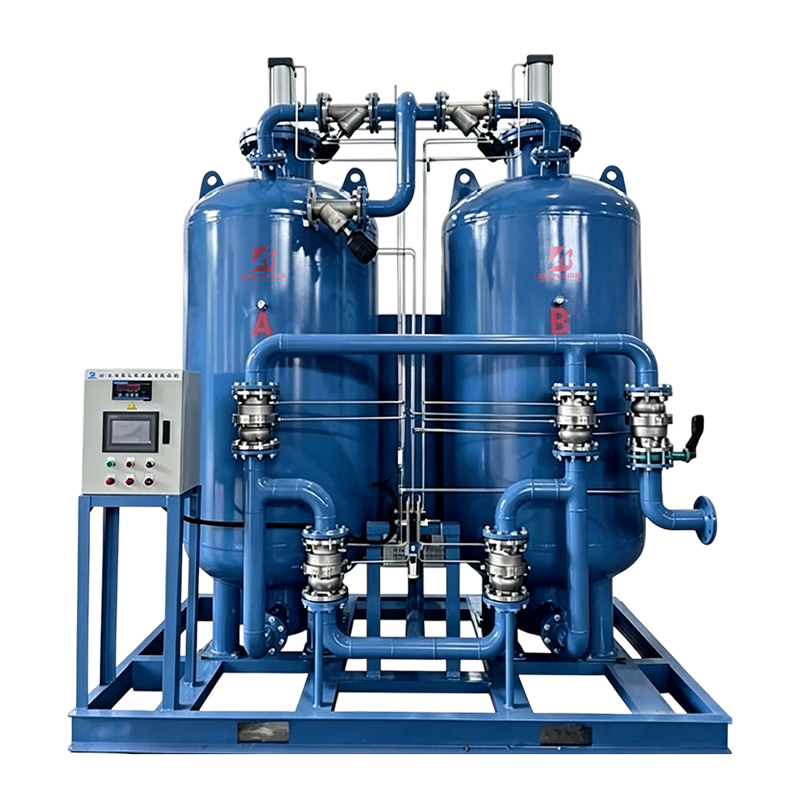 BAN Series PSA Nitrogen Generator for Continuous On-Site Nitrogen ProductionTwo-tower PSA nitrogen generator suited to steady chemical demand, with buffer vessel and switching sequence supporting continuous output and low outlet pressure ripple.View Product →
Zhejiang Baiao Gas Equipment Co., Ltd. builds its BAN series around a two-tower pressure swing arrangement, which is the configuration most chemical sites settle on when flow demand is steady and the purity target sits between 97 and 99.99 percent.
Matching Purity and Flow Rate to the Duty Your Process Actually Has
Purity is set by the downstream process, not by the nameplate of the generator. Each additional nine of purity, from 99.9 to 99.99 to 99.999 percent, cuts residual oxygen by roughly a factor of ten and reduces the usable nitrogen output of the same sieve bed.
That trade-off is the most misunderstood number in nitrogen procurement. A machine rated at 100 Nm3/h at 99.9 percent will not deliver 100 Nm3/h at 99.999 percent. Overspecifying purity by one nine can cost a chemical plant 30 to 40 percent in unnecessary capital plus a permanent energy penalty.
| Process duty | Purity | Pressure dew point | Practical note |
| Tank and pipeline blanketing | 97 to 99 percent | Minus 40 degrees Celsius | Highest flow, lowest purity; pressure stability matters more than purity |
| Reactor inerting and purging | 99 to 99.9 percent | Minus 40 degrees Celsius | Continuous supply required; pressure swings disturb the reaction |
| Solvent and resin drying | 99.5 percent | Minus 60 degrees Celsius | Moisture control drives product quality more than oxygen control |
| Catalyst protection | 99.99 to 99.999 percent | Minus 70 degrees Celsius | Usually requires downstream purification after the PSA stage |
| Analyser carrier gas | 99.999 percent | Minus 70 degrees Celsius | Needs purification plus a stable pressure regulator |
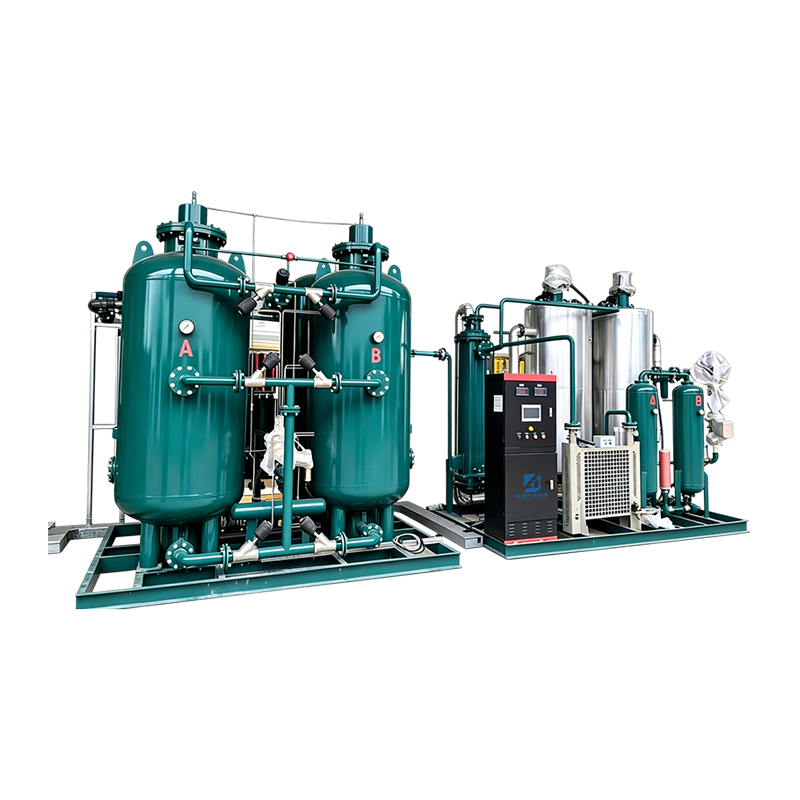 BCN Carbon-Supported Nitrogen Purification Equipment for High-Purity NitrogenPost-PSA purification unit for reaching top-tier nitrogen purity by removing residual oxygen, useful when ultra-high purity demands exceed standard PSA generator limits.View Product →
When the process demands the top tier, a carbon-supported purification stage placed after the PSA vessels is the standard route. It removes the residual oxygen that the sieve alone cannot reach, and it keeps the generator itself running at a comfortable purity rather than at its limit.
The Compressed Air Side Decides Whether Purity Holds Over Time
Most purity complaints on a chemical site trace back to compressed air treatment, not to the molecular sieve. Oil carryover is the most common cause of premature sieve failure. A rotary screw compressor with a worn separator element can push 0.1 mg/m3 of oil aerosol downstream, and carbon molecular sieve is permanently poisoned above roughly 0.003 mg/m3 of residual oil, which corresponds to ISO 8573-1 Class 1.
Dew point matters just as much. A refrigerated dryer alone delivers a pressure dew point of about plus 3 degrees Celsius, which is adequate for general plant air and not adequate for a nitrogen skid. Adsorption drying is what pulls the dew point down to minus 40 or minus 70 degrees Celsius.
- Oil and water separation removes the bulk condensate before it reaches a filter element.
- Refrigerated drying brings the pressure dew point down to about plus 3 degrees Celsius.
- Heatless or micro-heat regenerative drying pushes it to minus 40 or minus 70 degrees Celsius.
- Precision filtration and activated carbon remove oil aerosol and hydrocarbon vapour.
- Sterilising filtration is added when nitrogen contacts pharmaceutical or food-grade surfaces.
The same chain is standard on petrochemical nitrogen applications, where continuous duty and long intervals between maintenance windows matter more than first cost.
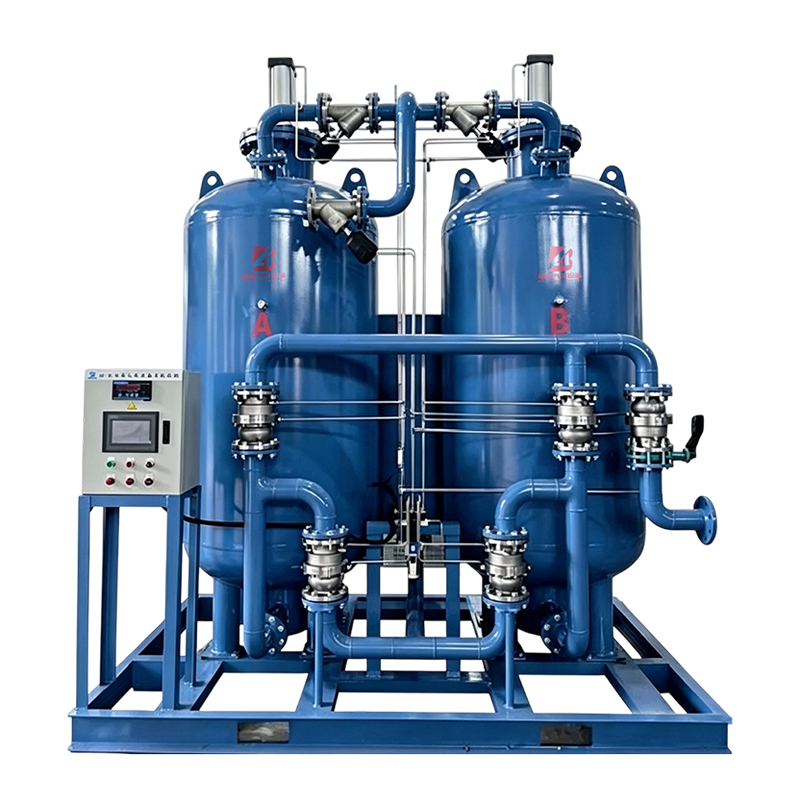
 BEA Combined Low Dew Point Compressed Air DryerCombined refrigerated and adsorption dryer for low dew point compressed air, aimed at petrochemical-style continuous duty where reliable operation and long maintenance intervals matter.View Product →
Onsite Generation versus Delivered Liquid Nitrogen: The Cost Arithmetic
For a chemical plant with steady nitrogen demand above roughly 50 Nm3/h, on-site generation wins on cost. The gap is wide enough that payback usually lands inside 18 to 30 months for a 200 Nm3/h system, before any allowance for avoided shutdown risk.
Three cost lines decide the comparison. Delivered liquid nitrogen carries evaporation loss from the storage tank, typically 0.5 to 1 percent per day, plus tanker transport and tank rental. Cylinder and bundle supply adds handling labour and residual gas loss. On-site generation replaces all of that with electricity, maintenance and periodic sieve replacement.
The operating cost that catches chemical buyers off guard is not electricity. It is unplanned maintenance on the compressor side. A nitrogen skid that runs at 85 percent load with dirty inlet air will consume more in separator elements and filter cartridges over five years than the price difference between a mid-range and a premium air treatment package.
Specification Checklist Before You Issue the Purchase Order
Eight items determine whether an explosion proof PSA nitrogen generator for chemical duty performs as specified. Each one is cheap to correct at the enquiry stage and expensive to correct after installation.
- Get the area classification in writing, with zone, gas group and temperature class, rather than a general requirement for explosion proof equipment.
- Size flow against worst-case simultaneous demand, not the daily average.
- State purity and dew point as two separate numbers, because they drive different equipment.
- Include the full air treatment chain in the same bid package as the generator.
- Require certificate numbers, not just a compliance statement, for every Ex-rated component.
- Confirm whether the control cabinet sits inside or outside the hazardous area.
- Agree on a sieve warranty that states the oil contamination threshold in writing.
- Verify spare parts availability and on-site service response before signing.
Frequently Asked Questions
Does the PSA nitrogen generator itself need explosion proof certification?
Only its electrical and instrumentation package does. The pressure vessels, piping, carbon molecular sieve beds and manual valves handle inert nitrogen and are not ignition sources. The components that require Ex certification are the motor, solenoid valves, transmitters, oxygen analyser and control cabinet.
Which explosion proof rating is normal for a chemical plant?
Ex d IIB T4 Gb is the most common specification, because gas group IIB covers ethylene and propylene and temperature class T4 caps surface temperature at 135 degrees Celsius. Sites handling hydrogen or acetylene move to gas group IIC, which is a different procurement category with longer lead times.
Can one PSA nitrogen generator deliver 99.999 percent purity at full rated flow?
No. Usable nitrogen output falls as the purity target rises, typically to around 55 percent of rated flow at 99.999 percent. Reaching that grade normally requires a downstream purification stage after the PSA vessels, which is why the purity requirement and the flow requirement must be quoted together.
How long does a carbon molecular sieve charge last?
Eight to ten years is realistic when the upstream air treatment holds residual oil below 0.003 mg/m3 and the pressure dew point below minus 40 degrees Celsius. Oil carryover is the dominant failure mode, and once the sieve is poisoned the loss of capacity is permanent rather than recoverable.
For a broader walkthrough of the treatment chain that sits in front of the generator, the gas purification equipment reference covers filtration, drying and filtration staging in more detail.
- Tel: +86-15057127179
+86-13588382771 - Email: huang.yifan0215@gmail.com
- Address: Huanshan Township, Fuyang District, Hangzhou City, Zhejiang Province
Copyright © Zhejiang Baiao Gas Equipment Co., Ltd. All Rights Reserved.
Privacy
Gas Generator Plant Manufacturer, Industrial Purification Equipment Plant
